
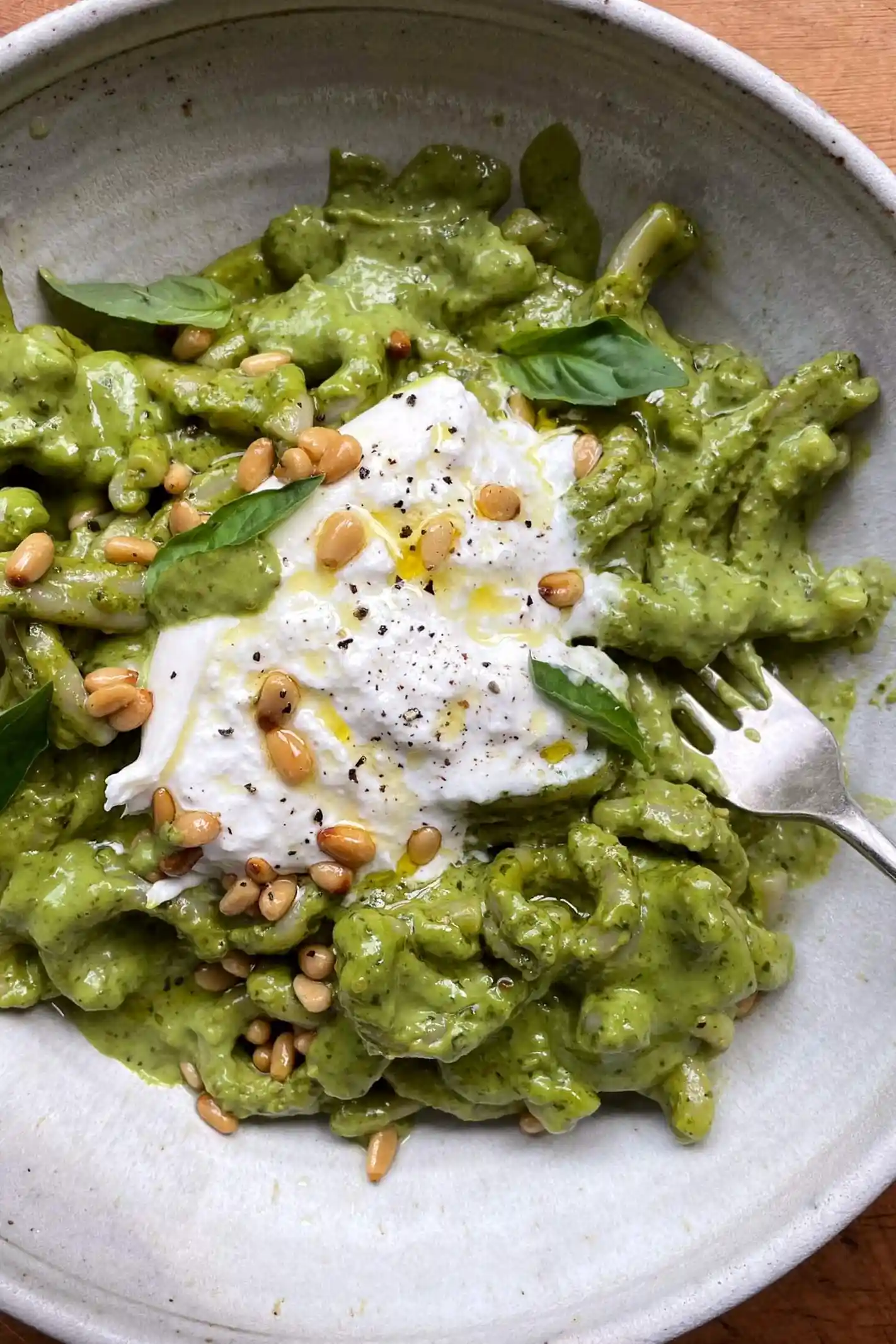
This creamy pesto pasta sauce transforms a standard kitchen staple into a restaurant-quality meal with minimal effort. By blending fresh, vibrant herbs with high-quality oil and a touch of velvety cream, you create an indulgent dish that feels both elevated and comforting. Whether you are pressed for time or looking to impress guests, this recipe delivers a rich, flavorful result every single time.
List of ingredients
- 200 g dried casarecce
- 3-4 tbsp double cream
- burrata (to serve)
- extra toasted pine nuts (to serve)
- 100 g pine nuts (toasted)
- 100 g basil (handful of leaves reserved)
- 200 ml olive oil
- 1 garlic clove
- 1 lemon (zest and juice)
- 1/2 tbsp freshly ground black pepper
- 70 g parmesan
- salt (to taste)
step-by-step instructions
- Step: Add all of the pesto ingredients to a blender and blitz until smooth. Taste the pesto and see if you need to add any salt, you may find it’s salty enough from the cheese. Decant the pesto to a clean jar.
- Step: Bring a medium pan of water up to a boil, add the pasta and then lower the heat cooking for 2 minutes less than the packet instructions. When cooked, drain the pasta, reserving a little pasta water.
- Step: Add 3 generous tablespoons of your pesto to the pan, followed by 1 tbsp of the reserved pasta water, mix to combine and once the sauce is hot, add the cream little by little, checking and tasting so that it’s as creamy as you like it.
- Step: Tip the pasta into the sauce and warm together before dividing between two pasta bowls. Top with half a ball of burrata each if you like. Garnish with more basil leaves, toasted pine nuts. Season and drizzle over your best olive oil.
Practical Preparation Pointers
Achieving the Perfect Toast on Pine Nuts
Toasting pine nuts is a delicate process because they have a high fat content and can transition from golden brown to burnt in a matter of seconds. Use a dry, non-stick pan over medium-high heat and shake the pan constantly to ensure even browning on all sides. As soon as you notice a fragrant, toasted aroma and a deep golden color, remove them from the heat and transfer them immediately to a cool plate to stop the cooking process.
Maximizing Fresh Herb Longevity
If you have extra basil left over after preparing your pesto, preserve its freshness by treating it like a bouquet of flowers. Trim about an inch off the bottom of the stems and place the basil in a small jar with about an inch of water. Gently place a breathable plastic bag over the top and secure it loosely around the jar, then leave it on your kitchen counter rather than the refrigerator to prevent the leaves from turning black.
Selecting the Best Pasta Shapes
While this recipe specifically utilizes casarecce for its unique ability to trap sauce in its central channel, many other shapes work perfectly. Consider using rotini or fusilli, which also excel at capturing thick, creamy sauces, or even penne if that is what you currently have in your pantry. Avoid very thin or delicate strands like angel hair, as they may become overwhelmed by the richness of the pesto and cream combination.
Refining Your Flavor Profile
Adjusting the Acidity
The lemon zest and juice play a critical role in balancing the fat from the double cream and the earthiness of the pine nuts. If you find your final sauce feels too heavy, add an extra squeeze of fresh lemon juice just before serving to provide a bright, zesty lift. Remember to add the juice in small increments, tasting between additions, to maintain the harmony of the other ingredients.
Incorporating Alternative Aromatics
Garlic is a traditional component, but its intensity can vary significantly depending on the age of the clove. If you prefer a milder, more mellow garlic profile, try roasting the clove in a bit of olive oil before blending it into the pesto. This transformation creates a sweet, spreadable consistency that softens the sharpness while maintaining the necessary savory depth required for a high-quality sauce.
Utilizing Different Nut Varieties
If pine nuts are unavailable or you simply want to experiment with different flavor profiles, toasted walnuts provide a wonderful, slightly bitter edge that works beautifully with basil. For a more delicate, floral note, consider using blanched almonds or shelled pistachios. Each nut choice will impart a slightly different texture to the pesto, so feel free to mix and match based on what you have readily available in your pantry.
Common Questions Addressed
How can I ensure the pesto maintains its bright green color?
The oxidation process is what causes pesto to darken when exposed to air. To prevent this, store your homemade pesto in an airtight glass jar and pour a very thin layer of high-quality olive oil over the top surface of the sauce before sealing the lid. This creates a physical barrier that keeps oxygen away from the basil, keeping the vibrant green color intact for several days in the refrigerator.
Can this sauce be prepared for a larger crowd?
This recipe is easily scalable by multiplying the ingredient quantities according to your serving needs. When scaling up, keep in mind that the pesto itself can be made well in advance, even days before you plan to host. Simply prepare the pasta fresh just before serving and incorporate the pesto and cream at the last minute to ensure the dish remains silky and warm.
Is there a way to make this dish lighter without losing the creaminess?
If you are looking for a lower-fat alternative to double cream, you can swap it out for a dollop of high-quality mascarpone or even a bit of full-fat Greek yogurt. If using yogurt, be very careful to keep the heat low when adding it to the pan, as high heat can cause dairy-based proteins in yogurt to separate or curdle, which might ruin the texture of your final pasta sauce.
Serving and Storage Recommendations
Optimal Reheating Strategies
If you find yourself with leftovers, reheating them correctly is essential to keeping the sauce smooth. Reheat the pasta in a wide skillet over medium-low heat and add a tiny splash of water or a small knob of butter to help bring the sauce back to its original consistency. Microwave reheating is possible, but use short intervals of thirty seconds and stir frequently to prevent the sauce from separating or becoming overly oily.
Freezing the Homemade Pesto
While it is best to avoid freezing the fully assembled creamy pasta, the pesto base itself is an excellent candidate for the freezer. Freeze the pesto in ice cube trays for individual portions, which makes it incredibly convenient to pop a single cube into a hot pan whenever you want a quick dinner. The pesto will maintain its flavor for up to three months when stored in the freezer, though the color may deepen slightly over time.
Creative Serving Ideas for Guests
To turn this simple pasta dish into an impressive centerpiece, serve it in warmed bowls and place the burrata in the very center, slicing it open just as you bring it to the table so the liquid cream spills into the pesto sauce. A light dusting of extra grated parmesan and a final drizzle of premium extra virgin olive oil added right before eating will provide that professional finishing touch that makes all the difference in presentation.
Print
Creamy Pesto Pasta Sauce
- Total Time: 25 minutes
- Yield: 2 servings 1x
- Diet: Vegetarian
Description
This Creamy Pesto Pasta Sauce is delicious and easy, tossed through hot pasta to make an elevated and super indulgent version of pasta pesto.
Ingredients
- 200 g dried casarecce
- 3–4 tbsp double cream
- burrata (to serve)
- extra toasted pine nuts (to serve)
- 100 g pine nuts (toasted)
- 100 g basil (handful of leaves reserved)
- 200 ml olive oil
- 1 garlic clove
- 1 lemon (zest and juice)
- 1/2 tbsp freshly ground black pepper
- 70 g parmesan
- salt (to taste)
Instructions
- Step: Add all of the pesto ingredients to a blender and blitz until smooth. Taste the pesto and see if you need to add any salt, you may find it’s salty enough from the cheese. Decant the pesto to a clean jar.
- Step: Bring a medium pan of water up to a boil, add the pasta and then lower the heat cooking for 2 minutes less than the packet instructions. When cooked, drain the pasta, reserving a little pasta water.
- Step: Add 3 generous tablespoons of your pesto to the pan, followed by 1 tbsp of the reserved pasta water, mix to combine and once the sauce is hot, add the cream little by little, checking and tasting so that it’s as creamy as you like it.
- Step: Tip the pasta into the sauce and warm together before dividing between two pasta bowls. Top with half a ball of burrata each if you like. Garnish with more basil leaves, toasted pine nuts. Season and drizzle over your best olive oil.
Notes
You can use shop-bought pesto if preferred. Store pesto in an airtight container for up to 2 weeks. Leftover pasta can be stored in the fridge for 3 days and reheated gently in a pan with a knob of butter.
- Prep Time: 15 minutes
- Cook Time: 10 minutes
- Category: Dinner
- Method: Stovetop
- Cuisine: Italian
Nutrition
- Serving Size: 1 serving
- Calories: 620 kcal
- Sugar: 3 g
- Sodium: 580 mg
- Fat: 52 g
- Saturated Fat: 12 g
- Unsaturated Fat: 38 g
- Trans Fat: 0 g
- Carbohydrates: 38 g
- Fiber: 4 g
- Protein: 16 g
- Cholesterol: 45 mg