
This one-pot meal combines seasoned ground beef and pasta for a quick and efficient family dinner. It is a budget-friendly option that minimizes cleanup by using a single skillet for all cooking stages.
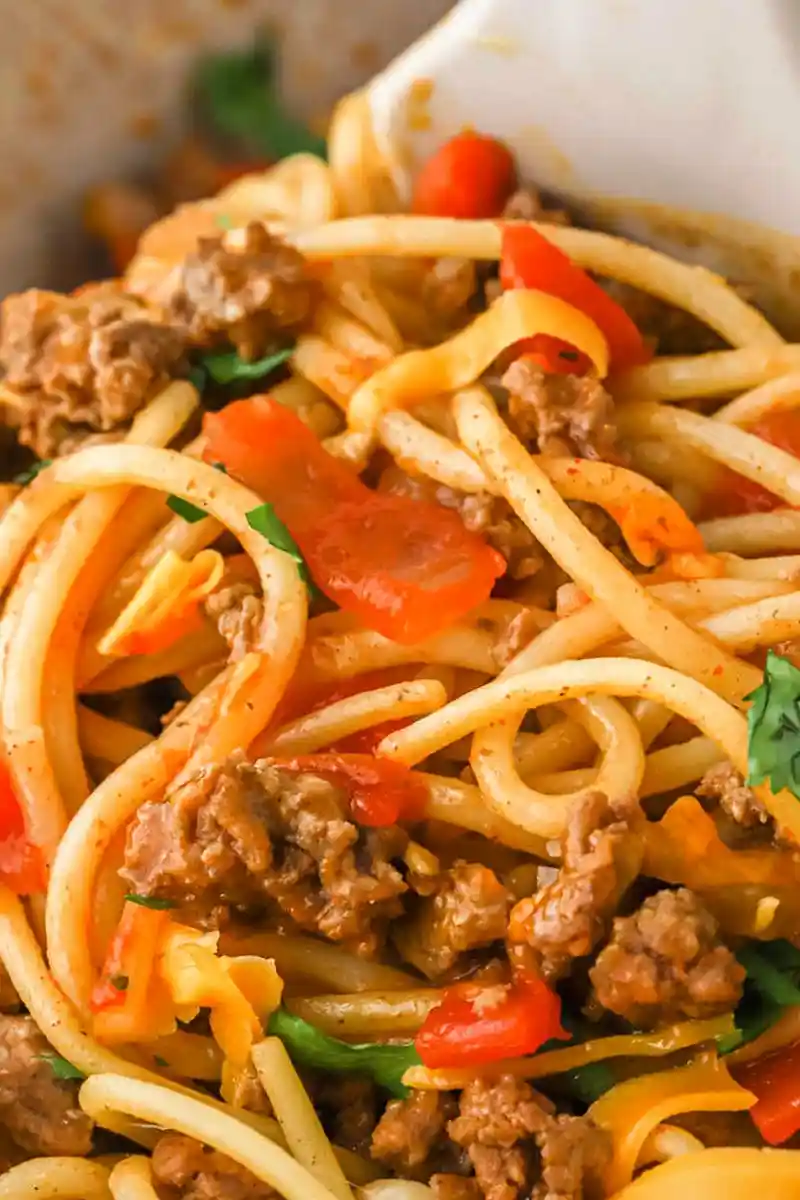
List of ingredients
- 1 pound Ground Beef – lean 80/20 or 90/10 is recommended.
- 1/2 Yellow Onion (diced) – finely chop for even distribution.
- 1 packet Taco Seasoning (1 oz) – store-bought or a homemade blend.
- 1 can Diced tomatoes with Green Chilies (Rotel – 10 oz can) – use the liquid from the can.
- 8 oz Spaghetti Noodles (uncooked) – break them in half if using a smaller skillet.
- 3 cups Water – filtered water prevents mineral aftertastes.
- 4 oz Cheddar Cheese (shredded) – sharp cheddar provides the best flavor profile.
- Fresh Cilantro (chopped) – used as a fresh garnish at the end.
step-by-step instructions
- Brown the meat: Brown 1 lb ground beef with ½ diced onion over medium-high heat until beef is cooked and onions are soft. Drain grease from the pan to ensure the sauce is not oily.
- Combine ingredients: Stir in 1 packet taco seasoning, 1 (10 oz) can diced tomatoes with green chilies, 8 oz spaghetti noodles, and 3 cups water. Mix thoroughly so the seasoning is evenly distributed.
- Simmer the pasta: Bring the mixture to a boil, then cover and reduce heat to low. Cook for 15 minutes until noodles are tender and have absorbed most of the liquid.
- Melt the cheese: Stir in ½ of the shredded cheddar cheese (2 oz) and cover for about 1 minute until melted. This integrates the cheese into the sauce for a creamier texture.
- Finish and serve: Serve topped with remaining 2 oz cheddar cheese and chopped cilantro. Serve immediately while the cheese is still melted.
Customizing Your Ingredients
Substituting Ground Turkey or Chicken
You can replace the ground beef with ground turkey or ground chicken for a leaner protein option. These meats have a milder flavor, so you may want to add a pinch of extra salt or pepper. Ensure you brown the alternative meat fully before adding the liquids.
Adding Legumes for Extra Protein
Adding canned black beans or pinto beans increases the fiber and protein content of the dish. Rinse the beans thoroughly before stirring them in during the second step. This variation adds a traditional taco texture to the pasta.
Exploring Different Pasta Shapes
While spaghetti is the standard, other shapes like penne, rotini, or fusilli work well. These shapes are often easier to stir and capture the sauce more effectively. Adjust the cooking time slightly based on the specific noodle thickness.
Choosing Alternative Cheese Varieties
Cheddar is traditional, but a Mexican cheese blend, Colby Jack, or Monterey Jack offers different melting properties. Monterey Jack is particularly creamy and melts more smoothly. Use a mix of two cheeses for a more complex flavor profile.
Adjusting the Heat Level
To increase the spiciness, use a ‘hot’ version of the diced tomatoes with green chilies. You can also add a teaspoon of crushed red pepper flakes during the browning stage. For a milder version, replace the chilies with plain diced tomatoes.
Cooking Techniques for Best Results
Shredding Your Own Cheese
Buying block cheese and shredding it yourself prevents the addition of cellulose or cornstarch found in pre-shredded bags. These anti-clumping agents can stop the cheese from melting smoothly. Freshly shredded cheese results in a creamier, more cohesive sauce.
Properly Browning the Meat
Cook the ground beef over medium-high heat to achieve a deep brown sear, which enhances the overall flavor. Use a spatula to break the meat into small, uniform crumbles. Draining the excess fat is essential to prevent the final dish from feeling greasy.
Managing the Liquid Ratio
The 3 cups of water are precisely measured to cook the pasta while leaving a thick sauce. If the pasta is still too firm after 15 minutes, add an extra quarter cup of water. If it is too liquid, simmer uncovered for another two minutes.
Ensuring Al Dente Texture
Check the noodles at the 13-minute mark to ensure they do not overcook. Pasta continues to soften as it sits in the hot sauce after the heat is turned off. Removing it from the heat just as it reaches al dente will provide a better bite.
Serving and Pairing Ideas
Pairing with a Fresh Garden Salad
A crisp garden salad with a lime-vinaigrette balances the richness of the cheesy pasta. Use romaine lettuce, sliced cucumbers, and cherry tomatoes for a refreshing contrast. This adds necessary nutrients to the meal.
Using Garlic Bread or French Bread
Warm French bread or garlic toast is ideal for scooping up the remaining sauce from the plate. Toast the bread with butter and a sprinkle of parsley in the oven. This adds a crunchy element to the soft texture of the spaghetti.
Adding Guacamole and Salsa
Serving the dish with a side of guacamole and fresh salsa enhances the Mexican-inspired theme. You can dollop guacamole directly on top of each serving for added creaminess. Salsa adds a bright, acidic note that cuts through the cheddar cheese.
Including Roasted Vegetables
Roasted broccoli or asparagus provides a savory, charred side dish that complements the taco seasoning. Toss the vegetables in olive oil and salt, then roast at 400 degrees Fahrenheit for 15 minutes. These vegetables add color and vitamins to the plate.
Incorporating Traditional Taco Toppings
To make the dish feel more like a taco, add shredded iceberg lettuce and diced fresh tomatoes on top. A dollop of sour cream or Greek yogurt provides a cooling effect. Sliced green onions also add a sharp, fresh finish.
Storage and Preservation
Refrigerating Leftovers
Place the leftover pasta in an airtight container once it has cooled to room temperature. The dish can be stored in the refrigerator for up to five days. The flavors often intensify overnight as the spices marinate into the pasta.
Freezing the Pasta
Taco spaghetti can be frozen for up to three months in a freezer-safe container or heavy-duty freezer bag. Press out as much air as possible to prevent freezer burn. Label the container with the date for easy tracking.
Thawing Frozen Portions
Thaw the frozen pasta in the refrigerator overnight before reheating. This slow thaw preserves the texture of the noodles and prevents them from becoming mushy. Avoid thawing in the microwave to prevent uneven heating.
Reheating Methods
Using the Microwave
Place a portion in a microwave-safe dish and add a tablespoon of water or beef broth. Heat in 30-second intervals, stirring in between to distribute the heat. This prevents the edges from drying out while the center remains cold.
Stovetop Reheating
For a better texture, reheat the pasta in a small skillet over low heat. Add a splash of water to loosen the sauce as it warms. This method allows you to maintain the creaminess of the cheese.
Oven Baking for Casserole Style
Transfer leftovers to a baking dish and top with extra shredded cheese. Bake at 350 degrees Fahrenheit until the cheese is bubbling and golden brown. This transforms the meal into a cheesy taco pasta bake.
Troubleshooting Common Issues
Fixing Dry or Sticky Pasta
If the noodles absorb too much liquid, the dish may become sticky or dry. Stir in a small amount of beef broth or water one tablespoon at a time. Continue stirring over low heat until the desired sauce consistency is restored.
Managing Excess Liquid
If the sauce is too thin after 15 minutes, remove the lid and increase the heat to medium. Simmer the mixture for 2 to 3 minutes without stirring too frequently. This allows the water to evaporate and the sauce to thicken.
Preventing Cheese Clumping
Cheese can clump if the pan is too hot or if pre-shredded cheese is used. Ensure the heat is turned down to low before stirring in the cheese. Stir gently and cover the pan to let the residual heat melt the cheese evenly.
Frequently Asked Questions
Can I make this recipe in a slow cooker?
This recipe is designed for the stovetop to ensure the pasta cooks correctly. In a slow cooker, pasta often becomes overcooked or mushy. It is better to cook the meat and sauce in the slow cooker and stir in the cooked pasta at the end.
How do I make a homemade taco seasoning?
Mix one tablespoon of chili powder, one teaspoon of ground cumin, one teaspoon of paprika, and a half teaspoon each of garlic powder, onion powder, salt, and black pepper. This alternative allows you to control the sodium levels in the dish.
What is the best pan to use for this recipe?
A large deep skillet or a Dutch oven is ideal because it provides enough room for the noodles to lay flat and boil. A wide base ensures that the ground beef browns evenly. A tight-fitting lid is necessary for the simmering stage.
Can I add fresh vegetables to the mix?
Yes, diced bell peppers or corn can be added during the browning stage with the onions. These vegetables add sweetness and texture to the meal. Ensure they are sautéed until tender before adding the water and pasta.
Print
One-Pot Taco Spaghetti
- Total Time: 35 minutes
- Yield: 6 servings 1x
- Diet: General
Description
Taco Spaghetti combines my kids two favorite recipes, tacos and spaghetti. This recipe is easy to make, and perfect for feeding a crowd.
Ingredients
- 1 pound ground beef
- 1/2 yellow onion, diced
- 1 packet (1 oz) taco seasoning
- 1 can (10 oz) diced tomatoes with green chilies
- 8 oz uncooked spaghetti noodles
- 3 cups water
- 4 oz shredded cheddar cheese
- fresh chopped cilantro
Instructions
- Step 1: Brown 1 lb ground beef with ½ diced onion over medium-high heat until beef is cooked and onions are soft. Drain grease.
- Step 2: Stir in 1 packet taco seasoning, 1 (10 oz) can diced tomatoes with green chilies, 8 oz spaghetti noodles, and 3 cups water.
- Step 3: Bring to a boil, then cover and reduce heat to low. Cook for 15 minutes until noodles are tender.
- Step 4: Stir in ½ of the shredded cheddar cheese (2 oz) and cover for about 1 minute until melted.
- Step 5: Serve topped with remaining 2 oz cheddar cheese and chopped cilantro.
Notes
Shred your own cheddar cheese instead of using the pre-shredded type as it will melt more creamy in the pasta dish. Store leftovers in an airtight container in the refrigerator for up to 5 days.
- Prep Time: 10 minutes
- Cook Time: 25 minutes
- Category: Main Course
- Method: Stovetop
- Cuisine: Mexican
Nutrition
- Serving Size: 1 serving
- Calories: 432 kcal
- Sugar: 4 g
- Sodium: 658 mg
- Fat: 22 g
- Saturated Fat: 10 g
- Unsaturated Fat: 11 g
- Trans Fat: 1 g
- Carbohydrates: 35 g
- Fiber: 3 g
- Protein: 23 g
- Cholesterol: 73 mg