
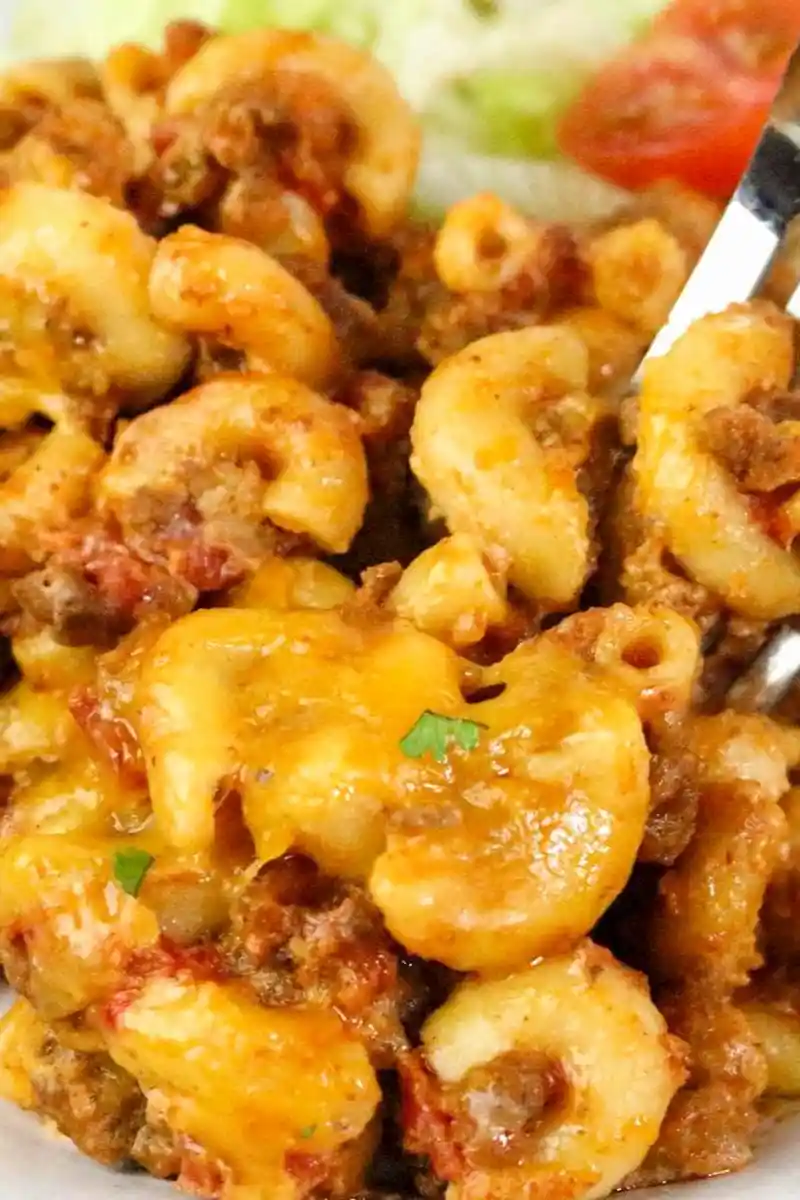
This Slow Cooker Taco Pasta is a hearty, one-pot meal perfect for busy weeknights. It blends savory ground beef with a creamy cheese sauce and tender pasta for a filling dinner.
List of ingredients
- 1 pound ground beef – browned and drained.
- 2 Tablespoons taco seasoning – one standard packet.
- 10 ounces diced tomatoes with green chilies – include the liquid from the can.
- 8 ounces tomato sauce – for a rich base.
- 1 cup beef broth – provides depth and liquid for pasta.
- 8 ounces uncooked elbow macaroni or rotini pasta – rotini holds sauce well.
- 1 cup shredded cheddar cheese – for creaminess.
- 1/2 cup sour cream – optional, for extra richness.
- Salt and pepper to taste – for final seasoning.
step-by-step instructions
- Brown the Beef: In a skillet over medium heat, cook the ground beef until browned, breaking it up as it cooks. Drain any excess grease.
- Combine Base: Transfer the cooked beef to the slow cooker and add taco seasoning, diced tomatoes, tomato sauce, and beef broth. Stir to combine.
- Slow Cook: Cover and cook on low for 3-4 hours.
- Cook Pasta: About 15 minutes before serving, stir in the uncooked pasta and cook for the remaining time until the pasta is tender.
- Add Cheese: Once the pasta is cooked, mix in shredded cheddar cheese and stir until melted and creamy.
- Final Touch: Add sour cream if desired. Season with salt and pepper to taste.
- Garnish: If desired, top with additional cheese and allow it to melt prior to serving. Garnish with chopped cilantro.
Protein Selection and Preparation
Choosing the Right Ground Beef
For the best results, use a ground beef with a fat content of 80% to 90%. This provides enough flavor without leaving the final dish overly greasy. If using a leaner meat, you may need a small amount of oil in the skillet to prevent sticking.
Handling Leaner Meat Alternatives
Ground turkey or ground chicken can be used as a lighter substitute for beef. Since these meats have less natural fat, they may brown less deeply and can dry out more easily in the slow cooker. Consider adding an extra tablespoon of oil or butter to the pot to maintain moisture.
The Importance of Draining Grease
Draining the fat after browning the beef is essential to prevent the sauce from separating. Excess grease can form an oil layer on top of the pasta, which affects the texture and taste. Use a colander or a spoon to remove as much liquid fat as possible before transferring the meat to the crockpot.
Optimizing the Sauce Base
Balancing the Tomato Acidity
The combination of diced tomatoes and tomato sauce provides the acidic base that cuts through the richness of the cheese. If the sauce tastes too tart, a pinch of sugar can balance the acidity. Ensure you use the undrained tomatoes to maximize the flavor profile.
Using Low-Sodium Broth
Taco seasoning often contains a significant amount of salt. Using a low-sodium beef broth allows you to control the salt levels more effectively. You can always add more salt at the end, but it is difficult to remove once the pasta has absorbed the liquid.
Enhancing the Taco Seasoning
While a store-bought packet is convenient, you can enhance the flavor by adding a dash of smoked paprika or cumin. This adds a deeper, earthier tone to the sauce. Ensure the seasoning is thoroughly mixed with the meat and liquids to avoid clumps of powder.
Pasta Selection and Cooking
Comparing Macaroni and Rotini
Elbow macaroni is the traditional choice for cheesy pastas due to its small size and shape. However, rotini or fusilli are excellent alternatives because their spirals trap more of the thick taco sauce. This results in a more consistent flavor in every bite.
Preventing Overcooked Noodles
Pasta cooks quickly in a slow cooker because the liquid is already at a simmer. Adding the pasta too early can lead to mushy noodles that lose their structure. Stick to the 15-20 minute window and check for al dente texture before turning off the heat.
Managing Pasta Absorption
The pasta will absorb a significant amount of the beef broth and tomato liquid as it cooks. This naturally thickens the sauce, turning it from a soup-like consistency into a creamy glaze. If you use a different pasta shape, you may need to adjust the cooking time slightly.
Texture Enhancements
Incorporating Shredded Cheese Correctly
Freshly shredded cheddar cheese melts more smoothly than pre-shredded options. Pre-shredded cheese is coated in potato starch or cellulose to prevent clumping, which can make the sauce slightly grainier. Stir the cheese in slowly on low heat to achieve a velvety finish.
The Role of Sour Cream
Adding sour cream at the very end introduces a tangy creaminess that mimics the flavor of a taco. It helps emulsify the cheese and tomato base, creating a cohesive sauce. If you prefer a tangier taste, stir in the sour cream right before serving.
Emulsifying the Sauce
To ensure the sauce is smooth and not broken, avoid overheating the dairy components. Stir the cheese and sour cream in after the heat is turned off or on the lowest setting. This keeps the fats from separating and maintains a creamy appearance.
Customizing Heat and Spice
Adding Fresh Chili Peppers
For those who prefer more heat, adding diced jalapeños or serrano peppers during the slow cooking phase is effective. The slow heat mellows the raw bite of the pepper while infusing the sauce. For maximum spice, add a few fresh slices as a garnish.
Using Hot Sauces for Depth
A few dashes of a vinegar-based hot sauce can add complexity to the dish. The acidity in the hot sauce complements the richness of the beef and cheese. Add this during the final stirring stage to maintain the brightness of the flavor.
Balancing Spice with Dairy
If the dish becomes too spicy, increase the amount of sour cream or add a dollop of Greek yogurt. The fats in the dairy bind to the capsaicin in the peppers, neutralizing the heat on the palate. This allows the other spices to shine through without overwhelming the taste buds.
Serving and Pairing Suggestions
Fresh Garnish Combinations
Topping the pasta with fresh cilantro, diced red onions, and sliced avocado adds necessary freshness. These raw ingredients provide a temperature and texture contrast to the hot, creamy pasta. A squeeze of fresh lime juice just before serving can also brighten the heavy flavors.
Complementary Side Dishes
A crisp side salad with a lime-vinaigrette dressing balances the richness of the cheesy pasta. Alternatively, serving this dish with garlic bread or warm corn tortillas allows you to scoop up any remaining sauce. Corn on the cob also pairs well with the Mexican-inspired flavors.
Ideal Texture Contrasts
Adding crushed tortilla chips on top of each bowl provides a satisfying crunch. This contrasts with the softness of the noodles and beef. For a more integrated approach, stir in a handful of chips just before serving to keep them from getting soggy.
Storage and Preservation
Refrigeration Guidelines
Store leftover taco pasta in an airtight container in the refrigerator for up to three days. Allow the dish to cool slightly before sealing the lid to prevent excessive condensation. Condensation can drip back into the pasta, making the texture too wet.
Proper Freezing Techniques
This dish can be frozen for up to three months if stored in freezer-safe containers. Let the pasta cool completely before freezing to avoid ice crystals forming inside the sauce. Leave a small amount of space at the top of the container to allow for expansion.
Safe Thawing Processes
The best way to thaw frozen taco pasta is to move it to the refrigerator 24 hours before you plan to eat it. This gradual thaw preserves the integrity of the pasta better than rapid thawing. Avoid thawing at room temperature to maintain food safety standards.
Reheating for Best Quality
Stove-top Reheating Method
Reheating on the stove over low heat is the most effective way to restore the texture. Add a small splash of beef broth or water to loosen the sauce, as the pasta continues to absorb liquid while stored. Stir frequently to prevent the bottom from burning.
Microwave Reheating Tips
When using a microwave, heat the pasta in short intervals of 60 seconds, stirring in between. This prevents hot spots and ensures the cheese remelts evenly. Adding a teaspoon of water or broth before heating helps prevent the noodles from drying out.
Restoring the Sauce Consistency
Dairy-based sauces often thicken or separate during storage. To bring back the creaminess, stir in a tablespoon of milk or a small dollop of sour cream while reheating. This re-emulsifies the cheese and creates a smooth sauce again.
Common Troubleshooting
Fixing Runny Sauce
If the sauce is too thin after adding the pasta, cook the dish with the lid off for the last 30 minutes. This allows excess moisture to evaporate through steam. Alternatively, stir in a small amount of cornstarch slurry (cornstarch mixed with water) and cook for a few more minutes.
Adjusting Underdone Pasta
If the pasta is still too firm after the initial cooking time, add a quarter cup of beef broth. Cover the pot and continue cooking on low for another 10-15 minutes. Always check the pasta every 5 minutes to avoid overcooking.
Correcting Over-Salted Dishes
If the dish is too salty, adding more unsalted vegetables or a bit more sour cream can help. A small amount of acid, such as lime juice, can also distract the palate from the saltiness. Avoid adding more cheese, as most cheeses contain sodium.
Recipe Frequently Asked Questions
Can I use a high heat setting?
Yes, you can cook this on high for approximately 2 hours instead of 4. However, the low setting is generally preferred for ground beef to ensure the flavors meld more deeply and the meat remains tender.
Which cheese melts the best?
Sharp cheddar provides the best flavor, but a blend of cheddar and Monterey Jack offers superior meltability. Monterey Jack is a softer cheese that creates a smoother, more fluid sauce when melted into the pasta.
Can I add vegetables to this?
Yes, diced bell peppers, corn, or black beans can be added during the first stage of slow cooking. These additions increase the nutritional value and add a variety of textures to the meal without altering the core flavor.
Print
Creamy Slow Cooker Taco Pasta
- Total Time: 4 hours 10 minutes
- Yield: 6 servings 1x
- Diet: General
Description
Slow Cooker Taco Pasta combines ground beef, taco seasoning, and pasta into a creamy, cheesy dish that’s easy to make and perfect for busy nights.
Ingredients
- 1 pound ground beef
- 2 Tablespoons taco seasoning
- 10 ounces diced tomatoes with green chilies (undrained)
- 8 ounces tomato sauce
- 1 cup beef broth
- 8 ounces uncooked elbow macaroni or rotini pasta
- 1 cup shredded cheddar cheese
- 1/2 cup sour cream (optional)
- Salt and pepper to taste
Instructions
- Step 1: In a skillet over medium heat, cook the ground beef until browned, breaking it up as it cooks. Drain any excess grease.
- Step 2: Transfer the cooked beef to the slow cooker and add taco seasoning, diced tomatoes, tomato sauce, and beef broth. Stir to combine.
- Step 3: Cover and cook on low for 3-4 hours.
- Step 4: About 15 minutes before serving, stir in the uncooked pasta and cook for the remaining time until the pasta is tender.
- Step 5: Once the pasta is cooked, mix in shredded cheddar cheese and stir until melted and creamy.
- Step 6: Add sour cream if desired. Season with salt and pepper to taste.
- Step 7: If desired, top with additional cheese and allow it to melt prior to serving. Garnish with chopped cilantro.
Notes
Store leftovers in an airtight container in the fridge for up to 4-5 days. You can sub out the ground beef for ground turkey or chicken if you prefer.
- Prep Time: 10 minutes
- Cook Time: 4 hours
- Category: Main Course
- Method: Slow Cooking
- Cuisine: Mexican-American
Nutrition
- Serving Size: 1 serving
- Calories: 469 kcal
- Sugar: 4 g
- Sodium: 582 mg
- Fat: 26 g
- Saturated Fat: 12 g
- Unsaturated Fat: 10 g
- Trans Fat: 1 g
- Carbohydrates: 34 g
- Fiber: 2 g
- Protein: 24 g
- Cholesterol: 84 mg