
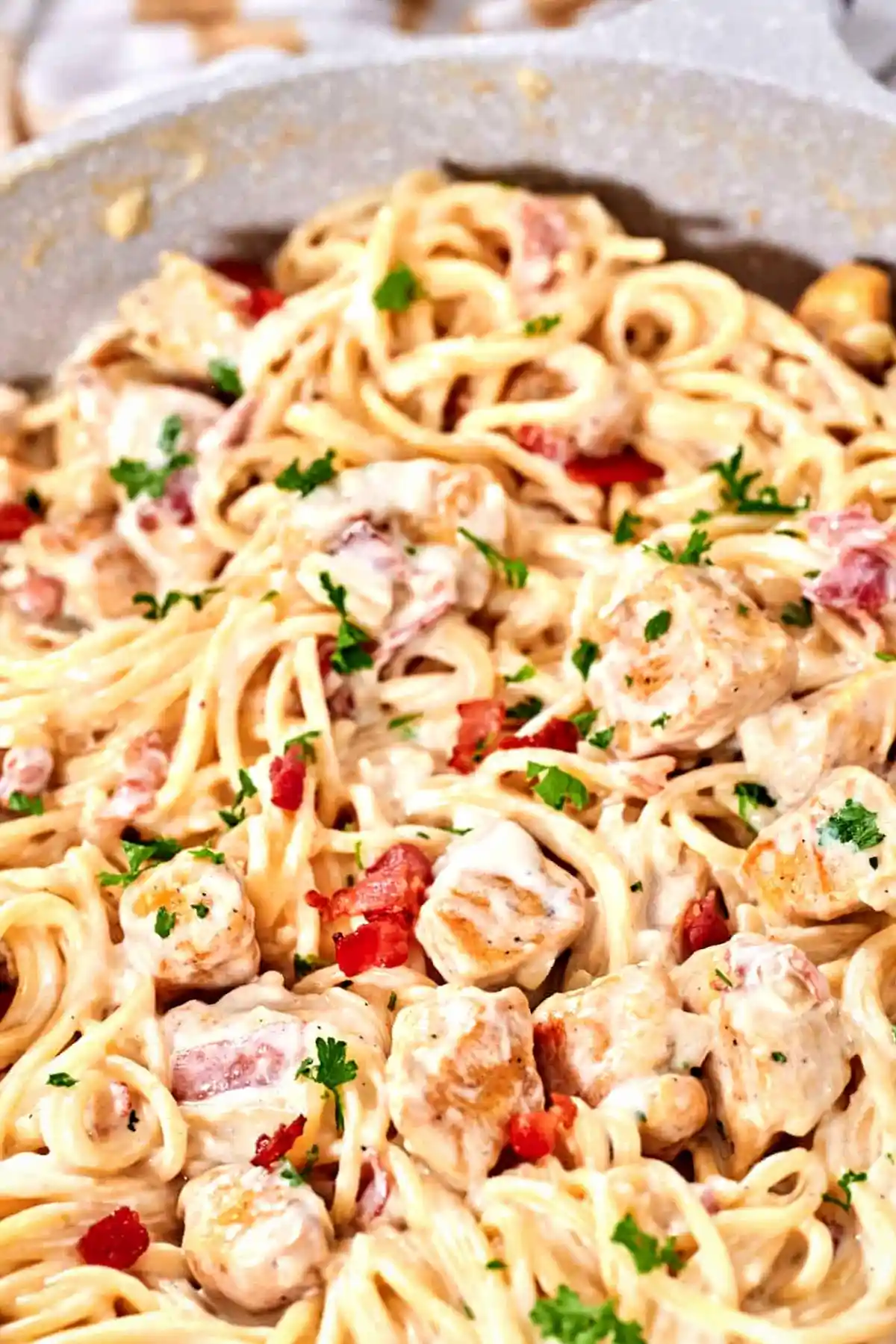
This recipe delivers a hearty pasta dish combining tender chicken and a rich, savory cream sauce. It is a quick meal that can be prepared in about 30 minutes, making it ideal for busy weeknights. Follow these steps to achieve a restaurant-quality result at home.
List of ingredients
- 12 ounces spaghetti – use a high-quality durum wheat pasta for the best texture.
- 1 pound chicken breast – cut into bite-sized pieces for even cooking.
- 1 tsp salt – divided between the chicken seasoning and the pasta water.
- ½ tsp pepper – divided between the chicken and the final seasoning.
- 1 medium onion – finely chopped to integrate into the sauce.
- 4 garlic cloves – minced finely for maximum flavor distribution.
- 6 strips turkey bacon – chopped and used as a savory, pork-free alternative.
- 1 cup Parmesan cheese – freshly grated to ensure smooth melting.
- 2 cups heavy cream – full fat is recommended for a luxurious consistency.
- 1 tsp cornstarch – used as a thickening agent for the cream.
- 2 tablespoons water – combined with cornstarch to create a slurry.
step-by-step instructions
- Brown the Turkey Bacon: Heat a large skillet over medium heat and cook the chopped turkey bacon until crispy, which usually takes about 5-7 minutes. Remove the bacon with a slotted spoon and let it drain on a paper towel-lined plate.
- Sear the Chicken: Season the chicken breast pieces with half of the salt and pepper. In the same skillet, adding oil if necessary, cook the chicken over medium heat for 5-7 minutes, turning occasionally until golden brown and cooked through. Remove the chicken and set it aside.
- Boil the Pasta: Bring a large pot of salted water to a boil and cook the spaghetti according to the package directions until al dente. Reserve about ½ cup of the starchy pasta water before draining the noodles.
- Sauté Aromatics: In the same skillet used for the proteins, sauté the chopped onion over medium heat for 3-4 minutes until translucent. Add the minced garlic and cook for 1 additional minute until fragrant.
- Prepare the Cream Base: Pour the heavy cream into the skillet and bring it to a gentle simmer.
- Thicken the Sauce: Mix the cornstarch and 2 tablespoons of water in a small bowl to form a slurry. Stir this mixture into the simmering cream and cook for 2-3 minutes until the sauce thickens slightly.
- Incorporate the Cheese: Add the grated Parmesan cheese to the sauce, stirring constantly until the cheese is completely melted and the texture is smooth.
- Combine Proteins: Stir the cooked turkey bacon and seared chicken back into the sauce, heating them through for one minute.
- Toss the Pasta: Add the cooked spaghetti to the skillet, tossing well to coat every strand in the sauce. If the consistency is too thick, stir in the reserved pasta water one tablespoon at a time.
- Final Seasoning: Taste the pasta and adjust with the remaining salt and pepper. Serve immediately with extra Parmesan cheese on top.
Optimizing Your Pasta Selection
Selecting Long Pasta Shapes
Spaghetti is the traditional choice because its long, thin shape provides a large surface area for the cream sauce to cling to. You can also use fettuccine or linguine, which are wider and can handle the weight of the chicken and turkey bacon more effectively. Avoid short pasta shapes if you want the classic carbonara aesthetic and mouthfeel.
Cooking to Al Dente Perfection
Cooking pasta al dente means leaving it slightly firm to the bite. This is crucial because the pasta will continue to cook for a minute or two once it is tossed in the hot cream sauce. If the pasta is overcooked in the pot, it will become mushy and break apart when you stir it into the skillet.
The Importance of Pasta Water
The water used to boil the pasta is rich in starch, which acts as a natural emulsifier. When you add a splash of this water to the sauce, it helps the cream and cheese bind better to the noodles. It also allows you to thin out the sauce without adding more cream, which would dilute the flavor.
Ensuring Tender and Flavorful Proteins
Searing Chicken for Maximum Flavor
To get a golden-brown crust on the chicken, ensure the skillet is hot before adding the meat. Avoid overcrowding the pan, as too many pieces of chicken will release moisture and cause the meat to steam rather than sear. This browning process adds a deep, savory flavor that complements the richness of the cream.
Preparing Crispy Turkey Bacon
Turkey bacon often contains less fat than pork bacon, so you may need a small amount of oil to prevent sticking. Cook it slowly over medium heat to render the fat and achieve a crisp texture. Draining the bacon on paper towels is essential to prevent excess grease from making the final sauce too oily.
Resting Meat Before Combining
Allowing the seared chicken to rest for a few minutes before adding it back to the sauce helps keep the juices inside the meat. If you add the chicken immediately while it is boiling hot, it may release too much liquid into the sauce. Resting ensures the chicken remains moist and tender throughout the dish.
Mastering the Creamy Sauce
Maintaining Cream Stability
Heat the heavy cream over medium heat and avoid bringing it to a rapid, rolling boil. Excessive heat can cause the cream to separate or curdle, which ruins the smooth texture of the sauce. A gentle simmer is sufficient to thicken the sauce and integrate the other ingredients.
Creating a Lump-Free Cornstarch Slurry
Always mix cornstarch with cold water before adding it to the hot sauce. Adding dry cornstarch directly to the simmering cream will create small, uncooked clumps that are impossible to remove. The slurry ensures that the thickening agent is evenly distributed for a silky finish.
Integrating Cheese Without Clumping
Use freshly grated Parmesan rather than pre-shredded cheese from a bottle. Pre-shredded cheeses are often coated in cellulose or potato starch to prevent clumping in the bag, which can stop them from melting smoothly. Freshly grated cheese melts instantly into the cream, creating a cohesive sauce.
Practical Ingredient Substitutions
Using Lighter Cream Alternatives
If you prefer a less rich sauce, you can substitute heavy cream with half-and-half. Be aware that half-and-half is thinner, so you may need to increase the cornstarch by a small amount to achieve the same thickness. Avoid using skim milk, as it lacks the fat needed to prevent the sauce from breaking.
Adapting for Gluten-Free Diets
You can use gluten-free spaghetti made from brown rice, chickpeas, or corn. Because gluten-free pastas can be fragile and overcook quickly, be extra careful to drain them slightly before the package instructions suggest. Toss them gently into the sauce to avoid breaking the noodles.
Incorporating Fresh Vegetables
Adding vegetables can increase the nutritional value and add a pop of color to the dish. Stir in a handful of baby spinach or frozen peas during the last minute of simmering the sauce. Sautéed mushrooms also pair well with the turkey bacon and chicken for a more earthy flavor profile.
Serving and Presentation Strategies
Best Garnishes for Visual Appeal
Freshly chopped parsley or chives add a bright green contrast to the white and gold colors of the pasta. A final dusting of Parmesan cheese and a crack of fresh black pepper provide a professional look. These additions also provide a fresh hit of flavor that cuts through the richness of the cream.
Suggested Side Dish Pairings
A crisp green salad with a lemon vinaigrette is the perfect accompaniment to this heavy pasta. The acidity of the dressing helps cleanse the palate between bites of the creamy sauce. Garlic bread or a toasted baguette can also be served to soak up any remaining sauce on the plate.
Plating for Temperature Retention
Warm your pasta bowls in the oven or with hot water before serving. Creamy sauces tend to thicken and set quickly as they cool, which can make the pasta feel clumpy. Serving in warm bowls keeps the sauce fluid and the chicken hot until the meal is finished.
Storing and Reheating Leftovers
Proper Refrigeration Techniques
Store leftovers in an airtight container and place them in the refrigerator as soon as they have cooled to room temperature. To maintain the best quality, keep the pasta and sauce together, but be mindful that the noodles will absorb more sauce over time. The dish will typically stay fresh for 3 to 4 days.
Freezing and Thawing Guidelines
While this dish can be frozen, the cream sauce may separate slightly upon thawing. Place the pasta in a freezer-safe bag or container for up to two months. Thaw the pasta in the refrigerator overnight before reheating to ensure an even temperature.
Restoring Sauce Creaminess
When reheating the pasta on the stove or in the microwave, add a splash of milk or cream. This replaces the moisture absorbed by the noodles and loosens the sauce back to its original consistency. Heat gently and stir frequently to avoid overheating the cream.
Common Cooking Troubleshooting
Fixing a Sauce That Is Too Thick
If the sauce becomes too thick or sticky, stir in the reserved pasta water one tablespoon at a time. The starch and water combination loosens the sauce while maintaining its glossy appearance. If you have no pasta water left, a tablespoon of milk or heavy cream will also work.
Resolving Overly Salty Pasta
Since turkey bacon and Parmesan cheese are naturally salty, it is easy to overseason the dish. If the pasta tastes too salty, add a squeeze of fresh lemon juice or a small amount of unsalted cream. The acid or fat will help balance the sodium levels and mellow the taste.
Preventing the Cream from Curdling
Curdling usually happens when the heat is too high or the cheese is added too quickly to a boiling liquid. To prevent this, keep the heat at a medium simmer and whisk the cheese in gradually. Ensure your cream is at room temperature or slightly warmed before adding it to the skillet.
Frequently Asked Questions
Can I use chicken thighs instead of breasts?
Yes, chicken thighs are a great alternative as they are more flavorful and stay juicier during the searing process. Cook them using the same method, though they may require an extra minute or two of searing depending on the size of the pieces.
What is the best way to prevent the pasta from sticking?
Prevent sticking by using a large pot with plenty of water and stirring the noodles occasionally during the first two minutes of cooking. Once drained, toss the pasta immediately into the sauce or with a small amount of oil to keep the strands separate.
Can this recipe be made in a slow cooker?
This specific recipe is designed for a skillet to achieve the sear on the chicken and the crispness of the bacon. While you could slow-cook the chicken, the cream sauce must be finished on the stove to prevent the dairy from separating or curduring over long periods of heat.
Print
Ultimate Creamy Chicken Carbonara Pasta
- Total Time: 30 minutes
- Yield: 6 servings 1x
- Diet: Non-vegetarian
Description
This Chicken Carbonara Pasta brings together tender chicken, crispy turkey bacon, and a rich, creamy Parmesan sauce for a dish that’s both comforting and indulgent. Ready in just 30 minutes, it’s perfect for busy weeknights or impressing guests.
Ingredients
- 12 ounces spaghetti
- 1 pound chicken breast, cut into bite-sized pieces
- 1 tsp salt, divided
- ½ tsp pepper, divided
- 1 medium onion, chopped
- 4 garlic cloves, minced
- 6 strips turkey bacon, chopped
- 1 cup Parmesan cheese, grated
- 2 cups heavy cream
- 1 tsp cornstarch
- 2 tablespoons water
Instructions
- Step: In a large skillet over medium heat, cook the chopped turkey bacon until crispy, about 5-7 minutes.
- Step: Remove the turkey bacon from the skillet and set it aside on a paper towel-lined plate to drain.
- Step: While the turkey bacon is cooking, season the chicken breast pieces with half of the salt and pepper.
- Step: In the same skillet used for the turkey bacon (drain excess fat if needed), add a little oil and cook the chicken over medium heat for about 5-7 minutes, turning occasionally, until fully cooked and golden brown.
- Step: Once cooked, remove the chicken from the skillet and set aside.
- Step: In a large pot, bring water to a boil. Add a pinch of salt, then cook the spaghetti according to the package instructions until al dente.
- Step: Drain the pasta and set it aside, reserving about ½ cup of the pasta cooking water.
- Step: In the same skillet used for the turkey bacon and chicken, add a little oil if needed, and sauté the chopped onion over medium heat until translucent, about 3-4 minutes.
- Step: Add the minced garlic and cook for another 1 minute, until fragrant.
- Step: Stir in the heavy cream and bring to a simmer.
- Step: Mix the cornstarch with 2 tablespoons of water in a small bowl to create a slurry. Stir this into the simmering cream to thicken the sauce. Cook for 2-3 minutes until the sauce has thickened slightly.
- Step: Add the grated Parmesan cheese to the sauce, stirring until melted and combined.
- Step: Add the cooked turkey bacon and chicken to the sauce. Stir to combine and heat through.
- Step: Add the cooked spaghetti to the skillet, tossing well to coat the pasta with the sauce. If the sauce is too thick, add a bit of the reserved pasta water until you reach your desired consistency.
- Step: Taste and adjust seasoning with more salt and pepper if needed.
- Step: Serve immediately, garnished with additional Parmesan cheese if desired.
Notes
Store leftovers in an airtight container in the fridge for 3-4 days. When reheating, add a splash of milk, cream, or reserved pasta water to restore the creamy consistency.
- Prep Time: 10 minutes
- Cook Time: 20 minutes
- Category: Main Course
- Method: Stovetop
- Cuisine: American
Nutrition
- Serving Size: 1 serving
- Calories: 728 kcal
- Sugar: 4 g
- Sodium: 913 mg
- Fat: 45 g
- Saturated Fat: 24 g
- Unsaturated Fat: 16 g
- Trans Fat: 0.04 g
- Carbohydrates: 46 g
- Fiber: 2 g
- Protein: 35 g
- Cholesterol: 164 mg