
This creamy pasta combines the tang of artichokes with the nutrients of fresh spinach. It is a fast dinner solution that provides a rich and satisfying texture in every bite.
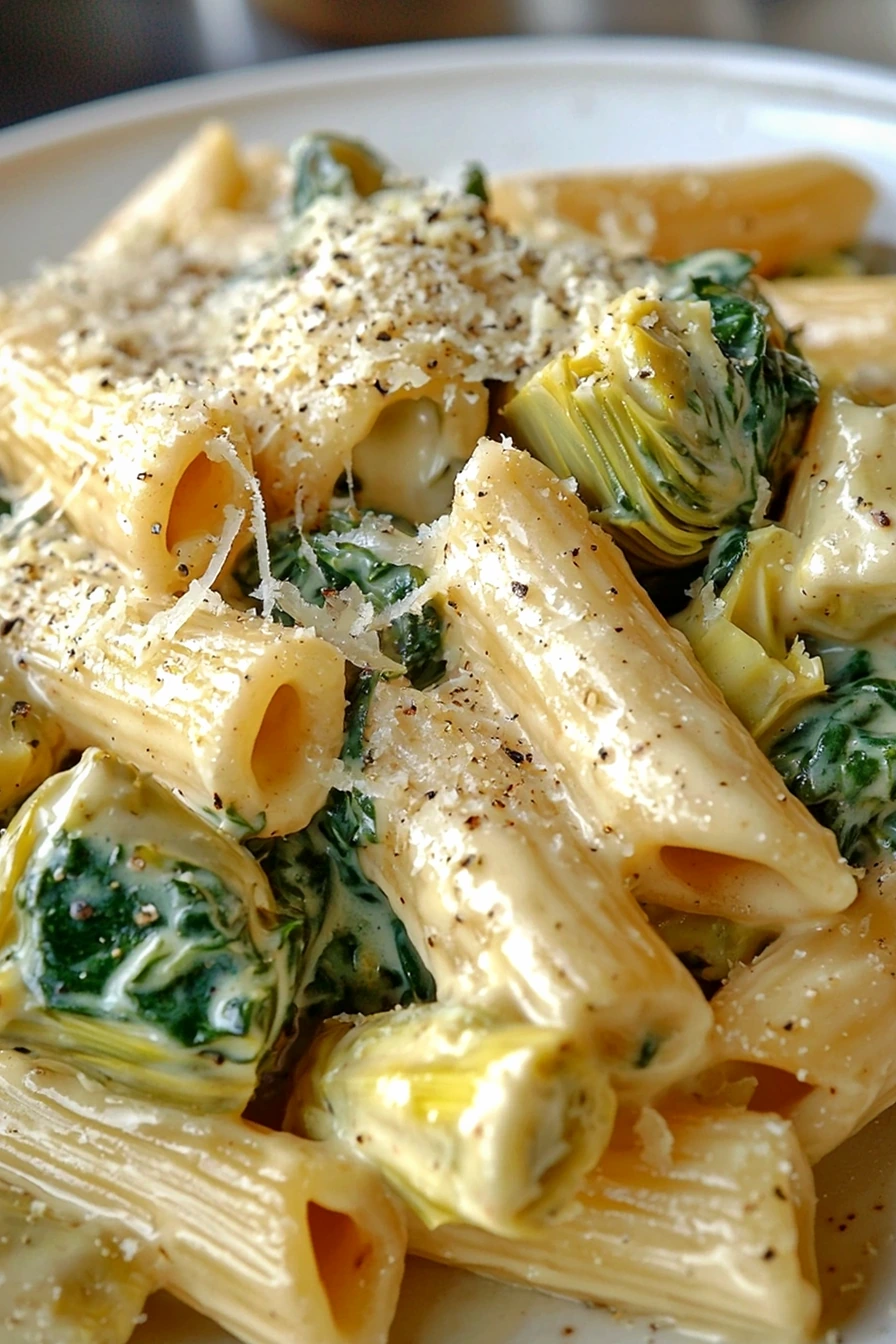
List of ingredients
- 250g pasta (penne or rigatoni) – provides a hollow structure to hold sauce.
- 2 cups fresh spinach – adds color and vitamins.
- 1 can (14 oz) artichoke hearts, drained and chopped – brings a unique tangy flavor.
- 2 garlic cloves, minced – provides a fragrant aromatic base.
- 2 tbsp olive oil – used for sautéing.
- 4 oz cream cheese – creates a thick, creamy consistency.
- 1/2 cup milk or cream – adjusts the sauce thickness.
- 1/3 cup grated Parmesan cheese – adds a salty, nutty finish.
- Salt and pepper to taste – balances the flavor profile.
- Red pepper flakes (optional) – adds a subtle heat.
step-by-step instructions
- Boil: Boil pasta in salted water until al dente. Reserve ½ cup pasta water and drain the pasta.
- Sauté: Heat olive oil in a skillet over medium heat and sauté minced garlic until fragrant.
- Vegetables: Add fresh spinach and cook until wilted, then stir in the chopped artichoke hearts.
- Cream Base: Add cream cheese and milk, stirring constantly until the mixture is smooth and melted.
- Season: Mix in grated Parmesan and season with salt, pepper, and optional red pepper flakes.
- Combine: Add the cooked pasta to the skillet and toss with the sauce, using reserved pasta water to reach the desired consistency.
- Serve: Serve immediately, topped with additional cheese and cracked black pepper.
Optimal Cooking Techniques
Maintaining Al Dente Pasta Texture
Cook pasta for one minute less than the package instructions. This ensures the noodles maintain a firm bite after being tossed in the hot sauce during the final combining step.
Emulsifying the Sauce with Pasta Water
The starch in the reserved pasta water helps the creamy sauce adhere to the noodles. Adding it gradually prevents the sauce from separating or becoming too oily.
Sautéing Garlic Without Burning
Keep the heat at a medium setting and move the garlic constantly. Burnt garlic becomes bitter and can ruin the delicate flavor of the cream and spinach.
Wilting Spinach Efficiently
Add spinach to the pan in batches if the skillet is small. Stirring frequently ensures the leaves shrink evenly without becoming mushy or overcooked.
Integrating Cream Cheese Smoothly
Use room-temperature cream cheese to ensure it melts faster into the liquid. This reduces the chance of small clumps remaining in the final sauce.
Ingredient Alternatives and Swaps
Using Reduced-Fat Dairy
Replace full-fat cream cheese with a reduced-fat version for a lighter meal. You can also swap heavy cream for skim milk or unsweetened almond milk to lower the calorie count.
Greek Yogurt Substitution
Use plain Greek yogurt instead of cream cheese for a more tart flavor profile. Stir it in at the end over low heat to prevent the yogurt from curdling.
Plant-Based Dairy Options
Use vegan cream cheese and coconut milk or soy milk for a dairy-free version. Pair this with nutritional yeast or vegan Parmesan for the salty finish.
Gluten-Free Pasta Choices
Brown rice pasta or chickpea pasta works well as a substitute for wheat noodles. Note that gluten-free pasta often releases more starch, so adjust the pasta water accordingly.
Substituting Frozen Spinach
If fresh spinach is unavailable, use thawed and squeezed-dry frozen spinach. Add it after the artichokes to avoid adding too much moisture to the pan.
Artichoke Heart Varieties
Use marinated artichoke hearts for a deeper, more briny flavor. If using marinated hearts, reduce the added salt in the recipe to maintain balance.
Creative Flavor Variations
Incorporating Lean Proteins
Mix in grilled chicken breast or sautéed shrimp for added protein. These proteins pair well with the creamy spinach and artichoke base without overpowering the dish.
Adding Sun-Dried Tomatoes
Stir in chopped sun-dried tomatoes for a sweet and tart contrast. This adds a burst of color and a concentrated tomato flavor to the creamy sauce.
Adding Citrus Zest
Grate fresh lemon zest into the sauce before serving. The acidity cuts through the richness of the cream cheese and brightens the entire flavor profile.
Enhancing Garlic Levels
Double the amount of garlic for a bolder, more pungent flavor. This is particularly effective if you are serving the dish with crusty bread for dipping.
Exploring Different Hard Cheeses
Swap Parmesan for Pecorino Romano or Asiago cheese. Pecorino offers a saltier, sharper taste than traditional Parmesan, while Asiago provides a milder, nuttier note.
Controlling the Heat Level
Increase the red pepper flakes to a full teaspoon for a spicy kick. Alternatively, add a pinch of cayenne pepper for a different type of lingering heat.
Serving and Pairing Suggestions
Pairing with Crisp Salads
Serve with a side of mixed greens tossed in a light lemon vinaigrette. The acidity of the dressing balances the creaminess of the pasta.
Serving with Garlic Toast
Pair the meal with toasted baguette slices rubbed with garlic and butter. This provides a crunchy texture that complements the soft pasta and sauce.
Selecting Non-Alcoholic Pairings
A chilled sparkling water with a slice of lemon or lime is an ideal pairing. It refreshes the palate between rich, creamy bites of the dish.
Garnish for Presentation
Top the finished dish with fresh parsley or basil leaves. Adding a final sprinkle of Parmesan cheese makes the plating look professional and appetizing.
Storage and Preservation Methods
Selecting Airtight Containers
Store leftovers in glass airtight containers to keep the sauce from drying out. This helps maintain the flavor and prevents odors from entering the food.
Refrigeration Timelines
Keep the pasta in the refrigerator for up to three to four days. Ensure the dish is cooled slightly before sealing the container to prevent condensation.
Managing Sauce Separation
Be aware that cream-based sauces can separate when chilled. This is a normal occurrence and can be corrected easily during the reheating process.
Reheating Guidelines
Stovetop Reheating Technique
Place the pasta in a skillet over low heat. Add a splash of milk or water to loosen the sauce as it warms through to restore the texture.
Microwave Reheating Method
Heat in short intervals, stirring every 30 seconds. Adding a teaspoon of water helps steam the pasta and prevents it from becoming rubbery.
Maintaining Consistency
If the sauce becomes too thick upon reheating, whisk in a tablespoon of cream or milk. This restores the original velvety texture of the sauce.
Preparation Planning
Pre-Chopping Strategy
Mince the garlic and chop the artichokes before starting the stove. Having all ingredients ready prevents the garlic from burning while you perform other tasks.
Measuring in Advance
Use measuring cups to prepare the milk and Parmesan in separate bowls. This allows for a seamless transition between cooking steps and prevents mistakes.
Sauce Preparation Ahead of Time
Prepare the sauce without the pasta and store it in the fridge. Boil the pasta and combine the two just before serving for the best texture.
Common Cooking Challenges
Fixing Excessively Thick Sauce
If the sauce is too heavy, stir in reserved pasta water one tablespoon at a time. This thins the sauce without losing the core flavor.
Correcting Over-Salting
If the dish is too salty, add a squeeze of lemon juice or a bit more cream. The acidity or fat helps neutralize the excess salt.
Avoiding Burnt Garlic
Use a medium-low heat setting if your skillet heats up quickly. Stir the garlic constantly to ensure an even golden color without scorching.
Smoothing Lumpy Cream Cheese
If the cream cheese does not melt smoothly, use a whisk instead of a spoon. This breaks up the clumps more efficiently during the melting process.
Frequently Asked Questions
Can I use frozen spinach instead of fresh?
Yes, thaw the spinach completely and squeeze out all excess water. This prevents the sauce from becoming watery and diluted.
Are canned artichokes okay to use?
Canned artichokes are a great option. Ensure you rinse them thoroughly under cold water and drain them before chopping and adding to the pan.
Can I make this pasta vegan?
Yes, use a plant-based cream cheese, unsweetened plant milk, and a vegan Parmesan alternative. The cooking process remains exactly the same.
Which pasta shape is best for this sauce?
Penne and rigatoni are ideal because their tubular shape traps the sauce inside. Fusilli or farfalle are also good alternatives for holding cream.
Can I freeze the leftover pasta?
It is not recommended to freeze cream-based pastas as the sauce often separates upon thawing. It is better to refrigerate and consume within four days.
Print
Creamy Spinach and Artichoke Pasta
- Total Time: 25 minutes
- Yield: 2–3 servings 1x
- Diet: Vegetarian
Description
Looking for the best spinach artichoke pasta recipe? This quick and easy dinner idea is rich creamy and full of flavor! It’s one of the best simple pasta dishes you can make with healthy greens and hearty artichokes for a satisfying meal any night of the week.
Ingredients
- 250g pasta (penne or rigatoni)
- 2 cups fresh spinach
- 1 can (14 oz) artichoke hearts drained and chopped
- 2 garlic cloves minced
- 2 tbsp olive oil
- 4 oz cream cheese
- 1/2 cup milk or cream
- 1/3 cup grated Parmesan cheese
- Salt and pepper to taste
- Red pepper flakes (optional)
Instructions
- Step: Boil pasta in salted water until al dente. Reserve ½ cup pasta water and drain.
- Step: In a skillet heat olive oil and sauté garlic until fragrant.
- Step: Add spinach and cook until wilted. Stir in chopped artichoke hearts.
- Step: Add cream cheese and milk. Stir until smooth and melted.
- Step: Mix in Parmesan and season with salt pepper and optional chili flakes.
- Step: Add pasta and toss with sauce. Use pasta water to adjust consistency.
- Step: Serve hot with more cheese and cracked pepper on top.
Notes
Use reduced-fat cream cheese or milk for a lighter version. Add cooked chicken for extra protein. Use frozen spinach if fresh is not available.
- Prep Time: 10 minutes
- Cook Time: 15 minutes
- Category: Dinner
- Method: Stovetop
- Cuisine: American-Italian
Nutrition
- Serving Size: 1 bowl
- Calories: 520 kcal
- Sugar: 3 g
- Sodium: 540 mg
- Fat: 28 g
- Saturated Fat: 14 g
- Unsaturated Fat: 10 g
- Trans Fat: 0 g
- Carbohydrates: 45 g
- Fiber: 4 g
- Protein: 18 g
- Cholesterol: 55 mg