
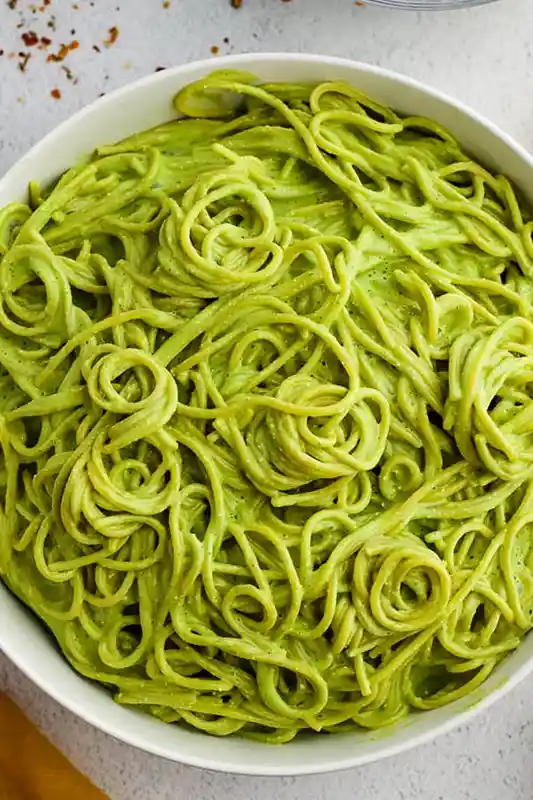
This vibrant green sauce transforms standard pasta into a nutrient-dense, restaurant-quality meal with minimal effort. By blending creamy cheeses with fresh spinach, you achieve a silky, velvet-like consistency that clings perfectly to your favorite noodles. It serves as a fantastic bridge for those looking to incorporate more vegetables into their weeknight dinner routine without sacrificing comfort or taste.
List of ingredients
- 12oz whole wheat spaghetti
- 6oz cottage cheese
- 4oz cream cheese
- 1 cup fresh spinach
- 1 teaspoon Italian seasoning
- 1 oz (1/2 cup) vegetarian-friendly parmesan cheese, plus more for garnish
- 1/2 cup reserved pasta water
- Salt to taste
step-by-step instructions
- Step: Cook the pasta according to package directions. Reserve 1 cup of pasta water before draining the pasta.
- Step: In a blender, add 1/2 cup pasta water, cream cheese, cottage cheese, spinach, Italian seasoning, and Parmesan cheese.
- Step: Blend until the sauce is smooth. You can add an additional splash of pasta water to thin the sauce, if needed.
- Step: Toss the pasta with the sauce and add additional Parmesan cheese, if desired.
Refining Your Technique
Achieving the Perfect Sauce Consistency
The secret to a truly luxurious pasta sauce lies in the ratio of fats to starch. If you find your sauce is initially too thick, do not reach for heavy cream or milk; instead, always prioritize the reserved starchy pasta water. The starches released by the noodles during the boiling process act as an emulsifier, which helps the cheese-based sauce stick to the spaghetti rather than sliding right off. If you accidentally discard your pasta water, a small amount of warm vegetable broth can be used as a backup, though the sauce may lack that signature glossy finish.
Mastering the Blending Process
For the smoothest possible sauce, ensure your cream cheese is at room temperature before you start. Cold cream cheese can leave tiny, stubborn lumps in the sauce that detract from the overall elegance of the dish. When adding the spinach, pack it firmly into your measuring cup to ensure you are getting the full volume required for the flavor profile. If you have a powerful blender, you can achieve a nearly neon-green, uniform color that makes the dish look particularly inviting when plated.
Selecting the Best Pasta Shapes
While spaghetti is the classic choice for this recipe, long, thin noodles are only the beginning. This creamy sauce works beautifully with shapes that have ridges, such as fusilli or rigatoni, which are designed to capture and hold thick sauces in their nooks and crannies. If you decide to use a thicker, shorter pasta shape, consider increasing the sauce recipe by 25 percent to ensure adequate coverage. Avoid very fine, delicate noodles like angel hair, as they can become gummy when tossed with such a heavy, cheese-rich sauce.
Customizing Your Flavor Profile
Exploring Spinach Alternatives
If you find yourself without fresh spinach, other tender leafy greens can work quite well. Baby kale or Swiss chard are excellent substitutes, provided you remove the tough stems before blending. If you use mature kale, you will need to blanch it in boiling water for one minute before blending to ensure the leaves become tender enough to emulsify smoothly. Keep in mind that these heartier greens may result in a slightly more assertive, earthy flavor compared to the mild, neutral profile of fresh baby spinach.
Enhancing the Herb Blend
Italian seasoning is a reliable workhorse, but you can elevate the sauce by incorporating fresh herbs if you have them on hand. Adding a small handful of fresh basil or flat-leaf parsley directly into the blender with the spinach provides a vibrant, peppery brightness that dries herbs simply cannot replicate. If you want to lean into a more Mediterranean flavor, try adding a tiny pinch of red pepper flakes during the blending process. This adds a subtle, warming heat that contrasts beautifully with the richness of the cream cheese and the savory notes of the Parmesan.
Boosting the Nutritional Content
This dish is already high in protein thanks to the inclusion of cottage cheese, but you can increase the nutritional density further with simple additions. Stirring in pre-cooked chickpeas or white beans at the very end adds texture and plant-based protein without interfering with the flavor. For added color and a crunch, top the finished bowl with roasted sunflower seeds or toasted pine nuts. These additions provide a delightful sensory contrast to the creamy sauce and soft noodles.
Practical Serving Strategies
Creating a Balanced Plate
Because this pasta is quite rich, it pairs best with lighter, acidic side dishes that cut through the creaminess. A simple salad of arugula dressed with a lemon-based vinaigrette is an ideal companion, as the bitterness of the greens balances the heavy, savory sauce. Roasted vegetables, such as asparagus, zucchini, or cherry tomatoes, also serve as excellent additions, either tossed directly into the pasta or served on the side. The char from roasting adds a smoky, complex layer that pairs very well with the creamy spinach base.
Handling Leftovers Effectively
If you anticipate having leftovers, store the sauce and pasta in separate containers if possible. When pasta sits in a sauce for a long period, it tends to absorb the liquid, leading to a dry result upon reheating. If you must store them together, place the mixture in a tightly sealed glass container in the refrigerator for up to four days. When you are ready to serve, add a splash of water or a tiny drizzle of olive oil before reheating to restore the original, creamy moisture levels that might have been lost during refrigeration.
Reheating Methods for Best Quality
Avoid reheating this dish on a high heat setting, as the high fat content in the cream cheese can cause the sauce to separate or become greasy. The most effective method is to use the microwave on a medium-low setting, stirring every thirty seconds to ensure even heating. Alternatively, you can reheat the pasta in a small skillet over low heat, splashing in a tablespoon or two of water to help the sauce come back together. This gentle approach maintains the integrity of the sauce and ensures the cheese remains perfectly melted and smooth.
Common Queries Addressed
Can this recipe be prepared ahead of time?
You can certainly prepare the sauce base entirely in advance. Simply blend the cheese, spinach, and seasonings as directed, then store the mixture in a jar in the refrigerator for up to two days. When you are ready for dinner, boil your pasta, reserve your water, and gently warm the sauce in a pan over low heat before tossing it with the noodles. This method is incredibly efficient for busy weeknights when you want to minimize time in the kitchen.
Is it necessary to use pasta water?
The starch in the pasta water is the secret ingredient that makes this dish successful. Standard tap water will not provide the same binding effect, and your sauce will likely end up looking thin or appearing somewhat watery. If you accidentally discard your pasta water, mixing a tiny half-teaspoon of cornstarch into a half-cup of warm water can mimic the starchy consistency needed to emulsify the fats in the sauce properly.
How can I make this sauce dairy-free?
To adapt this for a dairy-free requirement, you can swap the cheeses for high-quality, plant-based versions. Many brands now offer excellent cream cheese alternatives made from cashews or almonds that blend just as smoothly as traditional dairy. For the Parmesan, nutritional yeast is a fantastic substitute; it offers that characteristic savory, nutty flavor profile without any animal products. Ensure you select a dairy-free cream cheese that is unflavored and unsweetened for the best results in this savory application.
Can this recipe be frozen?
Freezing is not recommended for this specific sauce due to the delicate nature of the cream cheese and cottage cheese. Upon thawing, the water content in the cheeses often separates from the fats, resulting in a grainy or watery sauce that no amount of whisking can fully repair. Since the sauce takes less than five minutes to prepare using a blender, it is much better to make it fresh whenever you plan to serve it rather than attempting to freeze a batch for later use.
Print
Creamy Spinach Pasta Sauce
- Total Time: PT20M
- Yield: 2 servings 1x
- Diet: Vegetarian
Description
This deliciously creamy green sauce is perfect for pasta! It’s simple to make, packed with flavor, and a great way to add veggies to your pasta sauce.
Ingredients
- 12oz whole wheat spaghetti
- 6oz cottage cheese
- 4oz cream cheese
- 1 cup fresh spinach
- 1 teaspoon Italian seasoning
- 1 oz (1/2 cup) vegetarian-friendly parmesan cheese, plus more for garnish
- 1/2 cup reserved pasta water
- Salt to taste
Instructions
- Step: Cook the pasta according to package directions. Reserve 1 cup of pasta water before draining the pasta.
- Step: In a blender, add 1/2 cup pasta water, cream cheese, cottage cheese, spinach, Italian seasoning, and Parmesan cheese.
- Step: Blend until the sauce is smooth. You can add an additional splash of pasta water to thin the sauce, if needed.
- Step: Toss the pasta with the sauce and add additional Parmesan cheese, if desired.
Notes
Ensure you use a vegetarian-friendly Parmesan cheese made with microbial or plant-based rennet. Whole wheat pasta is recommended for added protein and fiber.
- Prep Time: PT5M
- Cook Time: PT15M
- Category: Dinner
- Method: Blended
- Cuisine: American
Nutrition
- Serving Size: 1 serving
- Calories: 520 kcal
- Sugar: 6 g
- Sodium: 780 mg
- Fat: 18 g
- Saturated Fat: 9 g
- Unsaturated Fat: 7 g
- Trans Fat: 0 g
- Carbohydrates: 68 g
- Fiber: 9 g
- Protein: 24 g
- Cholesterol: 45 mg