
This dish features golden, breaded chicken cutlets finished in a bright and tangy lemon-caper sauce. It is a fast, restaurant-style meal that can be prepared and served in approximately twenty minutes.
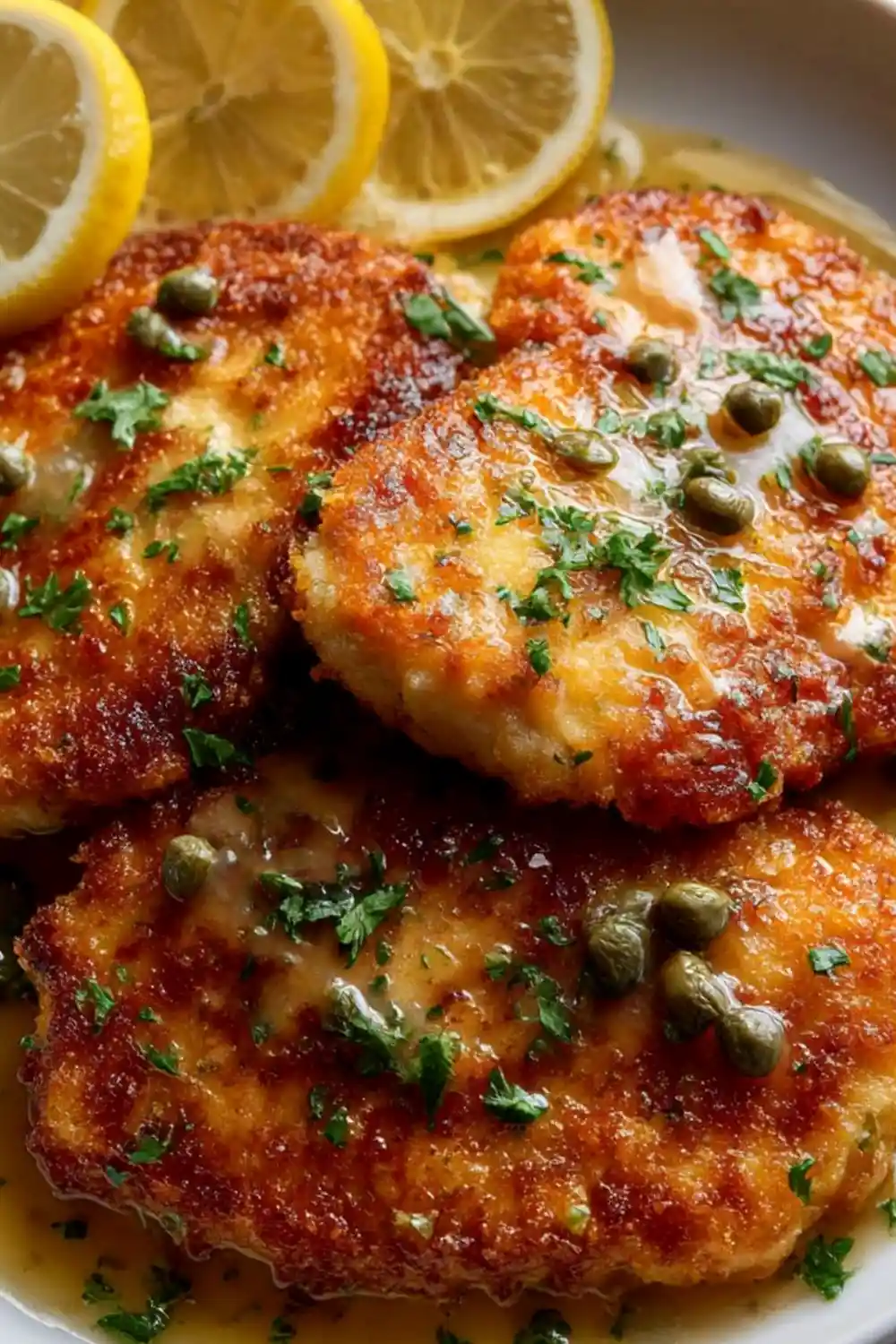
List of ingredients
- 2 large boneless, skinless chicken breasts, halved horizontally to make 4 cutlets – ensures quick and even cooking.
- Kosher salt and black pepper – used for basic seasoning of the meat.
- ½ cup all-purpose flour – creates the base for the breading.
- 1 large egg – acts as a binder for the crumbs.
- 1 tablespoon water – thins the egg wash for an even coat.
- ½ cup seasoned breadcrumbs – provides a crispy outer texture.
- 2 tablespoons olive oil – prevents butter from burning at high heat.
- 4 tablespoons unsalted butter, divided – adds richness to both the frying and the sauce.
- ½ cup chicken broth – provides a savory liquid base for deglazing.
- ¼ cup fresh lemon juice – adds necessary acidity and brightness.
- ¼ cup capers, drained – contributes a briny, salty flavor profile.
- 2 tablespoons fresh parsley, chopped – used for a fresh herbal garnish.
step-by-step instructions
- Prep the chicken: Slice each chicken breast in half horizontally, then pound to ¼-inch thickness between plastic wrap. Season both sides with salt and pepper.
- Dredge the cutlets: Set up a dredging station with flour, whisked egg and water, and seasoned breadcrumbs. Coat each cutlet in flour, dip in the egg mixture, and coat thoroughly with breadcrumbs.
- Cook the chicken: In a large skillet, heat olive oil and 2 tablespoons of butter over medium-high heat. Pan-fry the chicken for 3–4 minutes per side until golden and the internal temperature reaches 165°F, then transfer to a plate to keep warm.
- Make the sauce: Deglaze the pan with chicken broth, scraping up the browned bits from the bottom. Add lemon juice and capers, then simmer for 2 minutes. Whisk in the remaining 2 tablespoons of butter until the sauce is smooth and glossy.
- Combine and serve: Return the chicken to the pan and coat with the sauce. Sprinkle with chopped parsley and serve immediately while hot.
Protein Preparation Techniques
Using a Meat Mallet
Pounding the chicken ensures that the meat is of a uniform thickness. This prevents the thinner edges from overcooking while the center remains raw. Use a flat-sided mallet for the best results.
The Importance of Plastic Wrap
Placing the chicken between two sheets of plastic wrap or parchment paper prevents the meat from tearing. It also keeps your workspace clean and stops the mallet from sticking to the chicken. This method maintains the integrity of the cutlet.
Achieving Uniform Thickness
Aim for a consistent thickness of one-quarter inch across the entire piece. Uniformity is the key to achieving a consistent golden-brown crust. It also ensures the chicken cooks through in the specified three to four minutes per side.
The Breading Process
Efficient Dredging Station Setup
Arrange your bowls in the order of use: flour, egg wash, and breadcrumbs. This linear flow prevents cross-contamination and keeps the process organized. Ensure each bowl is wide enough to move the chicken without spilling.
The Role of the Egg Wash
Whisking water into the egg helps thin the consistency, allowing it to coat the floured chicken more evenly. This prevents the egg from becoming too thick or clumpy. A smooth egg wash ensures a seamless bond between the flour and the crumbs.
Applying Seasoned Breadcrumbs
Press the breadcrumbs firmly into the chicken with your palms to ensure they adhere well. This prevents the coating from peeling off during the frying process. Using seasoned breadcrumbs adds an extra layer of flavor to the crust.
Preventing Excess Flour Buildup
Shake off any excess flour before dipping the chicken into the egg wash. Too much flour can create a thick, doughy layer that separates from the meat. A light dusting is all that is required for the egg to stick.
Pan-Searing Mastery
Combining Olive Oil and Butter
Using olive oil alongside butter raises the smoke point of the cooking fat. Butter provides the rich flavor and browning, while the oil prevents the butter from burning too quickly. This combination allows for a higher searing temperature.
Managing Pan Temperature
Heat the oil and butter until the butter is melted and shimmering, but not smoking. If the pan is too cold, the breading will absorb the fat and become greasy. If it is too hot, the outside will burn before the inside is cooked.
Avoiding Overcrowding
Cook the cutlets in batches if your skillet is not large enough to hold them with space in between. Overcrowding drops the pan temperature and causes the chicken to steam rather than sear. This results in a pale, soggy crust.
Checking for Internal Temperature
Use an instant-read thermometer to ensure the chicken reaches 165°F. This is the safe internal temperature for poultry. Overcooking will result in dry meat, so remove the chicken as soon as it hits the target.
Sauce Development
Effective Pan Deglazing
Pour the chicken broth into the hot pan immediately after removing the chicken. Use a wooden spoon or whisk to scrape the browned bits, known as fond, from the bottom. These bits contain concentrated flavor that thickens and seasons the sauce.
Reducing the Liquid
Simmering the broth, lemon juice, and capers for a few minutes allows the flavors to concentrate. This reduction process thickens the sauce slightly before the butter is added. It ensures the sauce isn’t too watery when it hits the plate.
The Cold Butter Finish
Whisking in cold butter at the very end is a technique called monter au beurre. This creates a stable emulsion that results in a glossy, velvet-like texture. It adds a final layer of richness that balances the sharp acidity of the lemon.
Balancing Acidity
The combination of lemon juice and briny capers provides a strong acidic punch. The butter and chicken broth mellow these flavors, creating a balanced taste. Always taste the sauce before adding the chicken back to ensure the balance is correct.
Serving and Pairing
Classic Pasta Pairings
Angel hair pasta is a traditional accompaniment because its thin strands soak up the lemon-caper sauce. Toss the pasta in a bit of olive oil or butter before plating. This prevents the noodles from sticking together.
Using Garlic Mashed Potatoes
Garlic mashed potatoes provide a creamy, earthy contrast to the tangy sauce. The thickness of the potatoes helps anchor the cutlets on the plate. This pairing makes the meal feel more substantial and comforting.
Integrating Vegetable Side Dishes
Steamed green beans or roasted asparagus add a fresh, crisp element to the meal. These green vegetables cut through the richness of the butter sauce. A light squeeze of lemon over the vegetables ties them into the main dish.
Serving with Arugula Salad
A simple arugula salad with a lemon vinaigrette complements the flavors of the piccata. The peppery taste of the arugula cleanses the palate between bites of rich chicken. Keep the dressing light to avoid overpowering the main course.
Storage and Preservation
Optimal Refrigeration
Store leftover chicken and sauce in an airtight container in the refrigerator for up to three days. Keep the chicken and sauce together so the meat stays moist. Ensure the food is cooled slightly before sealing the container.
Skillet Reheating Method
To maintain the best texture, reheat the chicken in a skillet over low to medium heat. Add a small splash of water or broth to the pan to loosen the sauce. Avoid the microwave, as it can make the breading rubbery.
Freezing Guidelines
If freezing, it is best to freeze the breaded chicken before it is cooked and before the sauce is added. Store the cutlets in a freezer-safe bag for up to two months. Thaw them overnight in the fridge before pan-frying.
Preventing Soggy Breading
When storing cooked piccata, be aware that the breading will naturally soften as it absorbs the sauce. To minimize this, you can store the sauce and chicken in separate containers. Combine them only during the reheating process.
Common Troubleshooting
Fixing a Separated Sauce
If the sauce looks oily or broken, whisk in a teaspoon of cold water or a small knob of cold butter over low heat. This helps re-emulsify the fats and liquids. Constant whisking is key to bringing the sauce back together.
Dealing with Burnt Breadcrumbs
If the breading browns too quickly, lower the heat immediately. If a piece is already burnt, you can gently scrape the burnt parts off with a knife before adding it to the sauce. Adjust the oil-to-butter ratio to prevent this in future batches.
Correcting Overly Salty Capers
Capers can vary in saltiness depending on whether they are salt-cured or brined. If the sauce tastes too salty, add an extra squeeze of fresh lemon juice. The acidity helps neutralize the perception of salt on the tongue.
Frequently Asked Questions
Can I use chicken broth instead of wine?
Yes, chicken broth is an excellent substitute that provides a savory depth without the use of alcohol. It maintains the integrity of the sauce while keeping the dish accessible for all dietary preferences.
How to make it gluten-free?
Replace the all-purpose flour with a gluten-free 1-to-1 flour blend and use certified gluten-free breadcrumbs. The process remains exactly the same, and the flavor profile is preserved.
Can this be made in an air fryer?
You can air fry the breaded chicken at 400°F for about 8-10 minutes, turning halfway through. However, you must still prepare the lemon-caper sauce in a skillet on the stove to achieve the proper emulsion and flavor.
What is the difference between piccata and lemon chicken?
Chicken piccata specifically requires the addition of capers and a butter-based sauce. Generic lemon chicken may use different thickeners, such as cornstarch, and often lacks the briny element provided by capers.
Print
Crispy Lemon Caper Chicken Piccata
- Total Time: 20 minutes
- Yield: 4 servings 1x
- Diet: General
Description
This crispy, buttery chicken piccata with lemon and capers is a restaurant-style dish you can make in 20 minutes.
Ingredients
- 2 large boneless, skinless chicken breasts, halved
- Kosher salt and black pepper
- ½ cup flour
- 1 egg
- 1 tbsp water
- ½ cup seasoned breadcrumbs
- 2 tbsp olive oil
- 4 tbsp unsalted butter, divided
- ½ cup chicken broth
- ¼ cup lemon juice
- ¼ cup capers
- 2 tbsp chopped parsley
Instructions
- Prep the chicken: Slice and pound chicken to ¼-inch thickness. Season with salt and pepper.
- Dredge the cutlets: Coat in flour, dip in egg-water mixture, and coat in breadcrumbs.
- Cook the chicken: Pan-fry in olive oil and 2 tbsp butter for 3–4 minutes per side. Set aside.
- Make the sauce: Deglaze pan with chicken broth. Add lemon juice and capers. Simmer 2 minutes. Stir in remaining butter.
- Serve: Return chicken to pan, coat with sauce, and garnish with parsley. Serve hot.
Notes
To keep the breading crispy, avoid overcrowding the pan and ensure the oil is fully heated before adding the chicken.
- Prep Time: 10 minutes
- Cook Time: 10 minutes
- Category: Dinner
- Method: Pan-frying
- Cuisine: American
Nutrition
- Serving Size: 1 serving
- Calories: 480 kcal
- Sugar: 1 g
- Sodium: 720 mg
- Fat: 28 g
- Saturated Fat: 10 g
- Unsaturated Fat: 18 g
- Trans Fat: 0 g
- Carbohydrates: 22 g
- Fiber: 1 g
- Protein: 35 g
- Cholesterol: 120 mg