
This chicken alfredo casserole is a practical one-pan meal that eliminates the need to boil pasta separately. It is designed for efficiency, requiring only ten minutes of preparation before baking.
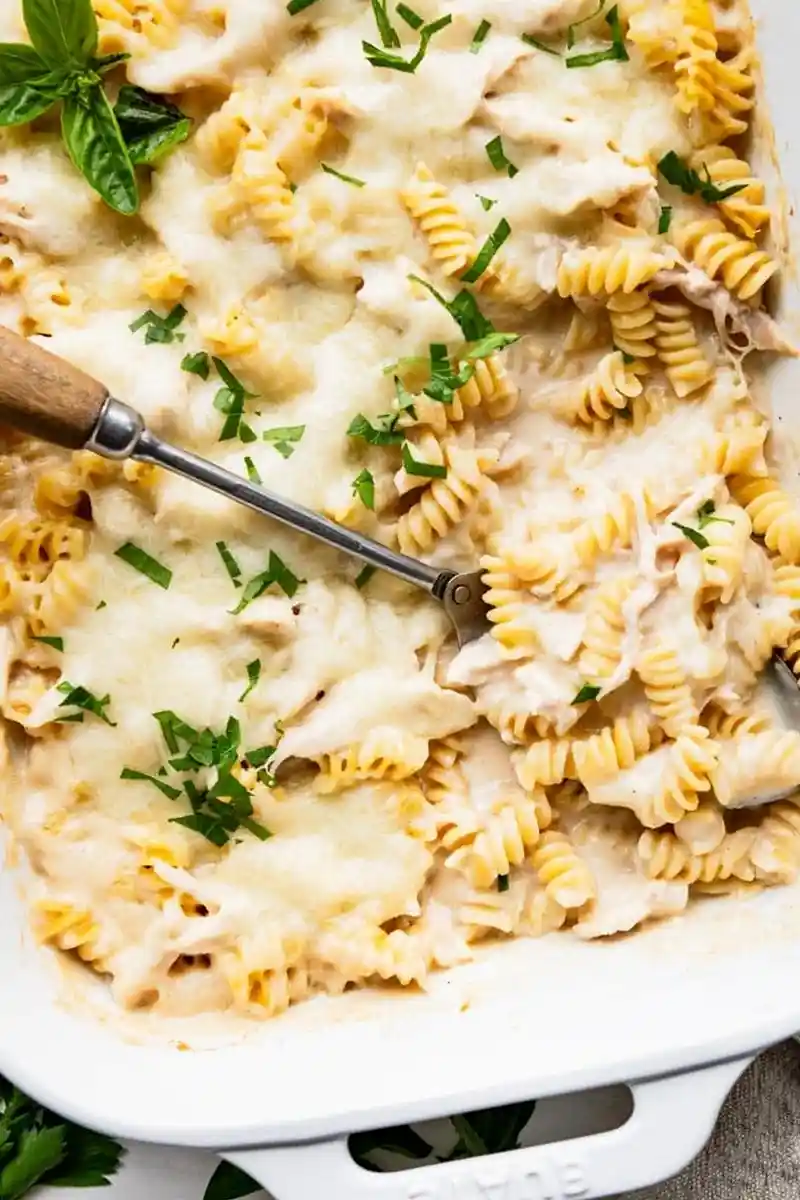
List of ingredients
- 1 (16 ounce) package uncooked rotini pasta – provides a sturdy shape that holds sauce.
- 1 (22 ounce) jar Alfredo sauce (or 1.5 15-ounce jars) – approximately 2.5 cups total for moisture.
- 3 cups chicken stock – used to hydrate the uncooked noodles during baking.
- 2 cups diced or shredded rotisserie chicken – pre-cooked chicken ensures even heating.
- 2 teaspoons minced garlic – approximately 2 large cloves for aromatic flavor.
- 2 cups shredded mozzarella cheese or Italian cheese blend – for a melted topping.
- Optional garnish: Parmesan cheese and chopped fresh herbs like basil, oregano, or parsley.
step-by-step instructions
- Prep the oven: Preheat your oven to 425°F (220°C).
- Combine components: In a large baking dish, stir together the uncooked rotini pasta, Alfredo sauce, chicken stock, cooked chicken, and minced garlic.
- First bake: Cover the dish tightly with aluminum foil and bake for 30 minutes.
- Check pasta texture: Remove the foil and stir the pasta. Ensure the noodles are almost al dente; they should still feel firm. If they are still very hard, cover the dish and bake for another 10 minutes.
- Add cheese: Sprinkle the shredded mozzarella or Italian blend evenly across the top of the mixture.
- Final bake: Bake uncovered for 5 to 10 more minutes until the cheese is melted and the pasta reaches a perfect al dente texture.
- Finish: Garnish with grated Parmesan or fresh herbs if desired before serving.
Optimizing Your Bake Results
Choosing Short-Cut Pasta Shapes
Rotini is the ideal choice for this method because its spirals trap the sauce efficiently. You can substitute penne or rigatoni if they have a similar 7-8 minute boil time. Avoid thick shells or ziti, as these require more moisture and time to soften.
Using Ceramic Dishes for Heat Distribution
Stoneware and ceramic dishes are recommended because they distribute heat evenly across the base. This prevents the bottom pasta from scorching while the top remains undercooked. Metal pans conduct heat faster, so you should check the pasta for doneness a few minutes earlier than specified.
Maintaining the Correct Sauce Ratio
The volume of Alfredo sauce is critical for the no-boil method. Using a 22-ounce jar ensures there is enough fat and cream to keep the pasta tender. If using smaller jars, ensure you reach the 2.5 cup total to avoid dry noodles.
Ensuring Proper Noodle Submersion
Before sealing the dish with foil, use a spoon to press any dry noodles beneath the liquid. Any pasta exposed to air instead of sauce and stock will remain crunchy after baking. Full submersion is necessary for uniform hydration.
Customizing Your Casserole
Integrating Fresh Vegetables
Broccoli and spinach are excellent additions for nutrition. If using fresh broccoli, steam it slightly first to ensure it softens at the same rate as the pasta. Spinach can be stirred in fresh, as it wilts quickly during the first 30 minutes of baking.
Substituting Different Protein Options
While rotisserie chicken is standard, grilled turkey or cooked shrimp also work well. If using shrimp, stir them in after the first 30-minute bake to prevent them from becoming rubbery. Ensure all substituted meats are fully cooked before adding them to the dish.
Enhancing Flavor with Dried Herbs
An Italian seasoning blend can be added during the initial mixing phase for deeper flavor. Dried oregano, thyme, and rosemary complement the creaminess of the Alfredo sauce. Add these in small quantities to avoid overpowering the garlic notes.
Making a Lighter Version
To reduce the calorie density, use reduced-fat Alfredo sauce and part-skim mozzarella. You can also increase the ratio of vegetables to pasta to lower the overall carbohydrate count. This maintains the creamy texture while decreasing the total fat content.
Storage and Reheating Guidelines
Refrigerator Storage Duration
Leftovers can be stored in an airtight container in the refrigerator for 3 to 4 days. The pasta will naturally absorb more sauce as it sits, which may make the casserole appear drier. This is a normal result of the starch in the pasta continuing to hydrate.
Best Reheating Methods
Reheat the pasta in short microwave bursts or over low heat on a stovetop. To restore the creamy consistency, stir in a small splash of chicken broth or extra Alfredo sauce before heating. This prevents the cheese from separating and the sauce from breaking.
Why Freezing is Not Recommended
Freezing this specific casserole is discouraged because the pasta texture degrades. Upon thawing and reheating, the noodles often become mushy or lose their structure. For best quality, consume the dish within the first few days after baking.
Preparing the Dish in Advance
You can assemble the ingredients in the baking dish several hours ahead of time. If refrigerating the assembled dish overnight, the pasta will begin to soften before it enters the oven. Reduce the initial baking time by a few minutes to prevent overcooking.
Serving and Pairing Ideas
Pairing with Fresh Green Salads
A light salad with a balsamic vinaigrette provides a necessary acidic contrast to the rich Alfredo sauce. Mixed greens, cherry tomatoes, and cucumber slices cleanse the palate between bites. This balance makes the meal feel less heavy.
Selecting Complementary Breads
Warm garlic bread or a crusty French baguette are traditional accompaniments. These breads are useful for scooping up any remaining sauce at the bottom of the plate. Homemade focaccia also pairs well due to its herbal notes.
Adding Roasted Vegetable Sides
Roasted asparagus or sautéed zucchini offer a textural contrast to the soft pasta. These vegetables can be roasted in the oven at the same temperature as the casserole. Prepare them on a separate sheet pan and time them to finish simultaneously.
Troubleshooting Common Issues
Fixing Hard Pasta After Baking
If the noodles are still too firm after the first 30 minutes, simply reseal the foil tightly. Return the dish to the oven for an additional 10 minutes. Variations in pasta brands can affect the absorption rate, so checking frequently is important.
Preventing Casserole Dryness
Dryness usually occurs due to a poor foil seal or insufficient liquid. Ensure the aluminum foil is crimped tightly around the edges of the pan to trap all steam. If the mixture looks dry during the stir phase, add a quarter cup of extra stock.
Managing Gluten-Free Pasta Substitutes
Gluten-free pasta can be used, but it requires closer monitoring. These noodles often transition from hard to mushy very quickly. Start checking for doneness 5 minutes earlier than the standard recipe suggests.
Correcting a Thin Sauce Consistency
If the sauce seems too liquid after the final bake, let the casserole rest for 5 to 10 minutes. During this resting period, the starches settle and the sauce thickens. Avoid overcooking the pasta in an attempt to thicken the sauce, as this will ruin the texture.
Frequently Asked Questions
Can I use raw chicken breast instead of cooked?
No, raw chicken will not cook evenly or safely within the timeframe of this no-boil pasta method. Always use pre-cooked, diced, or shredded chicken to ensure the dish is food-safe and the texture is consistent.
Can I freeze the casserole before baking it?
Yes, you can assemble the dish without the cheese, wrap it tightly, and freeze it. Thaw it completely in the refrigerator overnight before following the baking instructions. Add the cheese during the final stage as usual.
What is the best substitute for rotisserie chicken?
Grilled chicken breast or oven-roasted turkey are the best alternatives. Ensure the meat is cut into uniform bite-sized pieces so it distributes evenly throughout the pasta and sauce.
Does the type of baking dish really matter?
Yes, ceramic and glass are superior for this recipe because they prevent hot spots. Metal pans heat up more rapidly and can cause the edges of the pasta to overcook before the center is hydrated.
Print
Dump and Bake Chicken Alfredo Pasta Casserole
- Total Time: 45 minutes
- Yield: 8 servings 1x
- Diet: General
Description
You only need 10 minutes of prep and one dish for this easy chicken Alfredo bake!
Ingredients
- 1 (16 ounce) package uncooked rotini pasta
- 1 (22 ounce) jar Alfredo sauce
- 3 cups chicken stock
- 2 cups diced or shredded rotisserie chicken
- 2 teaspoons minced garlic
- 2 cups shredded mozzarella cheese or Italian cheese blend
- Optional garnish: Parmesan cheese and chopped fresh herbs
Instructions
- Step: Preheat the oven to 425°F (220°C).
- Step: In a large baking dish, stir together the uncooked pasta, Alfredo sauce, chicken stock, chicken, and garlic.
- Step: Cover tightly with aluminum foil and bake for 30 minutes.
- Step: Uncover and stir the pasta, checking that it is almost al dente.
- Step: Sprinkle the cheese over the top.
- Step: Bake, uncovered, for 5-10 more minutes, or until the cheese melts and the pasta is perfectly al dente.
- Step: Garnish with freshly grated Parmesan or chopped fresh herbs if desired.
Notes
Use rotini or similar short pasta like penne or rigatoni. Stick with cooked chicken for even results. Ceramic or glass dishes are recommended for a creamier bake. Store leftovers in the refrigerator for 3-4 days.
- Prep Time: 10 minutes
- Cook Time: 35 minutes
- Category: Dinner
- Method: Baking
- Cuisine: Italian
Nutrition
- Serving Size: 1 serving
- Calories: 499 kcal
- Sugar: 3 g
- Sodium: 1056 mg
- Fat: 21 g
- Saturated Fat: 11 g
- Unsaturated Fat: 10 g
- Trans Fat: 0 g
- Carbohydrates: 46 g
- Fiber: 2 g
- Protein: 28 g
- Cholesterol: 105 mg