
This fast-paced Chicken Pad Thai brings the bold flavors of Thailand into your kitchen in just 30 minutes. It is a balanced stir-fry featuring tender chicken, rice noodles, and fresh vegetables tossed in a tangy sweet-and-savory glaze.
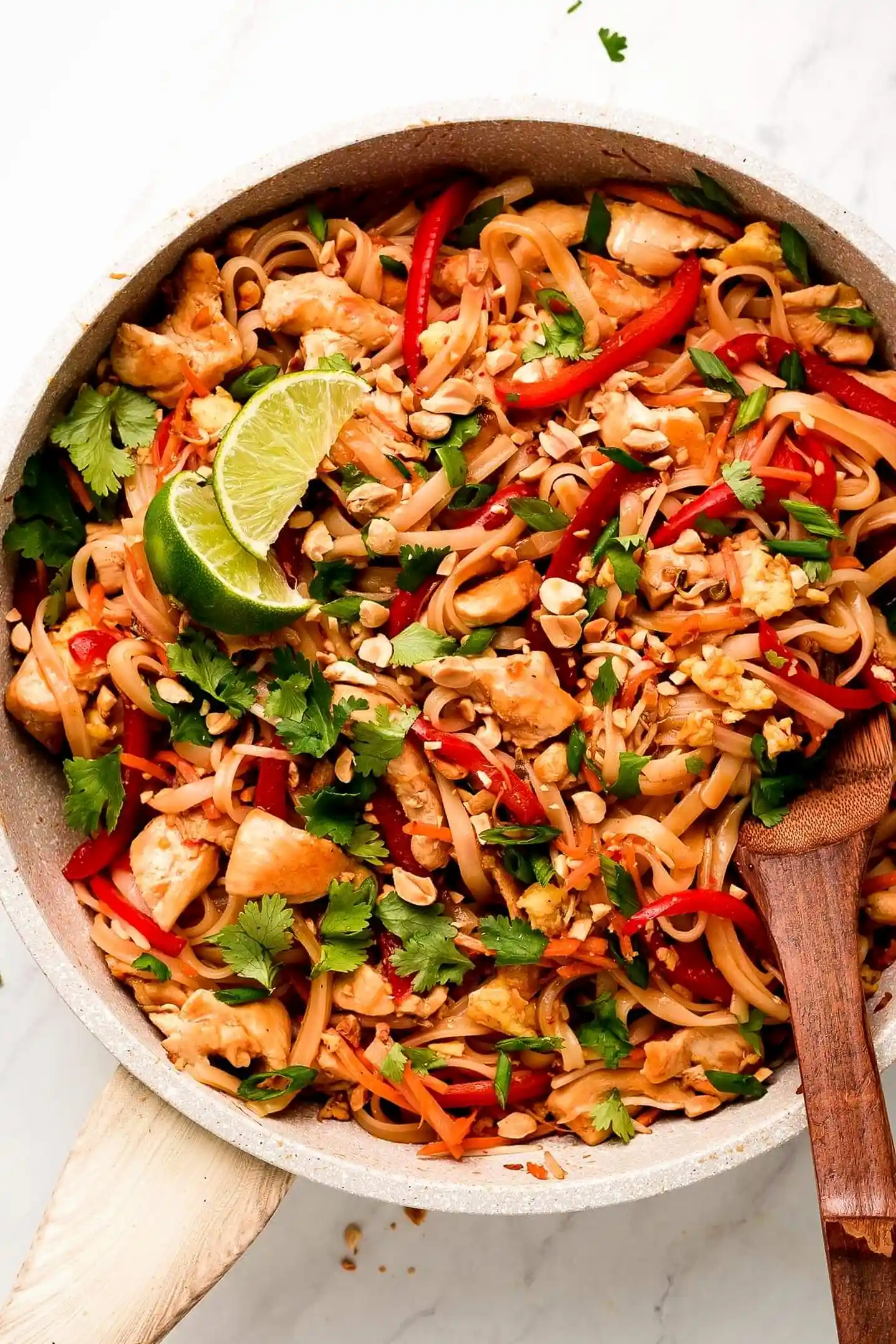
List of ingredients
- 6 tablespoons brown sugar – provides sweetness and a deep caramelized flavor.
- 6 tablespoons soy sauce – adds the essential saltiness and umami base.
- 2 tablespoons rice vinegar – offers a mild, sweet acidity to balance the sugar.
- 4 teaspoons chili garlic sauce or sriracha – adds a customizable level of spicy heat.
- Juice of 1 lime – provides a fresh citrus punch and brightness.
- 12 ounces Thai rice noodles – the traditional gluten-free base for this dish.
- 1 1/2 pounds chicken breasts, sliced into thin strips – lean protein that cooks quickly.
- 2 tablespoons oil, divided – used for searing chicken and sautéing vegetables.
- 3 eggs, beaten – adds richness and a soft texture to the stir-fry.
- 1 red bell pepper, sliced thin – adds vibrant color and a subtle sweetness.
- 2 cups bean sprouts – gives a fresh, crunchy, and slightly nutty taste.
- 1 cup matchstick carrots – adds color and nutritional value.
- 2 green onions, chopped – provides a mild, onion-like finish.
- 1/4 cup chopped peanuts – adds a crucial crunchy element and nutty flavor.
- Cilantro – fresh herb used for a fragrant garnish.
step-by-step instructions
- Whisk the Sauce: In a medium mixing bowl, combine the brown sugar, soy sauce, rice vinegar, chili garlic sauce, and lime juice. Stir until the sugar is mostly dissolved and set the sauce aside.
- Prepare the Noodles: Cook the Thai rice noodles according to the instructions on the package. Once they reach the desired tenderness, drain them well in a colander.
- Sear the Chicken: Heat 1 tablespoon of oil in a large non-stick skillet over medium-high heat. Add the sliced chicken and cook for 4 to 6 minutes until browned and cooked through, then remove from the pan and set aside.
- Scramble the Eggs: Heat 1 teaspoon of oil in the same skillet. Pour in the beaten eggs and scramble them until they are set, then remove them from the pan and set aside with the chicken.
- Sauté the Vegetables: Add 2 teaspoons of oil to the skillet and sauté the sliced red bell pepper for 1 to 2 minutes. Add the bean sprouts and matchstick carrots, cooking for another 1 to 2 minutes until slightly softened.
- Combine Ingredients: Add the drained noodles, cooked chicken, and scrambled eggs back into the skillet. Pour the prepared sauce over the mixture and toss everything together for about 1 minute until well coated.
- Garnish and Serve: Divide the noodles into bowls and top with chopped peanuts, chopped green onions, and fresh cilantro leaves.
Ways to Customize the Sauce
Substitute Rice Vinegar with Apple Cider Vinegar
If you cannot find rice vinegar, apple cider vinegar is a suitable alternative. It has a similar acidic profile, though it is slightly more pungent than rice vinegar. Use the same quantity to maintain the flavor balance.
Increase Spice with Extra Sriracha
For those who prefer a spicier dish, increase the amount of sriracha or chili garlic sauce. You can add an extra teaspoon to the sauce mix or drizzle more over the final plated dish. Start with small increments to avoid overpowering the other flavors.
Reduce Sugar for a Savory Profile
If you prefer a less sweet dish, you can reduce the brown sugar by one or two tablespoons. This allows the saltiness of the soy sauce and the acidity of the lime to stand out more. The sauce will be thinner but more savory.
Enhance Umami with a Hint of Extra Soy
For a deeper, saltier taste, add an extra tablespoon of soy sauce to the mixture. This is particularly useful if you are using a low-sodium version of soy sauce. Ensure you taste the sauce before adding it to the pan to keep the balance correct.
Alternative Vegetable Options
Add Shredded Cabbage for Extra Bulk
Shredded green or red cabbage is a wonderful addition to Pad Thai for extra crunch and volume. Sauté it along with the bell peppers to ensure it softens slightly. Cabbage absorbs the sauce well and adds a fresh garden taste.
Include Snap Peas for Freshness
Sugar snap peas provide a sweet snap and a bright green color to the dish. Add them during the last minute of sautéing the vegetables so they remain crisp. They complement the rice noodles perfectly in terms of texture.
Use Julienned Zucchini as a Carrot Substitute
If you are out of carrots, thinly sliced zucchini sticks work well as a replacement. Zucchini is softer than carrots, so add it slightly later in the sautéing process. This prevents the vegetable from becoming too mushy.
Incorporate Broccoli Florets for Texture
Small broccoli florets add a hearty bite and more nutrients to the stir-fry. Steam them slightly or sauté them first before adding the other vegetables. This ensures the thick stems are cooked through while the tops stay vibrant.
Pro Techniques for Better Texture
Prevent Noodle Overcooking
The most common mistake is overcooking the rice noodles during the initial boil. Cook them until they are just barely tender, as they will continue to cook when tossed in the hot skillet. Rinsing them with cold water immediately after draining prevents them from sticking.
Achieve a Proper Sear on the Chicken
Ensure the skillet is very hot before adding the chicken strips. Searing the meat quickly on high heat locks in the juices and creates a brown crust. Avoid crowding the pan, as too much meat will release moisture and cause the chicken to steam instead of brown.
Maintain High Pan Heat for Vegetables
Keep the heat medium-high when sautéing the vegetables to ensure they sear rather than boil in their own juices. This preserves the bright colors and the crisp texture of the bean sprouts and peppers. Quick cooking is the key to a professional stir-fry result.
Use Tongs for Gentle Mixing
When combining the noodles, chicken, and sauce, use kitchen tongs rather than a spoon. Tongs allow you to lift and fold the noodles gently without breaking them into small pieces. This keeps the long, elegant shape of the rice noodles intact.
Storage and Reheating Guide
Store in Airtight Containers
Place leftovers in an airtight container and keep them in the refrigerator for up to three days. Because rice noodles absorb liquid over time, the dish may seem dryer the next day. Keep the garnish separate until you are ready to serve.
Reheat on the Stovetop
The best way to reheat Pad Thai is in a skillet over medium heat. Add a tablespoon of water or a splash of soy sauce to loosen the noodles and restore the saucy consistency. Toss gently until heated through to avoid breaking the noodles.
Avoid Freezing the Dish
It is not recommended to freeze this recipe because the rice noodles change texture significantly. Upon thawing, the noodles often become mushy or grainy, and the vegetables lose their snap. Stick to refrigeration for the best quality.
Microwave Reheating Tips
If using a microwave, place the noodles in a microwave-safe dish and sprinkle a bit of water over the top. Cover the dish with a damp paper towel to trap steam. Heat in 30-second intervals, stirring in between, to ensure even warming without overcooking the edges.
Common Troubleshooting Tips
Fixing Clumping Noodles
If your noodles clump together after draining, toss them with a teaspoon of oil before adding them to the skillet. This creates a barrier that prevents sticking. Alternatively, a quick rinse under cold water can remove excess starch.
Thinning a Thick Sauce
If the sauce becomes too thick or sticky in the pan, add a small amount of water or extra lime juice. Stir quickly to incorporate the liquid. This will loosen the glaze and help it coat every strand of noodle evenly.
Brightening Bland Flavors
If the dish tastes flat, it usually needs more acidity. Squeeze an extra fresh lime wedge over the finished plate to brighten the salt and sugar. A pinch of extra salt or a drop of soy sauce can also help if the umami is lacking.
Timing Vegetable Additions
To avoid mushy vegetables, add them in order of their hardness. Start with the bell peppers, then add the carrots, and finally the bean sprouts. This ensures every vegetable is cooked perfectly according to its density.
Serving and Presentation Ideas
Add Fresh Lime Wedges
Always serve Pad Thai with fresh lime wedges on the side of the plate. This allows each person to adjust the acidity to their own preference. The fresh juice cuts through the richness of the peanuts and eggs.
Try Toasted Cashews
If you have a peanut allergy or simply want a different flavor, toasted cashews are a great substitute. They offer a buttery crunch that complements the sweet soy sauce. Toast them in a dry pan for two minutes for maximum flavor.
Plating for a Restaurant Look
To achieve a professional presentation, use tongs to twirl the noodles into a neat mound in the center of the plate. Arrange the green onions and cilantro on top for a pop of color. Scatter the chopped peanuts around the edges for a finished look.
Pair with Thai Cucumber Salad
Serve this main course with a side of chilled Thai cucumber salad. The cool, vinegary cucumbers provide a refreshing contrast to the warm, savory noodles. This balance makes the meal feel complete and light.
Frequently Asked Questions
Can I use whole wheat noodles?
You can use whole wheat noodles, but the texture and flavor will be different from traditional rice noodles. They are heartier and have a nuttier taste. Be sure to adjust the cooking time as whole wheat noodles often take longer to soften.
Is this recipe gluten-free?
The recipe is naturally gluten-free if you use a certified gluten-free soy sauce or tamari. Rice noodles are naturally gluten-free, making this a great option for those with gluten sensitivities. Always check the labels on your chili garlic sauce as well.
Can I use tofu instead of chicken?
Yes, extra-firm tofu is an excellent substitute for chicken. Press the tofu to remove excess water, cube it, and sear it in the skillet using the same method as the chicken. Tofu absorbs the sauce very well and provides a great texture.
What are the best rice noodles to use?
Medium-width flat rice noodles are the standard for Pad Thai. They provide the right surface area to hold onto the sauce while maintaining a chewy texture. Avoid using thin vermicelli noodles as they can overcook and break easily during the tossing phase.
Print
Easy Homemade Chicken Pad Thai
- Total Time: 30 minutes
- Yield: 6 servings 1x
- Diet: General
Description
Enjoy Thai food at home with this quick and easy, sweet and spicy Chicken Pad Thai.
Ingredients
- 6 tablespoons brown sugar
- 6 tablespoons soy sauce
- 2 tablespoons rice vinegar
- 4 teaspoons chili garlic sauce or sriracha sauce
- Juice of 1 lime
- 12 ounces Thai Rice Noodles
- 1 1/2 pounds chicken breasts, sliced into thin stripes
- 2 tablespoons oil, divided
- 3 eggs, beaten
- 1 red bell pepper, sliced thin
- 2 cups bean sprouts
- 1 cup matchstick carrots
- 2 green onions, chopped
- 1/4 cup peanuts, chopped
- Cilantro
Instructions
- Step: Mix all the sauce ingredients together in a bowl and set aside.
- Step: Cook noodles according to package.
- Step: Heat 1 tablespoon oil in a large non-stick skillet over medium-high heat and cook chicken for 4-6 minutes until done. Remove from pan and set aside. Heat 1 teaspoon oil in the skillet. Add the eggs and scramble until done. Remove from pan.
- Step: Add 2 teaspoons oil and sauté the bell pepper 1-2 minutes. Add the bean sprouts and carrots and cook for 1-2 more minutes.
- Step: Add the drained noodles, chicken, eggs, and sauce. Cook 1 more minute while tossing.
- Step: Serve garnished with cilantro and peanuts.
Notes
You can customize this dish by using whatever vegetables and protein you prefer or have on hand.
- Prep Time: 15 minutes
- Cook Time: 15 minutes
- Category: Main Course
- Method: Stir Fry
- Cuisine: Thai
Nutrition
- Serving Size: 1 serving
- Calories: 533 kcal
- Sugar: 16 g
- Sodium: 1483 mg
- Fat: 13 g
- Saturated Fat: 3 g
- Unsaturated Fat: 9 g
- Trans Fat: 1 g
- Carbohydrates: 68 g
- Fiber: 3 g
- Protein: 34 g
- Cholesterol: 154 mg