
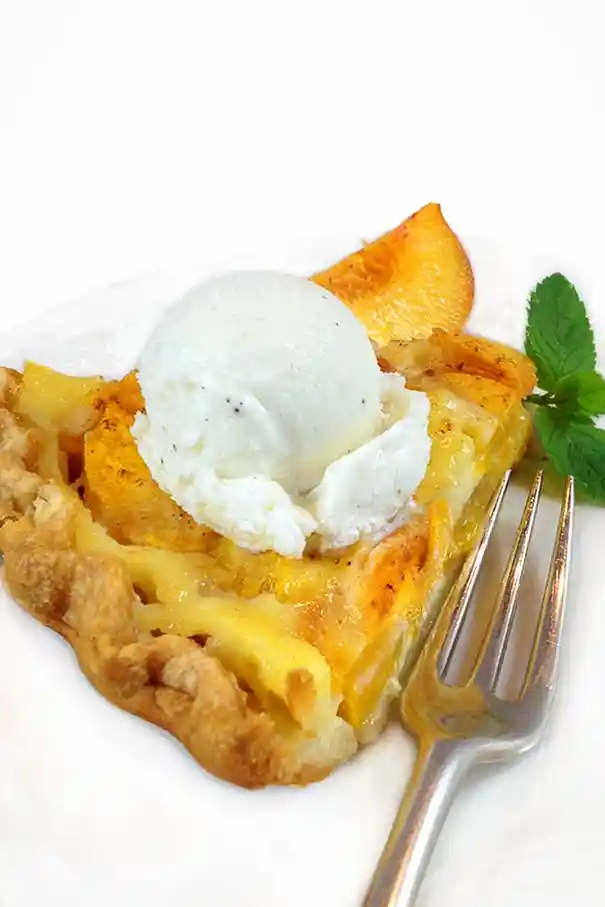
This creamy peach custard pie blends fresh summer fruit with a rich, smooth custard filling. It is a straightforward dessert that balances natural tartness with a sweet, creamy finish.
List of ingredients
- 3 cups fresh or frozen peaches – drained and thawed if frozen.
- 2/3 cup sugar – granulated white sugar for sweetness.
- 2 tablespoons flour – used to stabilize the custard.
- 1/4 teaspoon salt – enhances the overall flavor profile.
- 2 eggs – provides structure and thickness to the filling.
- 1/2 cup milk – whole milk is recommended for creaminess.
- 1/2 cup heavy cream – adds richness to the custard base.
- 1 unbaked 9 inch pie shell – prepared and ready for filling.
- Grated nutmeg – for a warm, aromatic topping.
- Sugar or turbinado sugar – optional for a crunchy top crust.
step-by-step instructions
- Prepare the Crust: Line a 9 inch pie pan with the crust. Do not prick the bottom. Bake at 450 degrees for 5 minutes, then remove and let it cool.
- Peel the Peaches: Cut a shallow X onto one end of each peach. Drop the peaches into scalding water for two minutes, then quickly transfer them to an ice water bath. Slip the skins off and slice the peaches thin.
- Arrange Fruit: Place the sliced peaches evenly across the bottom of the partially baked crust.
- Mix Dry Ingredients: In a separate bowl, combine the sugar, flour, and salt.
- Combine Custard: Whisk the eggs, milk, and heavy cream into the dry ingredients, mixing well until the batter is smooth.
- Fill the Pie: Carefully pour the custard mixture over the arranged peaches.
- Add Toppings: Sprinkle the top with grated nutmeg. Optionally, sprinkle with granulated sugar or turbinado sugar for extra texture.
- Bake: Bake at 350 degrees for 45 to 50 minutes.
- Monitor Browning: Start checking the pie at 35 minutes. Place strips of foil around the edges of the crust to prevent over-browning.
- Finish: The pie is done when the middle is set and the top is lightly golden brown.
- Serve: Allow to cool slightly. Serve warm or cold with a scoop of vanilla bean ice cream.
Pro Tips for Perfect Peach Custard
Select Ripe Peaches for Best Flavor
Choose peaches that feel slightly soft when gently pressed and have a strong, sweet aroma. Overripe fruit can become too mushy during baking, while underripe peaches may not soften sufficiently. Fresh, seasonal peaches provide the most vibrant flavor and best texture.
Preventing a Soggy Bottom Crust
Pre-baking the crust for five minutes creates a light seal that prevents the custard from soaking into the pastry. Avoid pricking the bottom of the shell, as this keeps the structure intact. This method ensures the base remains firm enough to support the heavy filling.
Achieving a Smooth Custard Texture
Whisk the eggs and dairy thoroughly to eliminate any lumps before pouring the mixture into the crust. Using a whisk helps incorporate air and ensures the flour is evenly distributed. A smooth batter results in a professional, uniform set after baking.
Customization and Substitutions
Using Frozen Peaches
Frozen peaches can be used as a convenient alternative when fresh fruit is unavailable. Ensure they are completely thawed and drained of all excess liquid before adding them to the pie. This step prevents the custard from becoming diluted or watery.
Dairy Alternatives for Richness
While heavy cream is traditional, you can replace it with full-fat coconut milk for a similar creamy consistency. Use whole milk for the best results, although 2% milk can be used in a pinch. These alternatives maintain the creamy mouthfeel essential to a custard pie.
Incorporating Alternative Spices
Grated nutmeg is the classic choice, but a pinch of ground cinnamon or ginger can add a different depth of flavor. Freshly grated nutmeg is more potent than pre-ground versions and provides a sharper aroma. Experiment with a blend of these spices to suit your preference.
Serving and Presentation Suggestions
Pairing with Vanilla Ice Cream
A scoop of cold vanilla bean ice cream provides a stark temperature contrast against a warm pie. The creaminess of the ice cream complements the tartness of the peaches. This is the most traditional way to serve this dessert.
Adding Fresh Herb Garnishes
A small sprig of fresh mint placed on top of a slice adds a pop of bright green color. The refreshing scent of mint cuts through the richness of the custard. This simple addition improves the visual presentation for guests.
Drizzling with Sweet Sauces
A drizzle of homemade caramel sauce or a reduction of peach juice adds extra decadence to the plate. This works particularly well when the pie is served chilled. The added sweetness enhances the natural flavors of the fruit.
Storage and Preservation
Refrigeration Guidelines
Store leftover peach custard pie in an airtight container in the refrigerator. This prevents the custard from absorbing other odors from the fridge. The pie will remain fresh and safe to eat for up to four days.
Freezing the Whole Pie
Wrap the cooled pie tightly in plastic wrap and place it inside a freezer-safe, airtight plastic bag. Ensure the bag is laid flat in the freezer to prevent the pie from shifting or cracking. Frozen pie can be stored for up to one month.
Thawing and Serving Frozen Pie
Allow the frozen pie to thaw slowly in the refrigerator overnight before serving. Rapid thawing can cause the custard to weep or the crust to become soggy. Once thawed, the pie can be eaten cold or gently reheated.
Reheating Instructions
Using the Oven for Reheating
Place individual slices on a baking sheet and heat in the oven at 325 degrees for a few minutes. Be careful not to overcook the slices, as the custard may separate or become rubbery. Heat only until the slice is warmed through.
Serving at Room Temperature
For those who prefer a softer texture, let the pie sit at room temperature for 30 minutes before serving. This allows the fats in the custard to soften, enhancing the flavor profile. It is a great option for a more relaxed dessert service.
Troubleshooting Common Issues
Custard Not Setting Properly
If the center of the pie remains liquid, it may be underbaked or the eggs were not whisked enough. Ensure the center has a slight jiggle but is mostly firm before removing it from the oven. Avoid opening the oven door too frequently, as this lets heat escape.
Over-browned Crust Edges
The edges of a pie crust cook faster than the center due to exposure. Using strips of aluminum foil around the perimeter halfway through the baking process prevents burning. This allows the center to finish cooking without scorching the pastry.
Dealing with a Watery Filling
Excess moisture from the peaches can lead to a watery custard layer. Slicing peaches thin and draining frozen fruit thoroughly are the best preventative measures. You can also pat the peach slices dry with a paper towel before placing them in the crust.
Choosing the Right Pie Dish
Glass vs Metal Baking Pans
Metal pans conduct heat more quickly and typically result in a crispier bottom crust. Glass pans hold heat longer, which can lead to more browning on the sides but may take slightly longer to set in the middle. Either can be used, but adjust your monitoring accordingly.
Deep Dish Considerations
If you use a deep-dish pie pan, you may need to increase the amount of custard slightly to fill the space. Otherwise, the peaches will sit low and the custard layer will be thinner than intended. Maintain a consistent ratio of fruit to custard for the best experience.
Mastering the Peach Peeling Process
The Blanching Method
Cutting a shallow X on the bottom of the peach allows the skin to release easily during blanching. Scalding water for exactly two minutes is sufficient to loosen the skin without cooking the flesh of the fruit. This preserves the fresh taste and firm texture of the peaches.
The Ice Bath Technique
Immediate immersion in an ice water bath stops the cooking process instantly. This prevents the peaches from becoming overcooked and mushy during the peeling phase. It ensures the fruit slices maintain their shape once they are baked into the pie.
Safe Slicing Tips
Use a sharp chef’s knife to create uniform, thin wedges of peach. Uniform slices ensure that the fruit cooks evenly and doesn’t sink haphazardly into the custard. Lay the slices overlapping slightly for a professional look.
Understanding the Custard Base
The Role of Eggs
Eggs act as the primary thickening agent, providing the structure necessary for the pie to be sliced cleanly. The proteins in the eggs coagulate during baking, turning the liquid mixture into a semi-solid custard. Using large eggs ensures the correct ratio of binder to liquid.
Flour as a Stabilizer
A small amount of flour prevents the custard from weeping or separating after it has cooled. It helps bind the milk and cream together, creating a smoother, more cohesive mouthfeel. This ensures the pie stays stable even when refrigerated.
Balancing the Sugar Content
The sugar in the custard balances the natural acidity and tartness of the fresh peaches. Adding turbinado sugar to the top provides a crystalline crunch that contrasts with the creamy interior. Adjust the topping sugar based on the ripeness of your peaches.
Frequently Asked Questions
Can I use canned peaches?
Yes, canned peaches can be used if fresh ones are unavailable. Ensure you drain them very well and pat them dry with paper towels to avoid excess moisture in the pie. Note that canned peaches are softer and may blend more into the custard.
Do I need to blind bake the crust?
This recipe uses a short 5-minute pre-bake rather than a full blind bake with weights. This creates a light seal on the bottom without overcooking the pastry before the filling is added. It is sufficient for this specific custard-based filling.
How long does the pie last in the fridge?
The pie remains safe and delicious for up to four days when kept in an airtight container. Always ensure the pie is completely cooled before sealing it to prevent condensation. This helps maintain the crispness of the crust.
Print
Fresh Peach Custard Pie
- Total Time: 75 minutes
- Yield: 1 pie 1x
- Diet: General
Description
Dreamy Peach Custard Pie. Fresh peaches and cream combine for an easy, delicious and summery fruit pie.
Ingredients
- 3 cups fresh or frozen peaches (drained, thawed)
- 2/3 cup sugar
- 2 tablespoons flour
- 1/4 teaspoon salt
- 2 eggs
- 1/2 cup milk
- 1/2 cup heavy cream
- 1 prepared unbaked 9″ pie shell
- Grated nutmeg
- Optional: sugar or turbinado sugar
Instructions
- Step: Line 9 inch pie pan with crust. (Do not prick.)
- Step: Bake at 450 degrees for 5 minutes. Cool.
- Step: Peel peaches by cutting a shallow X onto one end of peach.
- Step: Drop peaches into scalding water for two minutes.
- Step: Quickly transfer to ice water bath.
- Step: Slip skins off, then slice peaches thin.
- Step: Place peaches in bottom of partially baked crust.
- Step: Separately, combine dry ingredients.
- Step: Whisk eggs, milk and cream into the dry ingredients, mixing well.
- Step: Carefully pour custard mixture over peaches.
- Step: Sprinkle with nutmeg.
- Step: Optional: Sprinkle with sugar or turbinado sugar.
- Step: Bake at 350 degrees for 45 to 50 minutes.
- Step: Start checking at about 35 minutes and put strips of foil around the edges to prevent over browning.
- Step: Pie should be set in the middle and lightly golden brown when it is finished baking.
- Step: Serve warm or cold with a scoop of vanilla bean ice cream.
Notes
Store leftover pie in an airtight container in the fridge for up to 4 days. Freeze whole or by the slice wrapped in plastic wrap and stored in a freezer-safe bag for up to 1 month.
- Prep Time: 30 minutes
- Cook Time: 45 minutes
- Category: Dessert
- Method: Baking
- Cuisine: American
Nutrition
- Serving Size: 1 slice
- Calories: 324 kcal
- Sugar: 22 g
- Sodium: 250 mg
- Fat: 18 g
- Saturated Fat: 10 g
- Unsaturated Fat: 8 g
- Trans Fat: 0 g
- Carbohydrates: 30 g
- Fiber: 2 g
- Protein: 6 g
- Cholesterol: 70 mg