
This low-carb steak fajita bowl combines marinated skirt steak with roasted vegetables and seasoned cauliflower rice. It is a high-protein meal that is quick to assemble and easy to customize for various dietary needs.
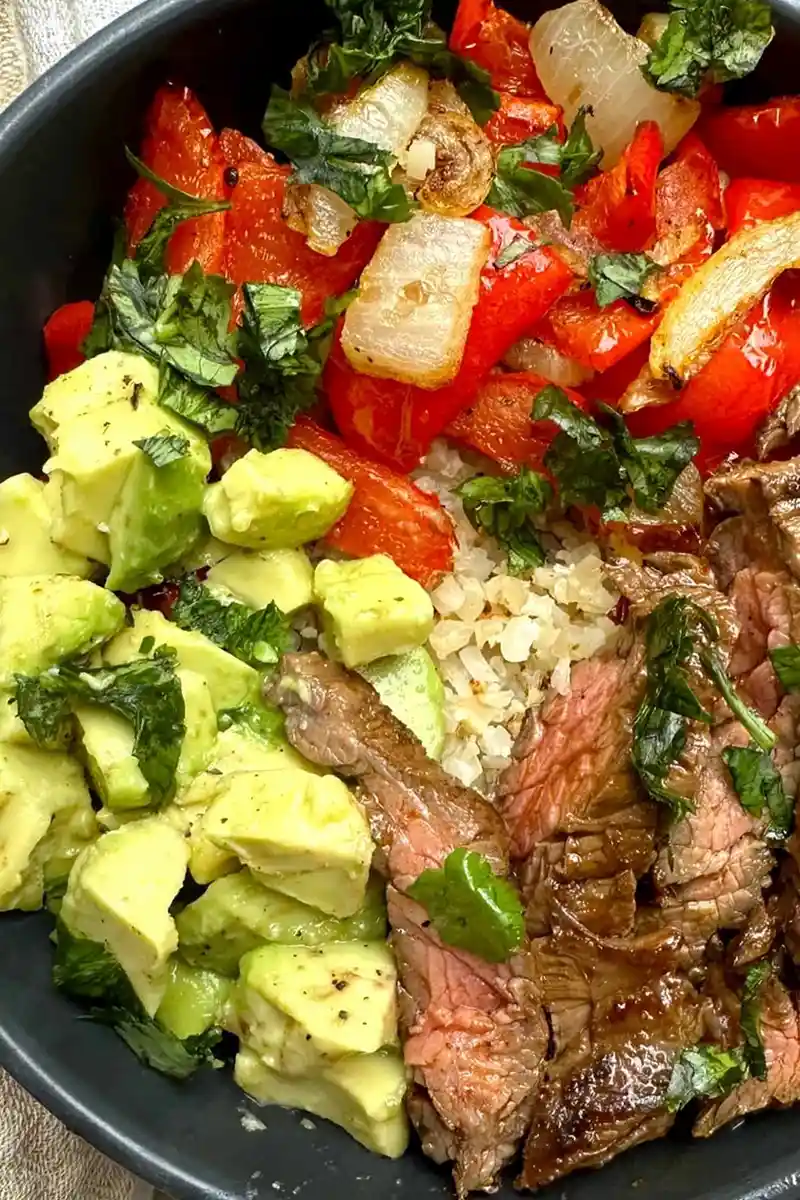
List of ingredients
- 1 pound skirt steak – ensure it is trimmed of excess silver skin.
- 2 tablespoons chipotle peppers in adobo sauce (finely chopped) with sauce – provides smoky heat.
- 2 tablespoons avocado or olive oil – used for the marinade.
- 2 tablespoons fresh lime juice – helps tenderize the meat.
- 1 1/2 teaspoons cumin – adds earthy warmth.
- Salt and pepper to season – use to taste.
- 1/2 tablespoon avocado or olive oil – for sautéing the rice.
- 1 10-ounce bag riced cauliflower – a low-carb alternative to white rice.
- Salt and pepper to season – for the cauliflower rice.
- 1/2 tablespoon avocado oil – for roasting the vegetables.
- 1 red bell pepper, sliced – provides sweetness and color.
- 1/2 yellow onion, sliced – adds savory depth.
- 1/2 teaspoon cumin – for seasoning the vegetables.
- Salt and pepper to season – for the vegetables.
step-by-step instructions
- Prepare the marinade: In a bowl or shallow dish, combine the chipotle peppers, oil, lime juice, cumin, salt, and pepper. Add the steak, toss to coat, and marinate for a few hours or overnight for best results. Remove the steak from the refrigerator 30 minutes before cooking to bring it to room temperature.
- Roast the vegetables: Preheat your oven to 400°F. Place sliced pepper and onion on a sheet pan, drizzle with 1/2 tablespoon olive oil, and sprinkle with salt, pepper, and 1/2 teaspoon cumin. Toss to coat evenly and roast for 15 to 20 minutes until tender.
- Cook the cauliflower rice: Heat 1/2 tablespoon avocado or olive oil over medium heat in a large skillet. Add riced cauliflower and stir regularly for about 15 minutes until it turns slightly golden and tender. Season with salt and pepper, then transfer to a bowl and cover to keep warm.
- Sear the steak: Shake off excess marinade from the steak. Heat one tablespoon of avocado oil in the same skillet over medium-high heat. Add the steak and cook for 2 to 3 minutes per side until it reaches medium-rare (130 degrees F). Transfer to a cutting board and let rest for 5 minutes before slicing against the grain into thin strips.
- Assemble the bowls: Evenly spoon the prepared cauliflower rice, roasted vegetables, and sliced steak into three bowls and serve immediately.
Optimizing Your Meat Selection
Using Flank Steak as an Alternative
If skirt steak is unavailable, flank steak is an excellent substitute. It is slightly leaner and thicker, which may require a slightly longer searing time. Ensure you marinate flank steak for at least 6 hours to break down the tougher muscle fibers.
Benefits of Flap Meat
Flap meat, also known as flank steak’s cousin, is often more tender than skirt steak. It has a similar flavor profile and works well in this bowl. When using flap meat, be careful not to overcook it, as it can dry out more quickly than skirt steak.
Identifying High-Quality Skirt Steak
Look for skirt steak with a deep red color and minimal white connective tissue. If the steak has a heavy silver skin, ask your butcher to trim it or remove it yourself with a sharp knife. High-quality cuts will have better fat distribution, leading to a juicier result.
Advanced Searing and Slicing Techniques
Achieving the Perfect Pan Temperature
Wait until the avocado oil is shimmering and just starting to smoke before adding the steak. This high heat creates a Maillard reaction, which produces a brown, flavorful crust on the meat. Adding steak to a cool pan will cause it to steam rather than sear, resulting in grey meat.
The Importance of the Resting Period
Allowing the steak to rest for at least 5 minutes allows the internal juices to redistribute. If you slice the meat immediately, the juices will run out onto the cutting board, leaving the steak dry. Resting ensures every bite remains moist and tender.
Slicing Against the Grain
Identify the direction of the muscle fibers, which are the long lines running through the meat. Slice perpendicular to these fibers to shorten them. This makes the meat much easier to chew and prevents the steak from feeling rubbery.
Cauliflower Rice Preparation Secrets
Preventing Mushy Texture
Do not overcrowd the skillet when cooking riced cauliflower. Use a wide pan and medium-high heat to allow moisture to evaporate quickly. Stirring occasionally rather than constantly helps the grains brown instead of steaming in their own liquid.
Enhancing Flavor Profiles
To add more depth to the cauliflower rice, you can add a pinch of garlic powder or a teaspoon of nutritional yeast. Sautéing the rice in the same pan used for the steak (after removing the steak) allows the rice to soak up the leftover pan juices.
Fresh vs Frozen Riced Cauliflower
Frozen riced cauliflower is convenient but often contains more water than fresh. If using frozen, sauté it for a few extra minutes or pat it dry with a paper towel before adding it to the oil. This prevents the rice from becoming watery in the bowl.
Marinade Science and Flavor Balance
The Role of Lime Juice in Tenderization
The citric acid in lime juice acts as a natural tenderizer by breaking down the protein structures in the steak. However, avoid marinating for more than 24 hours, as the acid can eventually break the meat down too much, giving it a mushy texture.
Adjusting the Heat with Chipotle Peppers
The heat level of this recipe depends on the chipotle peppers in adobo. For a milder flavor, use only the chopped peppers and omit some of the sauce. For more heat, add a pinch of cayenne pepper or an extra teaspoon of the adobo sauce.
Optimizing Marination Time
While a quick marinade works, overnight marination allows the flavors to penetrate deep into the meat. For those short on time, poke small holes in the steak with a fork before marinating to help the sauce enter the muscle fibers more efficiently.
Customizing Your Fajita Bowl
Incorporating Healthy Fats
Adding sliced avocado or a dollop of guacamole provides a creamy contrast to the smoky steak. The healthy fats in avocado also help the body absorb the fat-soluble vitamins found in the roasted bell peppers.
Adding Fresh Herbal Notes
Freshly chopped cilantro added at the end provides a bright, citrusy finish. If you dislike cilantro, flat-leaf parsley is a suitable alternative that adds color and freshness without the polarizing taste.
Integrating Spicy Toppings
Sliced fresh jalapenos or a drizzle of sriracha can increase the heat for those who prefer a spicier meal. For a tangy heat, a few pickled red onions add both acidity and a spicy kick to the bowl.
Low-Carb Base Alternatives
While cauliflower rice is the primary recommendation, shredded romaine lettuce or baby spinach can serve as a fresh base. For a heartier low-carb option, try riced broccoli or a mix of both cauliflower and broccoli rice.
Storage and Reheating Guide
Safe Refrigeration Timelines
Store the steak, vegetables, and cauliflower rice in airtight containers in the refrigerator for up to 4 days. It is best to store the components separately to maintain their individual textures and prevent the rice from becoming soggy.
Reheating Steak Without Overcooking
Avoid using a microwave on high power for the steak, as this often makes it tough. Instead, lightly sear the sliced steak in a pan over medium heat for 1-2 minutes or use a microwave on 50% power in short bursts.
Maintaining Vegetable Texture
Reheat the roasted peppers and onions in a skillet or oven to preserve their slight char. Microwaving them can make them overly soft and lose the roasted quality achieved during the initial cook.
Make-Ahead Strategies
Prepping Vegetables in Advance
Slice the bell peppers and onions up to two days before you plan to cook. Store them in a sealed container or bag in the fridge to save preparation time on the day of the meal.
Freezing Marinated Steak
You can place the steak and marinade in a vacuum-sealed bag and freeze it. The steak will marinate as it thaws in the refrigerator, making it a perfect option for planned meal prep.
Pre-cooking Cauliflower Rice
Cook a large batch of cauliflower rice at the start of the week. Reheat it in a pan with a small amount of oil or butter just before serving to restore its golden color and texture.
Troubleshooting Common Issues
Solving Tough or Chewy Steak
If the steak remains chewy, it may not have been sliced against the grain or it was overcooked. Ensure the internal temperature does not exceed 135 degrees F for medium-rare, and always double-check the fiber direction before cutting.
Fixing Undercooked Vegetables
If the vegetables are still too firm after 20 minutes, increase the oven temperature to 425°F for the final 5 minutes. Ensuring the vegetables are spread in a single layer on the pan prevents them from steaming.
Correcting Overly Salty Marinades
If the marinade tastes too salty, add a squeeze more lime juice or a teaspoon of honey. The acidity and sweetness will help balance the sodium levels without altering the overall flavor profile.
Frequently Asked Questions
Can I use a different type of pepper?
Yes, you can use any color of bell pepper, such as orange or green. Green peppers have a slightly more bitter, earthy taste, while red and yellow peppers are sweeter.
What is the best temperature for medium-rare steak?
The ideal internal temperature for medium-rare steak is 130-135 degrees F. Use a digital meat thermometer to ensure accuracy and prevent overcooking the meat.
Can I make this recipe in a slow cooker?
While you can slow cook the steak, it will change the texture from a sear to a shred. If using a slow cooker, cook the steak on low for 6-8 hours, then shred it and serve it over the cauliflower rice.
How do I prevent the cauliflower rice from sticking?
Ensure the skillet is fully heated before adding the oil and the cauliflower. Avoid stirring too frequently; let the rice sit for a few minutes to develop a crust before moving it.
Print
High Protein Steak Fajita Bowl
- Total Time: 30 minutes
- Yield: 3 servings 1x
- Diet: Low-carb
Description
This easy-to-make high-protein, low-carb steak fajita bowl features juicy skirt steak, riced cauliflower, and vibrant veggies for a healthy, delicious meal packed with flavor.
Ingredients
- 1 pound skirt steak
- 2 tablespoons chipotle peppers in adobo sauce (finely chopped) with sauce
- 2 tablespoons avocado or olive oil
- 2 tablespoons fresh lime juice
- 1 1/2 teaspoons cumin
- salt and pepper to season
- 1/2 tablespoon avocado or olive oil
- 1 10-ounce bag riced cauliflower
- salt and pepper to season
- 1/2 tablespoons avocado oil
- 1 red bell pepper, sliced
- 1/2 yellow onion, sliced
- 1/2 teaspoon cumin
- Salt and pepper to season
Instructions
- Step 1: In a bowl or shallow dish, combine the marinade ingredients and stir well. Add the steak, toss to coat, and marinate for a few hours or overnight (preferable). Remove from the fridge 30 minutes before cooking to bring to room temperature.
- Step 2: Preheat your oven to 400°F. Slice pepper and onion into strips and place them on a sheet pan. Drizzle with 1/2 tablespoon olive oil and sprinkle with salt, pepper and 1/2 teaspoon cumin. Toss to coat the veggies evenly. Roast the pepper and onion strips in the oven for 15 to 20 minutes, or until tender.
- Step 3: While veggies are roasting, heat 1/2 tablespoon avocado or olive oil over medium heat in a large skillet. Add riced cauliflower and stir regularly until it turns slightly golden and tender, about 15 minutes. Season with salt and pepper to taste. Place in a bowl and cover to keep warm.
- Step 4: Shake off excess marinade on steak. In the same skillet at medium-high heat, add a tablespoon avocado oil. When hot, add steak and cook for 2 to 3 minutes per side (depending on thickness), until medium rare (130 degrees F). When done, place steak on cutting board and let rest for 5 minutes. Once rested, slice the steak against the grain into thin strips.
- Step 5: Evenly spoon rice, roasted veggies and steak into 3 bowls and serve immediately.
Notes
Marinating the steak for at least one hour is recommended for best results, though overnight is preferable.
- Prep Time: 10 minutes
- Cook Time: 20 minutes
- Category: Dinner
- Method: Searing and Roasting
- Cuisine: Mexican
Nutrition
- Serving Size: 1 bowl
- Calories: 527.8 kcal
- Sugar: 5.5 g
- Sodium: 161 mg
- Fat: 33.3 g
- Saturated Fat: 8.1 g
- Unsaturated Fat: 25.2 g
- Trans Fat: 0 g
- Carbohydrates: 10.6 g
- Fiber: 3.7 g
- Protein: 48.1 g
- Cholesterol: 137.6 mg