
This hearty Italian pot roast is slow-braised to tender perfection and paired with creamy, cheesy polenta. It is an ideal choice for a comforting family dinner or a sophisticated guest meal.
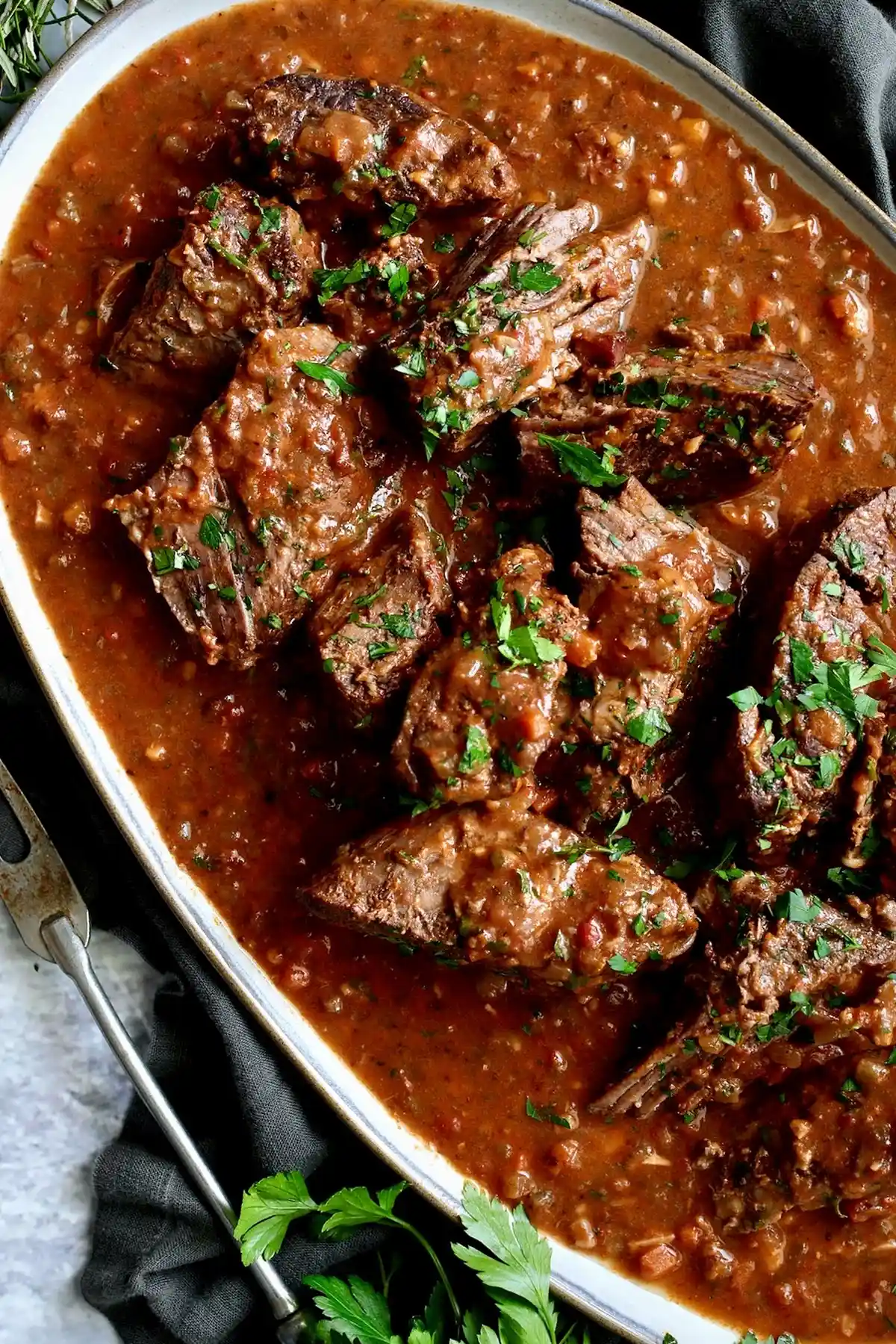
List of ingredients
- 4 tablespoons olive oil, divided – for searing meat and sautéing vegetables.
- 1 (4-pound) chuck roast, tied – ensures the meat stays together during long cooking.
- Salt and freshly ground black pepper – to taste for seasoning the beef.
- 1 large onion, finely chopped – part of the aromatic soffritto base.
- 2 large carrots, finely chopped – adds sweetness and depth to the sauce.
- 2 stalks celery, finely chopped – provides a savory aromatic foundation.
- 4 ounces turkey bacon, diced – a savory replacement for pancetta.
- 12 cloves garlic, 2 chopped and 10 sliced, divided – for intense aromatic flavor.
- 2 cups beef broth mixed with 2 tablespoons balsamic vinegar – a rich non-alcoholic substitute for red wine.
- 1 can (14.5-ounce) beef broth, with enough water added to make 2 cups – the primary braising liquid.
- 1 can (28-ounce) crushed tomatoes – use a high-quality Italian brand for best flavor.
- 1 tablespoon chopped fresh rosemary – adds an earthy, pine-like aroma.
- 2 teaspoons Italian seasoning – a blend of dried basil, oregano, and thyme.
- 2 large bay leaves – adds a subtle herbal depth to the braise.
- 2 tablespoons chopped fresh parsley – used for finishing and garnish.
- Cooking spray – to grease the polenta casserole dish.
- 3 cups chicken broth or water – the liquid base for the cornmeal.
- 1 1/2 cup half-and-half – adds creaminess to the polenta.
- 1 cup polenta or corn grits, coarse ground – avoid instant versions for better texture.
- Salt and freshly ground black pepper, to taste – for seasoning the polenta.
- 1 cup crumbled Gorgonzola cheese – provides a sharp, creamy finish.
- 2 tablespoons butter – adds richness to the final polenta texture.
step-by-step instructions
- Prepare Oven and Meat: Preheat your oven to 350 degrees F. Season the tied chuck roast liberally on all sides with salt and black pepper.
- Sear the Beef: Heat 2 tablespoons of olive oil over medium-high heat in a large Dutch oven. Brown the roast well on both sides, about 4 to 5 minutes per side, then transfer to a plate and discard the excess browning fat.
- Sauté Aromatics: Add the remaining 2 tablespoons of olive oil to the pot. Sauté the chopped onion, carrot, celery, and diced turkey bacon over medium heat for 7 to 8 minutes until the vegetables are tender.
- Add Garlic and Deglaze: Stir in the chopped garlic and cook for 10 to 15 seconds until fragrant. Pour in the beef broth and balsamic vinegar mixture, bringing it to a boil for 1 to 2 minutes.
- Combine Braising Ingredients: Return the beef and any juices to the pot. Stir in the beef broth, crushed tomatoes, sliced garlic, rosemary, Italian seasoning, and bay leaves, bringing everything to a gentle simmer over medium heat.
- Oven Braise: Place a layer of aluminum foil or parchment paper over the Dutch oven and cover with the lid to trap moisture. Bake in the oven for 2 1/2 to 3 hours, or until the meat is extremely tender.
- Prepare Polenta Base: About 45 minutes before the roast is finished, spray a 2 1/2 to 3-quart oven-safe casserole dish with cooking spray. Combine chicken broth (or water), half-and-half, coarse polenta, salt, and pepper in the dish, stirring well.
- Bake Polenta: Place the uncovered polenta dish in the oven alongside the roast for 30 minutes.
- Finish Polenta: Remove the dish briefly to stir in the Gorgonzola cheese and butter. Return it to the oven for another 10 to 15 minutes.
- Rest and Serve: Let the roast rest in the Dutch oven for 10 to 15 minutes before adding the fresh parsley. Transfer the meat to a platter and serve it over the creamy Gorgonzola polenta.
Selecting the Best Beef for Braising
Opt for a Well-Marbled Chuck Roast
Chuck roast is the ideal choice because it contains high amounts of connective tissue and fat. During the slow cooking process, this collagen breaks down into gelatin, which tenderizes the meat and thickens the sauce. This results in the characteristic melt-in-your-mouth texture of a traditional stracotto.
Use Brisket or Short Ribs as Alternatives
If chuck roast is unavailable, brisket or beef short ribs are excellent substitutes. These cuts also benefit from slow braising, as they are tougher and require low heat to become tender. Short ribs specifically add a deeper, more concentrated beef flavor to the resulting gravy.
Tie the Meat to Maintain Shape
Tying your roast with kitchen twine ensures that the meat remains compact during the long cooking process. This prevents the roast from falling apart prematurely and ensures it cooks evenly from the edges to the center. It also makes the presentation more professional when transferring the meat to a serving platter.
Optimizing the Braising Process
Develop a Deep Fond by Browning the Meat
Searing the beef at a high temperature creates a brown crust known as a fond. This chemical reaction, called the Maillard reaction, develops complex flavors that cannot be achieved through simmering alone. Be sure to pat the meat dry with paper towels before searing to avoid steaming the meat.
Sauté the Soffritto Correctly
The combination of onion, carrot, and celery is the aromatic heart of Italian cooking. Sautéing them slowly over medium heat allows the vegetables to release their natural sugars and soften without burning. Finely chopping these ingredients ensures they integrate seamlessly into the sauce, creating a velvety consistency.
Prevent Liquid Evaporation with Foil
Placing a piece of aluminum foil or parchment paper directly under the lid of the Dutch oven creates a tighter seal. This minimizes the amount of steam that escapes, keeping the meat submerged in the braising liquid. This technique is essential for achieving the maximum level of tenderness in the beef.
Perfecting the Oven-Baked Polenta
Avoid Instant Polenta for Better Texture
Using coarse-ground cornmeal instead of instant polenta provides a more authentic, rustic texture. Coarse grits require a longer cooking time, which allows them to absorb the flavors of the chicken broth and half-and-half. Instant polenta often lacks the structural integrity and depth of flavor found in traditional polenta.
Balance the Liquid to Cream Ratio
The combination of chicken broth and half-and-half provides a balance of savory and creamy notes. Using only broth can make the polenta too thin, while too much cream may overwhelm the corn flavor. The 3:1.5 ratio ensures the polenta is rich but still holds its shape when baked.
Stir Thoroughly to Avoid Lumps
Stirring the polenta mixture well before it enters the oven prevents the cornmeal from clumping. It is also critical to stir the mixture halfway through the baking process to redistribute the heat. This ensures that the bottom does not scorch while the top remains undercooked.
Cheese Variations for Polenta
Use Parmesan for a Sharper Profile
If you prefer a milder flavor than Gorgonzola, Parmesan is a fantastic substitute. It adds a salty, nutty punch that complements the richness of the beef without the strong funk of blue cheese. It is an excellent choice for guests who are less adventurous with cheese.
Substitute Gruyere for Nutty Notes
Gruyere cheese melts exceptionally well and provides a smooth, nutty flavor. This variation makes the polenta taste more like a sophisticated corn pudding. It pairs beautifully with the rosemary and garlic notes in the pot roast sauce.
Opt for White Cheddar for Mildness
A sharp white cheddar provides a familiar creamy taste that appeals to all ages. While it lacks the traditional Italian profile of Gorgonzola, it creates a comforting, gooey base for the meat. It is especially effective if you are serving the dish to children.
Sauce Consistency and Adjustments
Create a Beurre Manie to Thicken the Sauce
If the braising liquid is too thin, you can make a beurre manie by mixing softened butter and flour into a paste. Stirring this slurry into the simmering sauce allows it to thicken quickly without forming lumps. This adds a glossy finish to the gravy and helps it cling to the meat.
Reduce the Sauce on the Stovetop
Alternatively, you can remove the meat from the pot and boil the sauce uncovered on the stove. This evaporates excess water and concentrates the flavors of the tomato and beef broth. Simmer the liquid until it reaches your desired thickness before pouring it over the roast.
Manage the Fat Content
Slow-braised meats often release a significant amount of fat into the sauce. To manage this, you can skim the oil from the surface using a spoon before serving. If you make the roast a day in advance, the fat will solidify at the top in the fridge, making it very easy to lift off.
Alternative Cooking Equipment
Convert the Recipe for a Slow Cooker
To use a slow cooker, brown the meat and sauté the vegetables in a pan first, then transfer everything to the crockpot. Cook on high for 4 to 6 hours or on low for 8 to 10 hours. Since slow cookers retain more moisture, you may want to reduce the beef broth by one cup to prevent a watery sauce.
Use an Electric Pressure Cooker
In an electric pressure cooker, the cooking time is reduced to approximately 60 to 80 minutes. You must significantly reduce the amount of liquid used, as the pressure cooker does not allow for evaporation. Be sure to sauté the aromatics using the pressure cooker’s sauté function before starting the high-pressure cycle.
Long-Term Storage and Reheating
Store Leftovers in the Refrigerator
Place the roast and its sauce in an airtight container and keep it refrigerated for up to five days. The flavors often meld and improve overnight, making the second day even tastier than the first. Keep the polenta in a separate container to maintain its texture.
Freeze the Roast for Later Use
This recipe is freezer-friendly; simply cool the roast completely before placing it in a heavy-duty freezer bag. It can be stored for one to two months without losing significant quality. Thaw the meat slowly in the refrigerator for 24 hours before reheating.
Reheat Slowly in the Oven
The best way to reheat the roast is in the oven at 350 degrees F until heated through. This prevents the meat from toughening, which can happen in a microwave. Cover the dish with foil during reheating to keep the moisture locked in.
Suggested Side Dish Pairings
Serve with Thick Pappardelle Pasta
Pappardelle is a wide, ribbon-like pasta that is traditional for pairing with heavy meat sauces. The broad surface area of the noodle captures the rich stracotto sauce perfectly. Simply toss the cooked pasta with a bit of the braising liquid before plating.
Pair with Roasted Root Vegetables
Roasted parsnips, turnips, or carrots add a sweet and earthy contrast to the savory beef. Roast them with a bit of olive oil and thyme at the same temperature as the roast. This provides a nutritional balance and a variety of textures on the plate.
Complement with Braised Greens with Olives
Sautéed kale or spinach with lemon and olives provides a necessary acidic contrast to the rich polenta. The bitterness of the greens cuts through the creaminess of the cheese and the heaviness of the beef. This makes the overall meal feel lighter and more balanced.
Common Troubleshooting Solutions
Resolve Tough Meat Issues
If the meat is still tough after the allotted time, it simply needs more liquid and heat. Add another half cup of broth, seal the pot tightly, and continue braising for another 30 to 60 minutes. The connective tissue will eventually break down if given enough time.
Fix Overly Salty Sauce
If the sauce tastes too salty, you can stir in a small amount of unsalted butter or a splash of water. Adding a pinch of sugar can also help balance the saltiness by neutralizing the sharp notes. Alternatively, serving the roast over unseasoned polenta will help balance the overall flavor of the bite.
Correct Dry Polenta
If your polenta comes out too thick or dry, whisk in a little more warm chicken broth or half-and-half. Do this while the polenta is still hot so the liquid incorporates smoothly. Stir gently to avoid breaking the structure of the grits.
Frequently Asked Questions
Can I use vegetable broth instead of beef broth?
Yes, you can use vegetable broth for the liquids, although the flavor will be less intense. To compensate for the lack of beef depth, you may want to add a teaspoon of soy sauce or a bit more tomato paste to the braise.
Is it possible to make this dish without a Dutch oven?
You can use any heavy, oven-safe pot with a tight-fitting lid. If you only have a pot that isn’t oven-safe, you can sear the meat and sauté the vegetables on the stove, then transfer everything to a deep baking dish covered tightly with foil.
How can I make the polenta creamier?
For an even creamier result, increase the amount of butter or add a tablespoon of mascarpone cheese at the end. Ensure you are using a full-fat half-and-half to provide the necessary richness and mouthfeel.
Print
Italian Pot Roast (Stracotto) with Oven-Baked Gorgonzola Polenta
- Total Time: 180 minutes
- Yield: 8 servings 1x
- Diet: General
Description
This Stracotto, also known as Italian Pot Roast and oven-baked gorgonzola polenta, is the ultimate Italian comfort food. The beef is slowly braised in a rich, savory sauce, while the cheesy, hands-off polenta makes it a perfect, stress-free dish for entertaining or a cozy Sunday family dinner.
Ingredients
- 4 tablespoons olive oil (divided)
- 1 (4-pound) chuck roast (tied)
- Salt and freshly ground black pepper
- 1 large onion (finely chopped)
- 2 large carrots (finely chopped)
- 2 stalks celery (finely chopped)
- 4 ounces turkey bacon (diced)
- 12 cloves garlic (2 chopped, 10 sliced, divided)
- 2 cups beef broth mixed with 2 tablespoons balsamic vinegar
- 1 can (14.5-ounce) beef broth (with enough water added to make 2 cups)
- 1 can (28-ounce) crushed tomatoes
- 1 tablespoon chopped fresh rosemary
- 2 teaspoons Italian seasoning
- 2 large bay leaves
- 2 tablespoons chopped fresh parsley (plus more for garnish)
- Cooking spray
- 3 cups chicken broth (or water)
- 1 1/2 cup half-and-half
- 1 cup polenta or corn grits (coarse ground)
- Salt and freshly ground black pepper (to taste)
- 1 cup crumbled Gorgonzola cheese
- 2 tablespoons butter
Instructions
- Brown Beef: Preheat oven to 350 degrees F. Season the chuck roast liberally with salt and black pepper. Heat 2 tablespoons olive oil over medium-high heat in a large Dutch oven. Brown beef on both sides, approximately 4-5 minutes per side. Transfer to a plate and discard browning fat.
- Sauté Aromatics: Refresh the oil with the remaining 2 tablespoons. Add onion, carrot, celery, and turkey bacon. Reduce heat to medium and cook for 7-8 minutes until vegetables are tender.
- Add Garlic: Add chopped garlic and cook for 10-15 seconds until fragrant.
- Deglaze: Add the beef broth and balsamic vinegar mixture and bring to a boil for 1-2 minutes.
- Braise: Add the beef back to the pot with juices. Add beef broth, crushed tomatoes, sliced garlic, rosemary, Italian seasoning, and bay leaves. Bring to a gentle simmer over medium heat.
- Oven Cook: Place a layer of aluminum foil or parchment paper over the top of the Dutch oven, then the lid. Bake in the oven for 2 1/2 to 3 hours or until the meat is extremely tender.
- Prepare Polenta: Spray a 2 1/2 to 3-quart oven-safe casserole dish with cooking spray. Combine chicken broth (or water), half-and-half, polenta, salt, and black pepper in the dish and stir well.
- Bake Polenta: Place polenta in the oven uncovered alongside the roast during the last 40-45 minutes of roasting.
- Finish Polenta: After approximately 30 minutes, stir in Gorgonzola cheese and butter. Return to the oven for another 10-15 minutes.
- Serve: Let the roast rest for 10-15 minutes. Garnish with fresh parsley and serve the beef and sauce over the polenta.
Notes
To thicken the sauce: combine 2 tablespoons softened butter with 3 tablespoons all-purpose flour, mix with 3-4 tablespoons of hot braising liquid into a slurry, stir into the pot, and simmer for 4-5 minutes. This dish can be prepared 2 days ahead and is freezer-friendly for up to 2 months.
- Prep Time: 30 minutes
- Cook Time: 150 minutes
- Category: Beef
- Method: Braising
- Cuisine: Italian
Nutrition
- Serving Size: 1 serving
- Calories: 589 kcal
- Sugar: 4 g
- Sodium: 730 mg
- Fat: 36 g
- Saturated Fat: 15 g
- Unsaturated Fat: 20 g
- Trans Fat: 1 g
- Carbohydrates: 26 g
- Fiber: 2 g
- Protein: 31 g
- Cholesterol: 116 mg