
This Korean ground beef bowl is a fast, savory meal perfect for busy weeknights. It combines a sweet and salty ginger soy glaze with tender beef, ready in just 20 minutes.
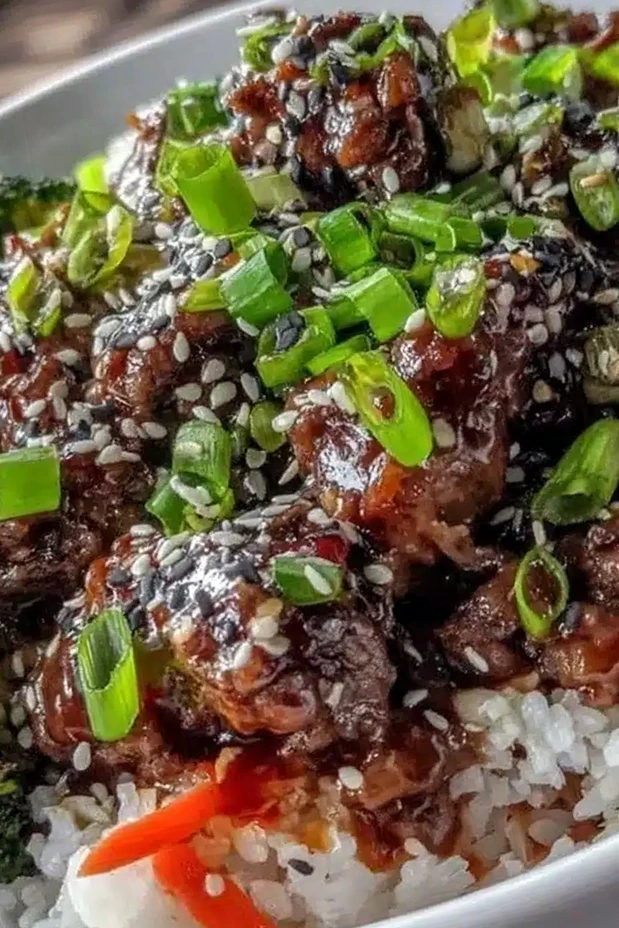
List of ingredients
- 1 pound ground beef (80/20 preferred) – provides the best flavor and juiciness.
- 1 tablespoon fresh grated ginger (about 6 grams) – adds a bright, zingy punch.
- 1/4 cup soy sauce (60 ml), regular or low-sodium – the primary salty and umami base.
- 2 tablespoons brown sugar (25 grams), light or dark – balances the salt with a rich sweetness.
- 3 cloves garlic, minced (about 1 tablespoon) – provides essential aromatic depth.
- 1 teaspoon sesame oil (5 ml) – adds a toasted, nutty finish.
- 2 green onions, thinly sliced (about 20 grams) – used for a fresh, crisp garnish.
- 4 cups cooked rice (white, brown, or jasmine; about 600 grams) – the hearty base for the beef.
- 1/4 teaspoon red pepper flakes (optional, about 0.5 grams) – adds a subtle kick of heat.
step-by-step instructions
- Prepare Ingredients: Grate the fresh ginger, mince the garlic, slice the green onions, and measure out the soy sauce and brown sugar.
- Brown the Beef: Heat a large skillet over medium-high heat. Add the ground beef and break it apart with a spatula, cooking for 6–7 minutes until browned and no pink remains.
- Sauté Aromatics: Push the beef to one side of the pan. Add a splash of oil if needed, then add the minced garlic and grated ginger, cooking for about 1 minute until fragrant while stirring constantly.
- Simmer the Sauce: Pour in the soy sauce and sprinkle the brown sugar over the beef. Stir well to coat all the meat and let it simmer for about 1 minute to meld the flavors.
- Final Seasoning: Remove the skillet from heat and stir in the sesame oil. Add red pepper flakes if desired for extra heat.
- Plating: Serve the beef mixture over warm cooked rice and garnish with sliced green onions.
Essential Kitchen Equipment
Heavy-Bottomed Stainless Steel Skillet
A 12-inch stainless steel skillet is ideal for this recipe because it distributes heat evenly. This allows the ground beef to sear properly, creating caramelized edges that enhance the overall flavor. Non-stick pans also work, though they may not brown the meat as effectively.
Microplane or Fine Grater
Using a microplane ensures the ginger is grated into a fine paste. This allows the ginger to melt seamlessly into the soy sauce glaze rather than leaving large, fibrous chunks. It ensures every bite has a consistent amount of zing.
Garlic Press
A garlic press is a practical tool for quickly mincing cloves into a consistent texture. This prevents large pieces of garlic from burning in the pan. It saves preparation time and ensures the garlic distributes evenly through the meat.
Standard Measuring Tools
Using accurate measuring cups and spoons is vital for the soy sauce and brown sugar ratio. Too much soy sauce can make the dish overly salty, while too much sugar can overpower the ginger. Precision ensures the balance of sweet and savory is maintained.
Meat Browning Strategies
Achieving the Maillard Reaction
Avoid stirring the beef constantly during the first few minutes of cooking. Let the meat sit undisturbed for a short period to develop a deep brown crust. This chemical reaction creates the complex, savory flavors essential to a high-quality beef bowl.
Managing Pan Temperature
Keep the skillet on medium-high heat to ensure the beef sears rather than steams. If the pan is too cool, the beef will release its juices and boil in its own liquid. If it is too hot, the beef may burn before it is cooked through.
Handling Leaner Beef Options
If you use 90/10 or leaner ground beef, you may need to add a tablespoon of oil to the pan. Leaner meats lack the fat necessary to prevent sticking and browning. A small amount of added fat helps mimic the texture of 80/20 beef.
Preventing Meat Clumping
Use a sturdy spatula or wooden spoon to break the beef into small, uniform crumbles. Small pieces provide more surface area for the soy ginger glaze to cling to. This ensures that every piece of meat is fully coated in sauce.
Ingredient Selection Tips
Optimal Ground Beef Fat Ratios
The 80/20 fat-to-lean ratio is recommended for the best mouthfeel and flavor. The fat carries the flavors of the garlic and ginger more effectively than lean meat. If you prefer less grease, you can drain a small amount of fat before adding the aromatics.
Fresh Ginger vs. Jarred Paste
Fresh ginger contains volatile oils that provide a sharp, clean heat. Jarred ginger paste often contains preservatives or citric acid that can alter the flavor profile. Always grate fresh ginger for the most authentic Korean-style taste.
Soy Sauce Varieties
Regular soy sauce provides a deep, salty flavor, while low-sodium options are better for those monitoring salt intake. For a richer taste, a naturally brewed soy sauce is preferable. If using low-sodium, you may need a pinch of extra salt to taste.
Brown Sugar Selection
Light brown sugar offers a mild sweetness, while dark brown sugar contains more molasses. Dark brown sugar adds a deeper, slightly caramelized note to the sauce. Both work well, but dark brown sugar complements the richness of the beef more effectively.
Recipe Variations and Substitutions
Using Ground Turkey or Chicken
Ground turkey or chicken can be used as a leaner alternative to beef. Since these meats are drier, add an extra teaspoon of sesame oil or a splash of water during the simmering stage. The ginger soy glaze works equally well with poultry proteins.
Adding a Spicy Kick
For a smoky and spicy flavor, stir in one tablespoon of gochujang (Korean chili paste) along with the soy sauce. This adds a fermented depth and a moderate level of heat. Balance the extra spice by adding a tiny bit more brown sugar.
Incorporating Fresh Vegetables
You can add shredded carrots, diced bell peppers, or frozen peas directly into the skillet. Sauté them for two minutes before adding the sauce to keep them crisp. This transforms the bowl into a more complete, nutrient-dense meal.
Gluten-Free Modifications
To make this recipe gluten-free, replace the soy sauce with tamari or coconut aminos. Tamari offers a similar salty profile, while coconut aminos are slightly sweeter and lower in sodium. All other ingredients in the recipe are naturally gluten-free.
Paleo-Friendly Sweeteners
Replace the brown sugar with honey or coconut sugar to align with paleo dietary needs. Honey adds a floral sweetness and helps the sauce thicken into a glossy glaze. Coconut sugar provides a similar caramel flavor to traditional brown sugar.
Serving and Pairing Suggestions
Rice Selection and Preparation
Jasmine rice is a popular choice for its aromatic scent and fluffy texture. Brown rice offers more fiber and a nuttier taste that pairs well with the savory beef. Ensure the rice is steaming hot when serving to help the sauce absorb better.
Fresh Garnish Ideas
Beyond green onions, try adding toasted sesame seeds for added texture and nuttiness. Freshly sliced cucumbers or pickled radishes provide a cool, acidic contrast to the rich beef. A sprinkle of fresh cilantro also adds a bright herbal note.
Complementary Side Dishes
Steamed broccoli or sautéed bok choy are excellent vegetable pairings. A simple side salad with a sesame-ginger vinaigrette complements the flavors of the main bowl. For a more filling meal, serve with a side of kimchi for probiotic benefits and spice.
Storage and Reheating Guidelines
Refrigeration Basics
Store leftover beef and rice in airtight containers in the refrigerator for up to four days. It is best to store the beef and rice in separate containers to prevent the rice from becoming mushy. The sauce may thicken during refrigeration, which is normal.
Optimal Reheating Methods
The best way to reheat is in a skillet over low heat with a tablespoon of water or vegetable broth. This reinstates the saucy consistency without drying out the meat. If using a microwave, heat in 30-second intervals and stir in between.
Freezing Considerations
Freezing this dish is not recommended because the sauce can separate and the rice may lose its texture. If you must freeze the beef, do so without the rice. Thaw it in the refrigerator overnight before reheating on the stove.
Troubleshooting Common Issues
Fixing Watery Sauce
Watery sauce usually happens if the beef was not browned sufficiently or if too much liquid was added. To thicken it, simmer the mixture for an additional two minutes without a lid. You can also stir in a tiny cornstarch slurry if a thicker glaze is desired.
Correcting Overly Salty Flavors
If the dish tastes too salty, add a teaspoon of brown sugar or a squeeze of fresh lime juice. The sweetness and acidity help neutralize the intensity of the soy sauce. Adding extra steamed vegetables to the bowl also dilutes the overall saltiness.
Preventing Bitter Aromatics
Garlic and ginger burn quickly, which creates a bitter taste. Ensure the heat is moderate and stir them constantly for the 60 seconds they are in the pan. If they begin to brown too quickly, immediately add the soy sauce to lower the pan temperature.
Balancing Excessive Sweetness
If the sauce is too sweet, add a splash of rice vinegar or an extra teaspoon of soy sauce. This introduces acidity or salt to cut through the sugar. A pinch of red pepper flakes can also distract from excess sweetness by adding heat.
Frequently Asked Questions
Can I make this without soy sauce?
Yes, you can use coconut aminos as a direct substitute. Coconut aminos are soy-free and provide a similar umami flavor, although they are slightly sweeter and less salty than traditional soy sauce.
Can I prepare this for meal prep?
Absolutely. This recipe is ideal for meal prep as the flavors often meld and improve overnight. Store the beef and rice separately and reheat them together to maintain the best texture.
Can I scale the recipe size?
Yes, you can double or halve the ingredients while keeping the ratios the same. If doubling, use a larger skillet to ensure the beef browns properly rather than steaming in a crowded pan.
What is the best way to mince garlic quickly?
A garlic press is the fastest method for achieving consistent, small pieces. If you do not have one, mince the garlic finely with a knife and then mash it with the side of the blade using a pinch of salt.
Print
Korean-Style Ground Beef Bowls with Ginger Soy Glaze
- Total Time: 20 minutes
- Yield: 6 servings 1x
- Diet: Dairy-Free
Description
A quick and flavorful Korean ground beef bowl with a savory ginger soy sauce, perfect for fast weeknight dinners. Ready in about 20 minutes, this recipe balances savory, sweet, and zingy flavors.
Ingredients
- 1 pound ground beef (80/20 preferred)
- 1 tablespoon fresh grated ginger
- 1/4 cup soy sauce
- 2 tablespoons brown sugar
- 3 cloves garlic, minced
- 1 teaspoon sesame oil
- 2 green onions, thinly sliced
- 4 cups cooked rice
- 1/4 teaspoon red pepper flakes (optional)
Instructions
- Step: Prep your ingredients first: grate the fresh ginger, mince the garlic, slice the green onions, and measure out the soy sauce and brown sugar.
- Step: Heat a large skillet over medium-high heat. Add the ground beef and break it apart with a spatula. Cook for 6–7 minutes until browned and no pink remains.
- Step: Push the beef to one side of the pan. Add a splash of oil if needed, then add the minced garlic and grated ginger. Cook for about 1 minute until fragrant, stirring constantly.
- Step: Pour in the soy sauce and sprinkle the brown sugar over the beef. Stir well to coat all the meat and let it simmer for about 1 minute to meld flavors.
- Step: Remove the skillet from heat and stir in the sesame oil. Add red pepper flakes if desired for heat.
- Step: Serve the beef mixture over warm cooked rice and garnish with sliced green onions.
Notes
Use 80/20 ground beef for best flavor and juiciness. Use fresh grated ginger for the best zing. Add sesame oil off the heat to avoid bitterness. If sauce is too thick, add a tablespoon of reserved rice cooking water. For gluten-free, substitute soy sauce with tamari.
- Prep Time: 10 minutes
- Cook Time: 10 minutes
- Category: Main Course
- Method: Stovetop
- Cuisine: Korean
Nutrition
- Serving Size: 1 bowl
- Calories: 320 kcal
- Sugar: 6 g
- Sodium: 700 mg
- Fat: 15 g
- Saturated Fat: 5 g
- Unsaturated Fat: 10 g
- Trans Fat: 0 g
- Carbohydrates: 20 g
- Fiber: 1.5 g
- Protein: 25 g
- Cholesterol: 80 mg