
These hearty chicken pot pies are designed specifically for the freezer, utilizing a double-thick crust to maintain a crisp texture. They provide a convenient, homemade comfort meal that can be baked directly from frozen whenever you need a quick dinner.
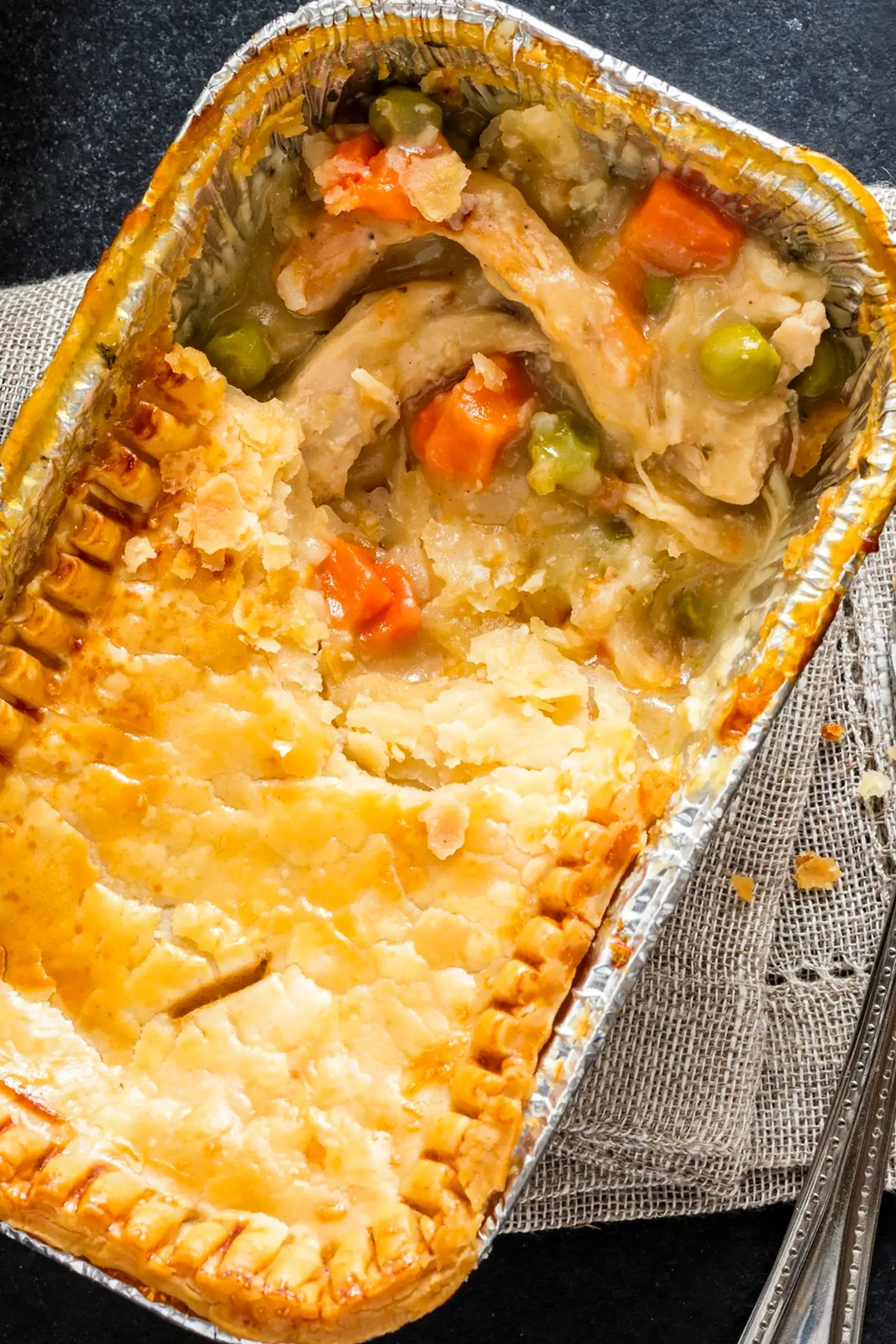
List of ingredients
- 1 1/2 pounds boneless, skinless chicken breasts – patted dry and seasoned with salt and pepper.
- 2 tablespoons vegetable oil – divided for searing and sautéing.
- 5 1/2 cups low-sodium chicken broth – used for poaching and as a sauce base.
- 2 tablespoons unsalted butter – for sautéing aromatics.
- 1 medium onion – chopped fine.
- 3 medium carrots – peeled and chopped.
- 1 celery rib – chopped fine.
- 1/2 cup all-purpose flour – to thicken the sauce.
- 1/4 cup milk – for creaminess.
- 2 teaspoons minced fresh thyme leaves – for aromatic flavor.
- 2 tablespoons lemon juice – to add brightness to the filling.
- 2 (15-ounce) boxes Pillsbury Ready to Roll Pie Crust – all 4 crusts are used.
- 1 large egg – for the crust glue.
- 1 large egg, beaten – for the final egg wash.
- 1 1/2 cups frozen peas – added just before assembling.
step-by-step instructions
- Sear the Chicken: Pat the chicken breasts dry with paper towels and season them with salt and pepper. Heat 1 tablespoon of oil in a large Dutch oven over high heat until it just begins to smoke. Cook the chicken until well browned, approximately 2 1/2 minutes per side.
- Poach in Broth: Pour in the chicken broth and bring the liquid to a boil. Cover the pot and simmer over low heat for 6 to 8 minutes, or until the chicken is cooked through. Remove the chicken to a plate and strain the broth into a separate bowl for later use.
- Sauté the Vegetables: Melt the butter with the remaining 1 tablespoon of oil in the Dutch oven over medium-high heat. Add the onion, carrots, celery, and 1/4 teaspoon of salt, cooking for 8 to 10 minutes until softened and lightly browned.
- Create the Roux: Reduce the heat to medium and stir in the flour. Cook for 1 minute to remove the raw flour taste.
- Thicken the Sauce: Gradually whisk in the reserved chicken broth, milk, and minced thyme. Simmer the mixture for about 10 minutes until the sauce has thickened.
- Prepare the Chicken: While the sauce simmers, use two forks to shred the cooked chicken into bite-sized pieces.
- Finalize Filling: Remove the sauce from the heat. Stir in the shredded chicken and lemon juice, then season with salt and pepper to taste.
- Chill the Filling: Transfer the mixture to a medium bowl and let it cool until it is just warm. Cover with plastic wrap and refrigerate for at least 1 hour until well chilled.
- Assemble the Crusts: Unroll the pie crusts onto a lightly floured counter. Use one beaten egg to glue two crusts together, then repeat with the other two crusts to create double-thick layers. Cut out six pastry toppings from these double layers.
- Fill the Pans: Stir the frozen peas into the cold filling. Divide the mixture evenly among six 2-cup disposable aluminum loaf pans.
- Seal and Vent: Place a pastry topping over each pan and seal the edges using a fork. Use a paring knife to cut three steam vents into the top of each crust.
- Freeze: Wrap each individual loaf pan tightly in two layers of plastic wrap and one layer of aluminum foil. Store in the freezer for up to 2 months.
- Bake: Preheat the oven to 400 degrees Fahrenheit with the rack in the middle position. Arrange frozen pies on a rimmed baking sheet.
- First Bake: Brush the tops of the crusts with the beaten egg. Cover with foil and bake for 40 minutes.
- Final Bake: Remove the foil and bake for another 35 minutes, or until the crusts are golden brown.
- Rest: Let the pot pies rest for 10 minutes before serving to allow the filling to set.
Expert Preparation Techniques
Proper Chicken Searing for Depth
Searing the chicken breasts over high heat initiates the Maillard reaction, creating a browned surface that adds a rich, savory depth to the final sauce. It is critical to pat the meat completely dry before cooking; otherwise, the chicken will steam rather than brown. Avoid overcrowding the pan to ensure the temperature remains high enough for an effective sear.
The Importance of Chilling the Filling
Refrigerating the filling for at least one hour is a mandatory step to preserve the integrity of the pastry. If hot filling is added to the dough, it will melt the fats in the crust instantly, leading to a soggy bottom and a collapsed top. A chilled filling ensures the crust stays distinct and crisp during the freezing and baking process.
Double-Layering the Pastry
Gluing two sheets of store-bought dough together creates a structural barrier that is more resilient than a single layer. This double-thick crust prevents the moisture from the filling from soaking through the top during the long bake from frozen. Using a beaten egg as a glue ensures the layers bond permanently and bake as a single unit.
Ingredient Substitutions and Variations
Using Chicken Thighs for Extra Moisture
If you prefer a richer flavor and more succulent meat, replace the chicken breasts with boneless, skinless chicken thighs. Thighs are less prone to drying out during the reheating process. You may need to increase the initial searing time by a minute or two to achieve the same level of browning.
Adding Root Vegetable Variety
To add more complexity to the filling, you can incorporate diced parsnips or turnips along with the carrots. These vegetables should be cut to a uniform size to ensure they soften at the same rate as the other aromatics. Add them to the pot during the sauté phase with the onions and celery.
Alternative Thickening Agents
For those who prefer a glossier sauce, cornstarch can be used instead of all-purpose flour. Mix the cornstarch with a small amount of cold water to create a slurry before stirring it into the simmering broth. Be aware that cornstarch-thickened sauces may behave differently when frozen and reheated.
Freezer Storage and Safety
Airtight Wrapping Methods
Using two layers of plastic wrap is essential for preventing freezer burn, which can ruin the flavor and texture of the pastry. The plastic wrap creates a primary airtight seal, while the aluminum foil provides a secondary layer of protection against odors. Ensure the wrap is pressed firmly against the edges of the aluminum pan.
Maximum Freezer Duration
While these pies can be stored for up to two months, the peak quality is generally maintained within the first six weeks. Over time, the pastry may lose some of its crispness or absorb smells from the freezer. Store them in the coldest part of your freezer, away from the door, to avoid temperature fluctuations.
Organizing and Labeling
Always label each pan with the date of preparation and the required baking temperature. Because these pies look similar once wrapped, labeling helps you follow a first-in, first-out rotation. This ensures no pie stays in the freezer past its optimal quality window.
Baking and Serving Advice
Preventing a Soggy Base
Baking the pies on a rimmed baking sheet is a simple but effective way to distribute heat more evenly around the bottom of the pans. The sheet acts as a heat conductor, helping the bottom of the pie cook at a rate similar to the top. This reduces the chance of the filling becoming watery at the base.
The Role of the Foil Cover
Covering the pies with foil for the first 40 minutes of baking is crucial because the filling is frozen. This allows the internal temperature to rise without exposing the top crust to direct heat for too long. Without the foil, the top would burn before the center was fully heated through.
Optimizing the Golden Crust
The egg wash provides the classic golden-brown finish and a professional sheen. For an even deeper color, you can add a teaspoon of water or milk to the beaten egg to make it easier to spread. Brush the egg wash generously across the entire surface, including the edges.
Troubleshooting Common Issues
Filling Is Too Thin
If your sauce appears too thin after simmering, you can increase the heat slightly and simmer for an additional few minutes before adding the chicken. Alternatively, whisk in a small amount of cornstarch slurry to thicken the liquid quickly. A thick sauce is necessary to support the weight of the crust.
Crust Fails to Brown
If the crust remains pale after the final 35 minutes of baking, ensure your oven is fully preheated to 400 degrees. You may also need to remove the foil a few minutes earlier in the process. Check that the egg wash was applied evenly, as gaps in the wash will result in uneven coloring.
Chicken Is Too Dry
To avoid dry chicken, monitor the poaching process closely and remove the breasts the moment they reach a safe internal temperature. Overcooking them during the initial simmer can make the meat stringy. Shredding the chicken and then folding it into the sauce helps it absorb moisture before freezing.
Frequently Asked Questions
Can I use a different type of pan?
While disposable aluminum pans are recommended for their conductivity and convenience, you can use ceramic or glass ramekins. Ensure the containers are both freezer-safe and oven-safe to prevent them from cracking due to thermal shock. You may need to adjust baking times slightly for heavier materials.
Should I thaw the pies before baking?
No, these pies should be baked directly from the freezer. Thawing them before they go into the oven can cause the pastry to become mushy and the filling to release excess moisture. Baking from frozen preserves the structural integrity of the double-thick crust.
Can I make this gluten-free?
Yes, you can substitute the all-purpose flour with a gluten-free flour blend that includes a thickening agent. You will also need to use a gluten-free pie crust alternative. Note that gluten-free doughs often have different binding properties, so you may need to use a different adhesive than egg for the layering process.
How do I prevent the peas from turning brown?
The key to maintaining the bright green color of the peas is to use them frozen and add them to the filling only after the sauce has completely cooled. Cooking the peas during the simmering process or thawing them beforehand will cause them to lose their color and become overcooked during the final bake.
What is the best way to reheat leftovers?
If you have leftover pie, reheat it in the oven at 350 degrees Fahrenheit until warmed through. Avoid using a microwave, as this will make the pastry soft and rubbery. Covering the leftovers with foil will prevent the crust from drying out during the reheating process.
Print
Make-Ahead Freezer Chicken Pot Pies
- Total Time: 3 hours 30 minutes
- Yield: 6 servings 1x
- Diet: General
Description
A streamlined chicken pot pie designed for freezing and baking on demand, featuring a saucy filling and a double-thick crust for maximum stability and flavor.
Ingredients
- 1 1/2 pounds boneless, skinless chicken breasts
- 2 tablespoons vegetable oil
- 5 1/2 cups low-sodium chicken broth
- 2 tablespoons unsalted butter
- 1 medium onion, chopped fine
- 3 medium carrots, peeled and chopped
- 1 celery rib, chopped fine
- 1/2 cup all-purpose flour
- 1/4 cup milk
- 2 teaspoons minced fresh thyme leaves
- 2 tablespoons lemon juice
- 2 (15-ounce) boxes Pillsbury Ready to Roll Pie Crust
- 2 large eggs (one for gluing, one beaten for baking)
- 1 1/2 cups frozen peas
Instructions
- Brown Chicken: Pat chicken dry, season with salt and pepper, and cook in 1 tablespoon oil in a Dutch oven over high heat until browned, about 2 1/2 minutes per side.
- Simmer Chicken: Add broth, bring to a boil, cover and simmer over low heat until cooked through, 6 to 8 minutes.
- Strain: Transfer chicken to a plate and strain the broth into a bowl.
- Sauté Vegetables: Melt butter with the remaining 1 tablespoon oil in the Dutch oven over medium-high heat; cook onion, carrots, celery, and 1/4 teaspoon salt until softened, 8 to 10 minutes.
- Thicken Sauce: Reduce heat to medium, stir in flour, and cook for 1 minute.
- Finish Sauce: Whisk in reserved broth, milk, and thyme; simmer until thickened, about 10 minutes.
- Combine Filling: Shred chicken into bite-sized pieces; stir chicken and lemon juice into sauce and season with salt and pepper.
- Chill: Cool filling until just warm, then cover and refrigerate until well chilled, about 1 hour.
- Prepare Crust: Glue two pie crusts together using 1 beaten egg; repeat with the other two crusts and cut into 6 pastry toppings.
- Assemble: Stir frozen peas into cold filling and divide the mixture among six 2-cup disposable aluminum loaf pans.
- Seal: Top with pastry, seal edges with a fork, and make 3 steam vents in each crust.
- Freeze: Wrap each pan tightly in 2 layers of plastic wrap and 1 layer of aluminum foil; freeze for up to 2 months.
- Initial Bake: Heat oven to 400°F, brush crusts with beaten egg, cover with foil, and bake for 40 minutes.
- Final Brown: Uncover and bake until crusts are golden brown, about 35 minutes.
- Rest: Let pot pies rest for 10 minutes before serving.
Notes
To preserve their color, do not thaw the peas before using. Using double-thick crusts prevents the pie from becoming soggy after freezing.
- Prep Time: 2 hours 15 minutes
- Cook Time: 1 hour 15 minutes
- Category: Main Courses
- Method: Baking
- Cuisine: American
Nutrition
- Serving Size: 1 pot pie
- Calories: 780 kcal
- Sugar: 7 g
- Sodium: 980 mg
- Fat: 36 g
- Saturated Fat: 15 g
- Unsaturated Fat: 18 g
- Trans Fat: 1 g
- Carbohydrates: 52 g
- Fiber: 6 g
- Protein: 34 g
- Cholesterol: 170 mg