
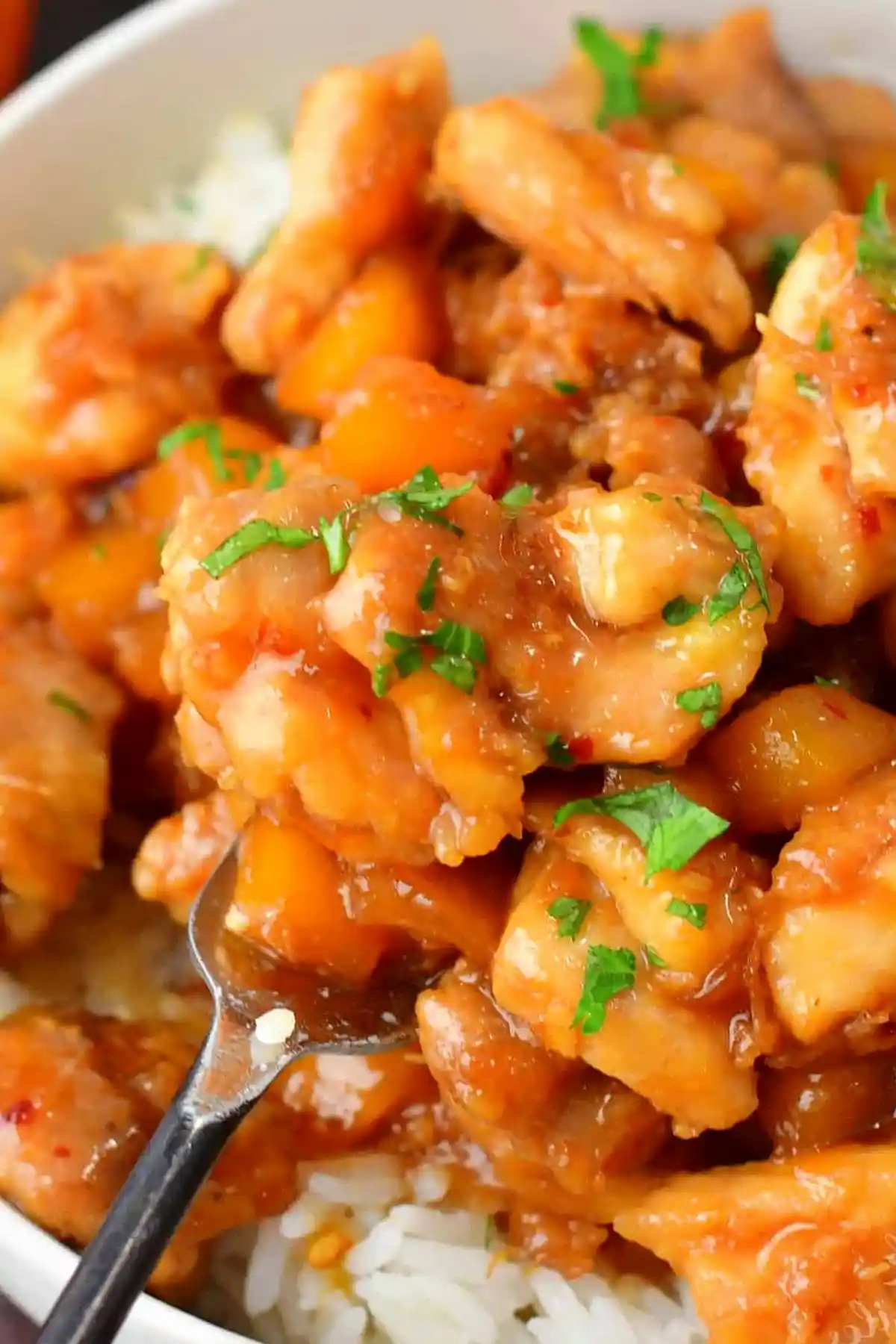
This Asian-inspired dinner features tender chicken thighs glazed in a sweet and tangy mango sauce. It is paired with fluffy coconut rice for a complete tropical-style meal that comes together in 30 minutes.
List of ingredients
- 2 lbs boneless, skinless chicken thigh meat – cut into small pieces and trimmed of excess fat.
- 2 tbsp cornstarch – used as a dredge to create a crisp exterior.
- 2-3 tbsp canola oil – for searing the chicken.
- 2 tbsp butter – for sautéing the mango and thickening the sauce.
- 1 ripe mango – diced into small pieces.
- 1/3 cup honey – provides a deep sweetness to the glaze.
- 1/4 cup low sodium soy sauce – for salty, umami depth.
- 1/4 cup chicken stock – used in the sauce for added richness.
- 3 garlic cloves – pressed for intense flavor.
- 1 lime – juice only, providing acidity to balance the sugar.
- 1 tsp fresh ginger – grated or shaved for a pungent kick.
- 1/2-1 tsp red pepper flakes – adjusted to your preferred heat level.
- 1 cup jasmine rice – known for its floral aroma and slightly sweet taste.
- 1 cup chicken stock – used as the cooking liquid for the rice.
- 5.46 oz can coconut milk – creates a creamy, tropical flavor in the rice.
- 1/2 tsp white granulated sugar – enhances the coconut flavor.
- salt – added to taste.
step-by-step instructions
- Prepare the Coconut Rice: Combine coconut milk, chicken stock, sugar, and salt in a cooking pot over medium-high heat. Whisk the mixture and bring it to a boil.
- Cook the Rice: Add the jasmine rice and stir exactly once. Lower the heat to the lowest setting, cover with a lid, and cook for 18-20 minutes without disturbing the rice.
- Finish the Rice: Once the cooking time is complete, fluff the rice with a fork and set it aside to keep warm.
- Prep the Mango and Sauce: Dice the mango flesh into small pieces. In a separate small bowl, whisk together the honey, soy sauce, chicken stock, lime juice, ginger, garlic, and red pepper flakes.
- Coat the Chicken: Cut the chicken thighs into small pieces, removing any excess fat. Place the chicken in a bowl and toss with cornstarch until every piece is evenly coated.
- Sear the Chicken: Heat oil in a large pan over medium to medium-high heat. Add the dredged chicken and sear on all sides until almost fully cooked, then remove the chicken from the pan and set it aside.
- Sauté the Mango: Reduce the heat to medium and melt butter in the same pan used for the chicken. Add the diced mango and cook for a couple of minutes until the fruit softens.
- Simmer the Sauce: Pour the whisked sauce mixture into the pan with the mango. Stir gently and allow the sauce to simmer for a few minutes.
- Final Combine: Return the seared chicken to the pan. Stir and cook for an additional 2-3 minutes until the chicken is fully cooked through and the sauce has thickened into a glaze.
- Plate the Dish: Serve the mango chicken and sauce immediately over the fluffed coconut rice.
Optimal Ingredient Selection
Choosing the Best Mangoes
Select mangoes that are slightly soft to the touch and have a fragrant aroma at the stem end. Ataulfo or Kent varieties are recommended for their lower fiber content and buttery texture. If using frozen mango, ensure it is completely thawed and drained of excess water before adding to the pan.
The Role of Jasmine Rice
Jasmine rice is preferred for this recipe because its natural fragrance complements the coconut milk. It has a slightly stickier texture than long-grain white rice, which helps it hold the mango sauce. Ensure you use authentic jasmine rice to achieve the correct aromatic profile.
Selecting Chicken Thighs
Boneless, skinless chicken thighs are used instead of breasts because they have a higher fat content. This prevents the meat from drying out during the high-heat searing process. Thighs also absorb the flavors of the honey-soy glaze more effectively than lean breast meat.
Technical Cooking Tips
Mastering the Cornstarch Dredge
The cornstarch serves as a thin barrier that protects the chicken from overcooking while creating a surface for the sauce to cling to. Ensure the chicken is patted dry before adding the cornstarch to prevent clumping. Shake off any excess powder so the chicken sears rather than steams.
Achieving the Perfect Sear
Use a heavy-bottomed pan or a cast-iron skillet to maintain consistent heat. Do not overcrowd the pan, as adding too much chicken at once drops the temperature and releases moisture. Cook in batches if necessary to ensure each piece develops a golden-brown crust.
Controlling the Sauce Thickness
The sauce thickens through a combination of the honey reduction and the residual cornstarch from the chicken. If the sauce is too thin after simmering, continue cooking for another minute over medium heat. If it becomes too thick, stir in a tablespoon of chicken stock to loosen it.
Ingredient Substitutions and Variations
Low-Carb Base Alternatives
For a lower-carbohydrate version, replace the jasmine rice with cauliflower rice. Sauté the cauliflower rice in a pan with a splash of coconut milk and salt until tender. Quinoa or farro can also be used for a nuttier flavor and more protein.
Soy-Free Sauce Options
To make this dish soy-free, substitute the low-sodium soy sauce with coconut aminos. Coconut aminos offer a similar salty-sweet profile but with lower sodium and no soy. This substitution pairs exceptionally well with the mango and coconut flavors already present in the dish.
Alternative Sweeteners
If honey is unavailable, maple syrup or agave nectar can be used as a direct substitute. Maple syrup adds a slightly woodier sweetness, while agave is more neutral. Keep the measurement the same to maintain the balance of the glaze.
Adjusting the Spice Level
The red pepper flakes provide a mild heat that cuts through the sweetness of the mango. For a spicier version, increase the flakes to 1 full teaspoon or add a teaspoon of sriracha to the sauce mixture. For a kid-friendly version, omit the red pepper flakes entirely.
Storage and Reheating Advice
Refrigeration Guidelines
Store leftover mango chicken and coconut rice in separate airtight containers in the refrigerator. The chicken and sauce can be kept for up to three days. Keeping the rice separate prevents it from absorbing all the sauce and becoming mushy.
Best Reheating Methods
To reheat the chicken, use a skillet over medium heat with a splash of water or chicken stock to loosen the sauce. Avoid the microwave if possible, as it can make the chicken rubbery and the mango pieces overly soft. For the rice, microwave it with a damp paper towel over the top to steam it back to fluffiness.
Freezing Instructions
While the chicken and sauce can be frozen for up to two months, the coconut rice does not freeze well and may become grainy. If freezing the chicken, let it cool completely before sealing it in a freezer-safe bag. Thaw in the refrigerator overnight before reheating on the stove.
Meal Prep and Planning
Preparing the Sauce Ahead
The mango sauce mixture (honey, soy sauce, stock, lime, ginger, garlic, and pepper flakes) can be whisked and stored in a jar for up to 48 hours. This reduces the active cooking time on the night of the meal. Give the sauce a quick whisk before pouring it into the pan to redistribute the ginger and garlic.
Advanced Chicken Prep
You can cut the chicken and trim the fat several hours in advance, storing the pieces in a sealed container. However, do not apply the cornstarch until immediately before cooking. Applying cornstarch too early allows the moisture from the meat to soak into the powder, ruining the sear.
Timing the Rice
Since the rice takes about 20 minutes to cook and needs time to sit, start it first. Once the rice is simmering on low heat, you can focus entirely on the chicken. This synchronization ensures both components are hot and fresh at the same time.
Troubleshooting Common Issues
Preventing Mushy Coconut Rice
The most common cause of mushy rice is stirring the pot during the cooking process. Stirring releases excess starch and breaks the grains. Keep the lid tightly closed and only fluff the rice with a fork once the heat is turned off.
Handling Burnt Garlic
Garlic can burn quickly when added to hot oil, which creates a bitter taste. In this recipe, the garlic is whisked into the sauce and added after the mango has already softened. This method protects the garlic from direct high heat and preserves its flavor.
Correcting a Bland Sauce
If the sauce tastes flat, it likely needs more acidity. Add an extra squeeze of fresh lime juice or a pinch of salt to brighten the flavors. The balance between the sweet honey and the acidic lime is critical for the dish’s success.
Frequently Asked Questions
Can I use chicken breast instead of thighs?
Yes, you can use breast meat, but you must be careful not to overcook it. Breast meat cooks faster and is leaner, so reduce the final simmering time by 1-2 minutes to keep it tender.
What if I cannot find fresh mango?
Frozen mango chunks are a suitable substitute. Thaw them completely and pat them dry with a paper towel before sautéing to ensure they brown in the butter rather than steaming.
Can I make this recipe in a slow cooker?
This specific recipe is designed for a pan to achieve a sear on the chicken. For a slow cooker, omit the cornstarch and searing steps, cook the chicken with the sauce on low for 6 hours, and then thicken the sauce with a cornstarch slurry at the end.
Is there a substitute for coconut milk in the rice?
You can use full-fat canned coconut milk for the best creaminess. If unavailable, you can use a mixture of heavy cream and a teaspoon of coconut extract, although the flavor will be slightly different.
How do I cut a mango safely?
Stand the mango upright and slice lengthwise on both sides of the flat center seed. Once you have two halves, slice the flesh into a grid pattern without cutting through the skin, then scoop the cubes out with a spoon.
Print
Mango Chicken and Coconut Rice
- Total Time: 30 minutes
- Yield: 4 servings 1x
- Diet: Gluten Free
Description
Mango Chicken and Rice is an amazing Asian inspired dinner made with tender chicken thigh meat and flavorful fresh mango sauce.
Ingredients
- 2 lbs boneless, skinless chicken thigh meat
- 2 tbsp cornstarch
- 2–3 tbsp canola oil
- 2 tbsp butter
- 1 ripe mango
- 1/3 cup honey
- 1/4 cup low sodium soy sauce
- 1/4 cup chicken stock
- 3 garlic cloves, pressed
- 1 lime, juice only
- 1 tsp fresh ginger, grated or shaved
- 1/2–1 tsp red pepper flakes
- 1 cup jasmine rice
- 1 cup chicken stock
- 5.46 oz can coconut milk
- 1/2 tsp white granulated sugar
- salt to taste
Instructions
- Rice Base: In a cooking pot, over medium-high heat, combine coconut milk, chicken stock, sugar, and salt.
- Boil: Whisk it together and bring the mixture to boil.
- Simmer: Add rice, stir just once, lower the heat to the lowest setting and close the pot with a lid.
- Cook Rice: Cook rice for about 18-20 minutes; fluff it up with a fork and set aside.
- Prep Mango: Dice mango flesh into small pieces and set aside.
- Prepare Sauce: In a small bowl, whisk together honey, soy sauce, chicken stock, lime juice, ginger, garlic, and red pepper flakes.
- Prep Chicken: Cut chicken thighs into small pieces, removing excess fat, and mix with cornstarch until evenly coated.
- Sear Chicken: Preheat a large cooking pan over medium to medium-high heat, add oil, and sear chicken on all sides until almost done, then set aside.
- Sauté Mango: Lower heat to medium, melt butter in the pan and cook diced mango for a couple of minutes until softened.
- Simmer Sauce: Pour the sauce into the pan with mango, gently stir and let it simmer for a couple of minutes.
- Combine: Add chicken back, stir, and let it cook another 2-3 minutes, until chicken is completely done and sauce is a little bit thicker.
Notes
Serve the mango chicken over the fluffed coconut rice. If preferred, the coconut rice can be swapped for brown rice, cauliflower rice, quinoa, or couscous.
- Prep Time: 5 minutes
- Cook Time: 25 minutes
- Category: Main Course
- Method: Stovetop
- Cuisine: American
Nutrition
- Serving Size: 1 serving
- Calories: 804 kcal
- Sugar: 33 g
- Sodium: 820 mg
- Fat: 32 g
- Saturated Fat: 15 g
- Unsaturated Fat: 15 g
- Trans Fat: 1 g
- Carbohydrates: 79 g
- Fiber: 3 g
- Protein: 51 g
- Cholesterol: 231 mg