
This flavorful Korean-inspired beef bowl is an efficient meal solution for busy weeknights. It combines savory protein and fluffy rice for a balanced dinner that takes only 25 minutes to prepare.
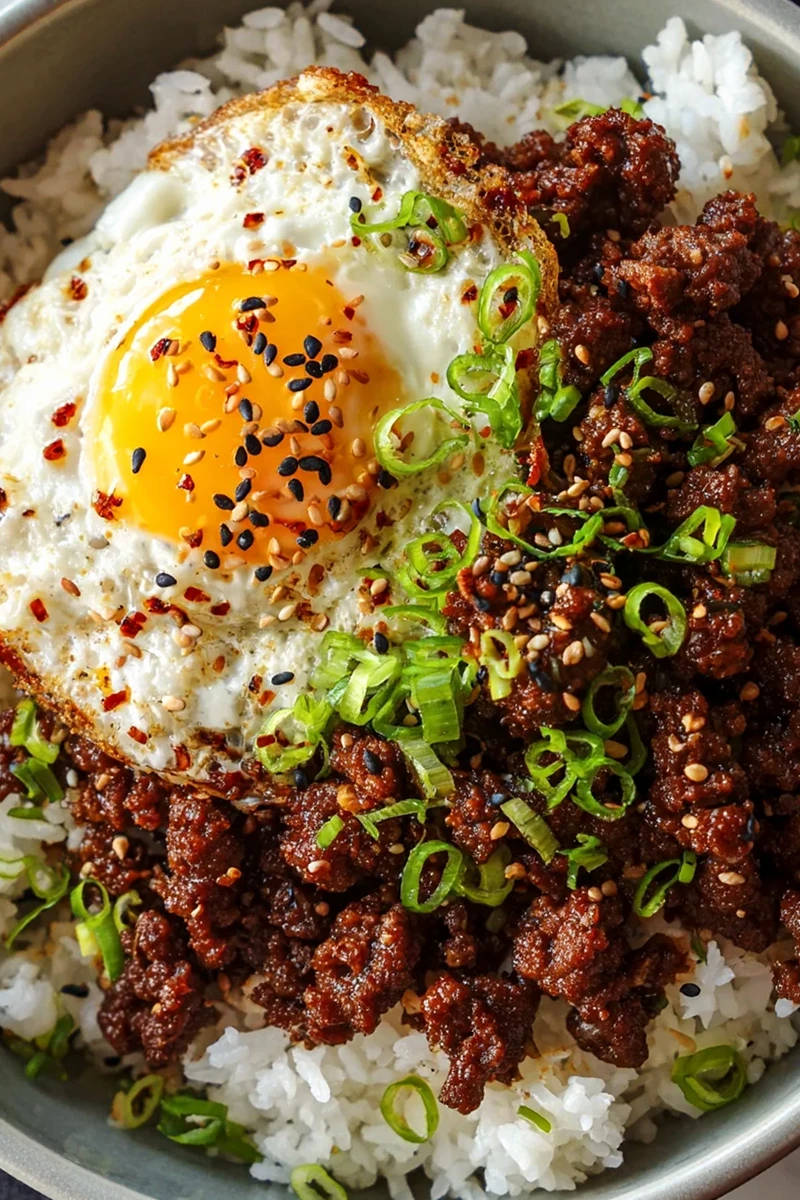
List of ingredients
- 1 pound ground beef (80/20) – provides the best balance of flavor and moisture.
- 2 tablespoons soy sauce (or tamari) – adds a salty, umami base to the meat.
- 1 tablespoon sesame oil – contributes a distinct nutty aroma and richness.
- 3 cloves garlic (minced) – adds a pungent, aromatic depth.
- 1 teaspoon ginger (minced) – provides a fresh, spicy zing.
- 2 cups cooked rice (jasmine, basmati, or brown) – serves as the hearty base for the bowl.
- Green onions – used for both cooking and fresh garnishing.
- Sesame seeds – optional topping for added texture.
- Fried egg – optional topping for extra richness and protein.
step-by-step instructions
- Prepare the components: Measure out your soy sauce, sesame oil, and rice. Mince the garlic and ginger, and chop your green onions and any chosen vegetables.
- Brown the beef: Place a large skillet over medium-high heat and add the ground beef. Cook until fully browned, breaking the meat into small crumbles with a spatula, and drain any excess fat if necessary.
- Season the meat: Stir in the minced garlic and ginger and cook for about one minute until fragrant. Pour in the soy sauce and sesame oil, stirring well to ensure the beef is evenly coated.
- Add vegetables: Stir in your preferred chopped vegetables, such as bell peppers or carrots. Cook just until they are tender yet still retain a slight crispness.
- Assemble the bowls: Divide the cooked rice among four bowls. Spoon the seasoned beef mixture over the rice and garnish with chopped green onions, sesame seeds, or a fried egg.
Optimizing Your Meat Selection
Choose 80/20 Ground Beef for Better Texture
Using ground beef with a 20% fat content ensures the meat remains juicy during the high-heat browning process. Leaner meats can become dry and crumbly, which affects the overall mouthfeel of the bowl.
Avoid Overcrowding the Skillet
Using a large skillet allows the beef to sear rather than steam. When the meat has enough space, it browns more effectively, creating a deeper flavor profile through the Maillard reaction.
Drain Excess Fat Carefully
While some fat is necessary for flavor, too much can make the sauce greasy. Carefully tilt the pan and spoon out excess rendered fat before adding the liquid seasonings to keep the sauce concentrated.
Rice Base Options
Use Jasmine Rice for Floral Notes
Jasmine rice is a popular choice for this dish due to its slight floral aroma and sticky texture. It clings well to the savory beef and sauce, ensuring every bite is flavorful.
Opt for Brown Rice for More Fiber
Brown rice provides a nuttier flavor and more dietary fiber than white rice. It is a heartier alternative that keeps you full longer, though it requires a longer cooking time.
Substitute with Cauliflower Rice for Low Carb
For a low-carbohydrate version, sautéed cauliflower rice works well. Steam or pan-fry the cauliflower grains until tender before topping them with the seasoned beef.
Flavor Enhancement Tips
Prioritize Fresh Aromatics
Using freshly minced garlic and ginger provides a much more vibrant flavor than powdered or pre-minced jarred versions. The natural oils in fresh aromatics create a brighter taste profile.
Toast Sesame Seeds for Aroma
Briefly heating sesame seeds in a dry pan before garnishing releases their natural oils. This adds a toasted, nutty layer that complements the sesame oil used in the cooking process.
Adjust Salt Based on Soy Brand
Different brands of soy sauce have varying sodium levels. Taste the beef after adding the soy sauce and adjust with a pinch of salt or an extra teaspoon of soy sauce to meet your preference.
Vegetable Integration Ideas
Add Sautéed Bell Peppers for Sweetness
Slicing red and green bell peppers into thin strips adds a pop of color and a mild sweetness. Sauté them during the final few minutes of cooking to maintain their crunch.
Wilt Fresh Spinach for Nutrition
Fresh baby spinach can be stirred into the pan at the very end of the cooking process. The residual heat from the beef will wilt the leaves quickly without overcooking them.
Incorporate Shredded Carrots for Texture
Shredded carrots add a subtle sweetness and a different textural element to the bowl. They integrate well with the ground beef and cook quickly due to their small size.
Include Sliced Mushrooms for Umami
Sautéed mushrooms enhance the earthy tones of the beef. Brown them in the skillet before adding the ground beef to ensure they develop a rich, caramelized exterior.
Serving and Topping Suggestions
Add a Sunny-Side Up Egg
A fried egg with a runny yolk creates a natural sauce that mixes with the beef and rice. This adds a creamy element that balances the saltiness of the soy sauce.
Include Kimchi for Acidic Contrast
Adding a side of fermented kimchi provides a spicy and sour contrast to the rich beef. The acidity helps cut through the fat of the meat, refreshing the palate.
Garnish with Sliced Cucumbers
Thinly sliced cucumbers, perhaps tossed in a bit of rice vinegar, provide a cool and crisp element. This contrast in temperature and texture makes the bowl more dynamic.
Use Fresh Cilantro for Brightness
While green onions are traditional, a sprinkle of fresh cilantro adds a citrusy note. This works particularly well if you are using a wider variety of mixed vegetables.
Storage and Preservation
Refrigeration Guidelines
Store leftover beef and rice in airtight containers in the refrigerator for up to 4 days. It is often better to store the beef and rice in separate containers to prevent the rice from becoming too mushy.
Freezing for Meal Prep
This recipe is excellent for freezer meals. Portion the beef and rice into freezer-safe bags or containers and store them for up to 3 months for a quick future dinner.
Preventing Rice Dryness
Rice tends to dry out when refrigerated. When storing, ensure the rice is sealed tightly, and consider adding a teaspoon of water before reheating to restore moisture.
Reheating Methods
Microwave Reheating for Speed
Place a portion in a microwave-safe bowl and cover it with a damp paper towel. Heat in 1-minute intervals, stirring in between, to ensure the beef is heated evenly without drying out.
Stovetop Reheating for Texture
Heat the beef mixture in a small pan over medium-low heat with a splash of water or beef broth. This helps loosen the sauce and restores the original texture of the meat.
Oven Reheating for Bulk
For larger quantities, place the bowls in a 350°F (175°C) oven for 15-20 minutes. Cover the bowls with foil to trap steam and prevent the edges of the rice from hardening.
Common Cooking Mistakes
Avoid Using Lean Beef
Avoid using 90% or 95% lean ground beef as it lacks the necessary fats to carry the flavor of the ginger and garlic. If using lean beef, add an extra teaspoon of sesame oil to compensate.
Preventing Overcooked Meat
Cooking the beef for too long after it has browned can lead to a tough, grainy texture. Remove the beef from the heat as soon as it is no longer pink and the edges are browned.
Balancing the Ginger Ratio
Ginger is potent and can overpower the other flavors if too much is used. Stick to the measured teaspoon to ensure it complements the garlic rather than dominating the dish.
Side Dish Pairings
Pair with a Refreshing Cucumber Salad
A simple salad of sliced cucumbers, rice vinegar, and a pinch of sugar provides a cooling side. This balances the warm, savory notes of the beef bowl.
Serve with Miso Soup
A bowl of warm miso soup adds a traditional Japanese-inspired element to the meal. The salty, fermented broth complements the umami profile of the soy sauce.
Add Pickled Daikon or Radish
Pickled vegetables provide a sharp, tangy bite that cleanses the palate. These are traditional accompaniments that add brightness to the overall dining experience.
Frequently Asked Questions
Can I make this recipe gluten-free?
Yes, you can make this dish gluten-free by substituting the soy sauce with tamari or coconut aminos. These alternatives provide the same salty flavor without the wheat content.
What is the best type of rice to use?
Jasmine rice is generally preferred for its aroma and texture, but basmati or brown rice are excellent alternatives depending on your dietary needs.
Can I use ground turkey instead of beef?
Yes, ground turkey can be used, but since it is leaner, you may need to add a bit more oil to the pan to prevent sticking and maintain juiciness.
How do I stop the beef from clumping?
Use a sturdy spatula to break the meat into small pieces as it browns. Do not stir too frequently at the start; let the meat sear first, then break it apart.
Which vegetables work best in this bowl?
Crunchy vegetables like carrots, bell peppers, and broccoli work best. They maintain their structure and provide a necessary texture contrast to the soft rice.
Print
Quick Korean-Style Ground Beef Bowls
- Total Time: 25 minutes
- Yield: 4 servings 1x
- Diet: General
Description
The Korean Ground Beef Bowl (25-Minutes) is a vibrant and satisfying dish that brings the bold flavors of Korean cuisine right to your table in no time. Perfectly seasoned ground beef is combined with fresh vegetables and served over fluffy rice, making it an ideal choice for busy weeknights or meal prep.
Ingredients
- 1 pound ground beef (80/20)
- 2 tablespoons soy sauce (or tamari)
- 1 tablespoon sesame oil
- 3 cloves garlic (minced)
- 1 teaspoon ginger (minced)
- 2 cups cooked rice (jasmine, basmati, or brown)
Instructions
- Step 1: Prepare all ingredients by measuring and chopping as needed.
- Step 2: In a large skillet over medium-high heat, brown the ground beef until fully cooked.
- Step 3: Stir in minced garlic and ginger, followed by soy sauce and sesame oil; mix well.
- Step 4: Add your choice of chopped vegetables and cook until tender yet crisp.
- Step 5: Serve the beef mixture over cooked rice, garnishing with green onions and optional toppings.
Notes
Optional toppings include green onions, sesame seeds, and a fried egg. For a lower-carb option, cauliflower rice can be used as a base.
- Prep Time: 10 minutes
- Cook Time: 15 minutes
- Category: Main
- Method: Frying
- Cuisine: Korean
Nutrition
- Serving Size: 1 serving
- Calories: 540 kcal
- Sugar: 3 g
- Sodium: 740 mg
- Fat: 28 g
- Saturated Fat: 10 g
- Unsaturated Fat: 16 g
- Trans Fat: 0 g
- Carbohydrates: 45 g
- Fiber: 2 g
- Protein: 32 g
- Cholesterol: 90 mg