
This one-pan meal combines lean protein and crisp vegetables for a fast weeknight dinner. It delivers deep savory flavors in under 30 minutes with minimal cleanup.
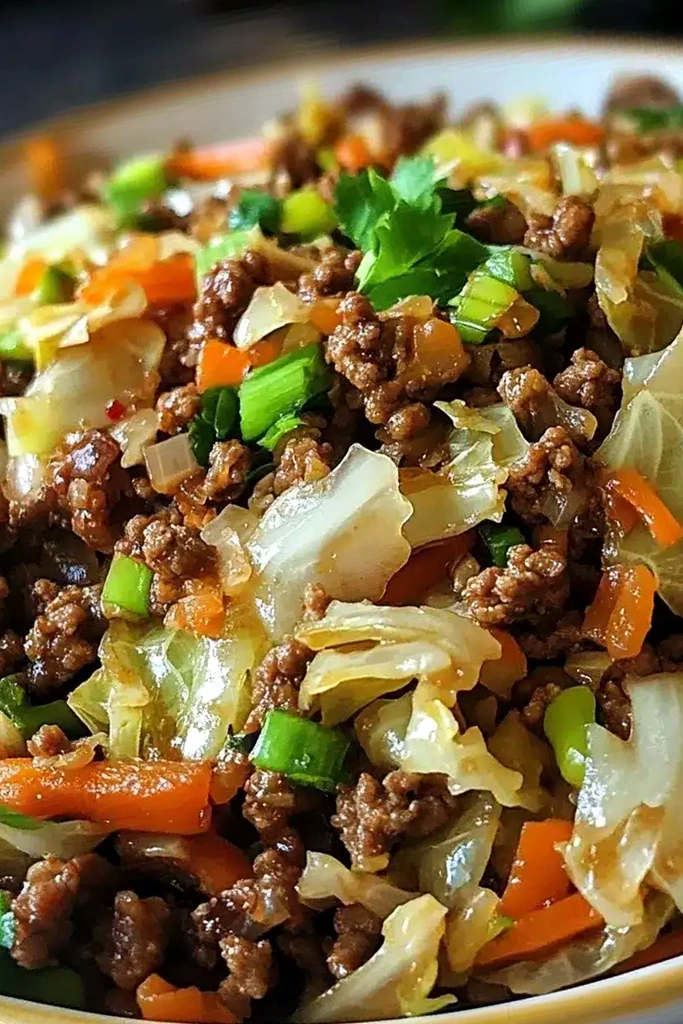
List of ingredients
- 1/2 cup onions, finely chopped – provides a sweet aromatic base.
- 2 cloves garlic, minced – adds pungent depth.
- 1-inch piece of fresh ginger, minced – brings a zesty, warm flavor.
- 1 lb lean ground beef (90% lean or higher) – ensures a light yet hearty protein.
- 1 small head of cabbage, shredded (about 4 cups) – adds bulk and crunch.
- 1 tablespoon olive oil or sesame oil – used for searing and sautéing.
- 1/4 cup low-sodium soy sauce – the primary salty and umami component.
- 2 tablespoons oyster sauce (optional) – enhances the richness of the sauce.
- 1 tablespoon rice vinegar – adds a necessary acidic balance.
- 1 tablespoon hoisin sauce (optional) – introduces a subtle sweetness.
- 1 teaspoon sesame oil (for finishing) – adds a toasted nutty aroma.
- 1/2 teaspoon red pepper flakes (optional) – provides a hint of spice.
- 1/4 teaspoon black pepper – adds a basic sharp seasoning.
- 1/4 cup green onions, chopped (for garnish) – adds a fresh, mild onion finish.
- 1 tablespoon toasted sesame seeds (optional, for garnish) – provides a slight crunch.
step-by-step instructions
- Brown the Beef: Heat olive oil in a large skillet or wok over medium-high heat. Add ground beef and cook for 6-8 minutes, breaking it apart until browned. Drain any excess fat and set aside on a plate.
- Sauté Aromatics: In the same skillet, add more oil if needed. Sauté onions for 2-3 minutes until soft. Stir in garlic and ginger and cook for 30 seconds until fragrant.
- Cook Cabbage: Add the shredded cabbage to the pan. Stir-fry for 5-7 minutes until it becomes tender but still retains a slight crispness.
- Prepare Sauce: In a small bowl, mix soy sauce, oyster sauce, rice vinegar, hoisin sauce, sesame oil, red pepper flakes, and black pepper.
- Combine and Simmer: Return the cooked beef to the skillet. Pour the sauce over the mixture and stir well to combine. Cook for another 2-3 minutes to allow the sauce to thicken.
- Final Touch: Remove from heat. Garnish with green onions and sesame seeds. Serve immediately as is or over rice, quinoa, or cauliflower rice.
Meat Selection and Preparation
Selecting the Best Lean Beef
Using ground beef with at least 90% lean content prevents the dish from becoming overly greasy. This allows the sauce to coat the meat and vegetables effectively. If you use a fattier blend, you must drain the pan thoroughly after browning.
Achieving a Proper Sear
Cook the beef over medium-high heat to ensure it browns rather than steams. Avoid overcrowding the pan, which can lower the temperature and lead to grey, boiled meat. Breaking the beef into small crumbles ensures even cooking and flavor distribution.
Managing Excess Fat
Drain any rendered fat before adding the vegetables to the skillet. Too much grease can dilute the flavors of the soy and ginger sauce. A clean pan allows the onions and garlic to sauté properly without absorbing unnecessary oil.
Cabbage and Vegetable Tips
Using Napa Cabbage for Texture
Napa cabbage is a great alternative to green cabbage for a softer, more delicate texture. It contains more water, so it will wilt faster during the stir-fry process. Reduce the cooking time slightly to prevent it from becoming too mushy.
Adding Red Cabbage for Color
Integrating shredded red cabbage adds a vibrant visual appeal and additional antioxidants. Red cabbage is slightly denser than green cabbage and may require an extra minute of cooking. Mix both colors for a more professional presentation.
Incorporating Bok Choy
Chopped bok choy stems can be added along with the cabbage for extra crunch. The leafy greens should be added at the very end of the vegetable sauté. This ensures the leaves wilt without overcooking the stems.
Efficient Shredding Methods
Use a mandoline slicer or a food processor to get consistent, thin shreds of cabbage. Consistent thickness ensures that all pieces cook at the same rate. If slicing by hand, aim for thin ribbons to maximize sauce absorption.
Maintaining the Crunch
Avoid overcooking the cabbage beyond the tender-crisp stage. High heat and frequent stirring are key to achieving this texture. Remove the pan from the heat as soon as the cabbage has wilted but still resists a slight bite.
Sauce Customization and Balance
Reducing Sodium Levels
Use low-sodium soy sauce to keep the dish healthy without sacrificing flavor. If the sauce feels too light, add a small pinch of salt at the end. You can also replace soy sauce with coconut aminos for a lower-sodium, soy-free option.
Boosting Umami Depth
Oyster sauce and hoisin sauce provide the rich, savory depth typical of Chinese cuisine. If you omit these, add a teaspoon of mushroom powder or a bit more soy sauce. These additions create a complex flavor profile that balances the sweetness of the onions.
Controlling the Spice Level
Adjust the red pepper flakes based on your heat preference. For a more intense kick, add a teaspoon of sriracha or chopped fresh Thai chilies. If you prefer no heat, simply omit the pepper flakes entirely.
Balancing Sweetness and Tang
Rice vinegar provides the acidity needed to cut through the richness of the beef. If the sauce is too tart, add a small amount of honey or brown sugar. Balance is achieved when no single flavor dominates the palate.
Using Sesame Oil Correctly
Sesame oil is used both for cooking and as a finishing touch. Adding it at the end preserves its delicate toasted aroma, which can be lost under high heat. Use a high-quality toasted sesame oil for the best results.
Cooking Equipment Recommendations
Benefits of a Carbon Steel Wok
A wok is ideal for stir-frying because its shape concentrates heat at the bottom. This allows for rapid cooking and easy tossing of ingredients. It helps the cabbage sear quickly while remaining crisp.
Using a Cast Iron Skillet
Cast iron retains heat exceptionally well, making it great for browning ground beef. It provides a steady temperature that prevents the pan from cooling down when vegetables are added. Ensure the pan is well-seasoned to prevent sticking.
Choosing the Right Spatula
A wide metal spatula or a sturdy wooden spoon is best for breaking up ground beef. These tools allow you to scrape the browned bits from the bottom of the pan. This incorporates the fond back into the sauce for more flavor.
Utility of a Garlic Press
A garlic press ensures that the garlic is finely minced and evenly distributed. This prevents large chunks of raw garlic from remaining in the final dish. It also speeds up the preparation process significantly.
Meal Presentation and Pairing
Pairing with Brown Rice
Brown rice adds a nutty flavor and extra fiber to the meal. Steam the rice separately and spoon the beef and cabbage mixture over the top. This makes the dish more filling and balanced.
Low Carb Cauliflower Rice
For a ketogenic or low-carb option, serve the stir fry over sautéed cauliflower rice. This maintains the texture of a grain bowl without the added carbohydrates. It complements the savory sauce perfectly.
Creating Fresh Lettuce Wraps
Spoon the mixture into large butter lettuce or iceberg lettuce leaves. This transforms the stir fry into a hand-held appetizer or a light lunch. Add a squeeze of lime juice on top for extra freshness.
Integration with Quinoa
Quinoa provides a high-protein base that absorbs the sauce well. Cook the quinoa in vegetable broth for added flavor before adding the beef mixture. This is a great option for those seeking a gluten-free grain.
Storage and Preservation
Airtight Container Guidelines
Store leftovers in a glass airtight container to keep the cabbage fresh. Ensure the food is cooled slightly before sealing the lid to prevent excess condensation. This helps maintain the texture of the vegetables.
Refrigerator Duration
This dish stays fresh in the refrigerator for 3 to 4 days. The flavors often meld together overnight, making the leftovers taste even better. Store it on a middle shelf to maintain a consistent temperature.
Optimal Reheating Methods
Reheat the stir fry in a skillet over medium heat rather than using a microwave. This prevents the cabbage from becoming soggy and helps the beef regain its sear. Add a teaspoon of water if the sauce has thickened too much.
Freezer Storage Tips
Portion the stir fry into freezer-safe bags and remove as much air as possible. It can be stored in the freezer for up to two months. Label the bags with the date for easy tracking.
Proper Thawing Process
Thaw the frozen meal in the refrigerator overnight before reheating. Avoid thawing at room temperature to ensure food safety. Heat through in a saucepan until steaming hot.
Common Troubleshooting Solutions
Fixing Soggy Cabbage
Sogginess usually occurs when the pan is overcrowded or the heat is too low. Use a larger skillet and cook the cabbage in batches if necessary. Keep the heat high and stir constantly.
Preventing Burnt Aromatics
Garlic and ginger burn quickly and can turn bitter. Add them only after the onions have softened. Cook them for no more than 30 to 60 seconds before adding the cabbage.
Correcting Over-Salted Sauce
If the sauce is too salty, add a splash of water or a teaspoon of sugar. A bit of extra rice vinegar can also neutralize the saltiness. You can also add more cabbage to bulk up the dish and dilute the salt.
Addressing Dry Meat
If the ground beef feels dry, ensure you are not overcooking it during the browning stage. Return the meat to the pan only at the end. The sauce will rehydrate the beef during the final simmer.
Frequently Asked Questions
Can I use ground turkey instead?
Yes, ground turkey is an excellent lean substitute for beef. Turkey has a milder flavor, so you may want to add a bit more ginger or red pepper flakes. Be careful not to overcook it, as turkey dries out faster than beef.
How do I make this dish vegan?
Replace the beef with crumbled extra-firm tofu or a plant-based ground meat. Use a vegan-certified oyster sauce substitute made from mushrooms. Replace hoisin with a vegan version or a mix of soy sauce and maple syrup.
Can I add more vegetables?
Absolutely. Sliced carrots, bell peppers, mushrooms, and snap peas are all great additions. Add harder vegetables like carrots at the same time as the onions to ensure they cook through.
What is the best serving temperature?
This dish is best served steaming hot immediately after cooking. This preserves the contrast between the tender meat and the crisp cabbage. If serving later, reheat thoroughly in a pan.
Print
Quick Savory Beef and Cabbage Stir Fry
- Total Time: 25 minutes
- Yield: 4 servings 1x
- Diet: Low Carb
Description
A quick and healthy one-pan stir fry made with lean ground beef, fresh cabbage, and a savory Asian-style sauce. Perfect for weeknight dinners, this dish is low in carbs, packed with protein, and ready in under 30 minutes.
Ingredients
- 1/2 cup onions, finely chopped
- 2 cloves garlic, minced
- 1-inch piece of fresh ginger, minced
- 1 lb lean ground beef (90% lean or higher)
- 1 small head of cabbage, shredded (about 4 cups)
- 1 tablespoon olive oil or sesame oil
- 1/4 cup low-sodium soy sauce
- 2 tablespoons oyster sauce (optional)
- 1 tablespoon rice vinegar
- 1 tablespoon hoisin sauce (optional)
- 1 teaspoon sesame oil (for finishing)
- 1/2 teaspoon red pepper flakes (optional)
- 1/4 teaspoon black pepper
- 1/4 cup green onions, chopped (for garnish)
- 1 tablespoon toasted sesame seeds (optional, for garnish)
Instructions
- Step: Heat olive oil in a large skillet or wok over medium-high heat. Add ground beef and cook for 6-8 minutes, breaking it apart until browned. Drain any excess fat and set aside.
- Step: In the same skillet, add more oil if needed. Sauté onions for 2-3 minutes until soft. Add garlic and ginger and cook for another 30 seconds until fragrant.
- Step: Add the shredded cabbage and stir-fry for 5-7 minutes, until it becomes tender but still crisp.
- Step: In a small bowl, mix soy sauce, oyster sauce, rice vinegar, hoisin sauce, sesame oil, red pepper flakes, and black pepper.
- Step: Return the cooked beef to the skillet. Pour the sauce over the mixture and stir well to combine. Cook for another 2-3 minutes.
- Step: Remove from heat. Garnish with green onions and sesame seeds. Serve immediately as is or over rice, quinoa, or cauliflower rice.
Notes
You can substitute beef with ground chicken, turkey, or tofu. Try bok choy or kale instead of cabbage for variety. To make it gluten-free, use coconut aminos instead of soy sauce. Great for meal prep—reheats well for lunches or dinners.
- Prep Time: 10 minutes
- Cook Time: 15 minutes
- Category: Dinner
- Method: Stir Fry
- Cuisine: Chinese
Nutrition
- Serving Size: 1 bowl
- Calories: 310 kcal
- Sugar: 5 g
- Sodium: 680 mg
- Fat: 18 g
- Saturated Fat: 5 g
- Unsaturated Fat: 11 g
- Trans Fat: 0 g
- Carbohydrates: 12 g
- Fiber: 3 g
- Protein: 26 g
- Cholesterol: 70 mg