
This spinach artichoke pasta is the perfect solution for a comforting, restaurant-style dinner prepared right in your own kitchen. By combining the tangy flavor of artichokes with earthy fresh spinach and a velvety cream cheese sauce, you create a dish that is both sophisticated and incredibly simple to assemble. Whether you are looking for a quick weeknight meal or an impressive dish to serve guests, this recipe offers a delicious balance of textures and flavors that will satisfy any pasta lover.
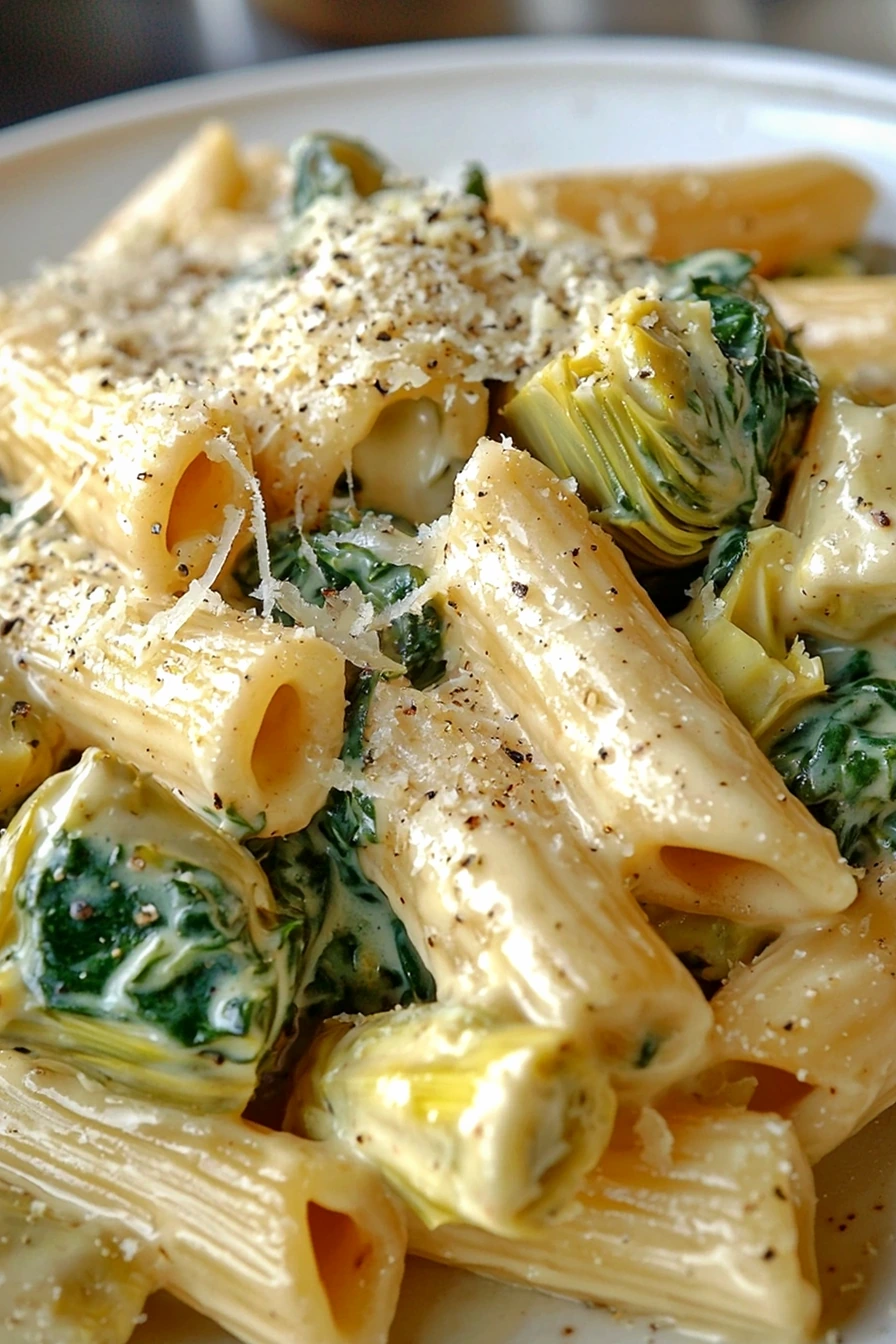
List of ingredients
- 250g pasta (penne or rigatoni)
- 2 cups fresh spinach
- 1 can (14 oz) artichoke hearts, drained and chopped
- 2 garlic cloves, minced
- 2 tbsp olive oil
- 4 oz cream cheese
- 1/2 cup milk or cream
- 1/3 cup grated Parmesan cheese
- Salt and pepper to taste
- Red pepper flakes (optional)
step-by-step instructions
- Step: Boil pasta in salted water until al dente. Reserve ½ cup pasta water and drain.
- Step: In a skillet, heat olive oil and sauté garlic until fragrant.
- Step: Add spinach and cook until wilted. Stir in chopped artichoke hearts.
- Step: Add cream cheese and milk. Stir until smooth and melted.
- Step: Mix in Parmesan and season with salt, pepper, and optional chili flakes.
- Step: Add pasta and toss with sauce. Use pasta water to adjust consistency.
- Step: Serve hot with more cheese and cracked pepper on top.
Practical Preparation Approaches
Managing Pasta Water Starch
The starchy water leftover from boiling your pasta acts as a natural binder that helps the creamy sauce adhere to the noodles rather than sliding off. Always reserve a portion of this liquid before you drain your colander, as it is the secret to achieving a professional-looking glossy finish. Start by adding just a tablespoon or two at a time during the final tossing stage to avoid thinning the sauce too much.
Selecting the Right Pasta Shapes
While any pasta shape can technically work, opting for tubular or structured varieties like penne, rigatoni, or fusilli makes a significant difference in the eating experience. These shapes feature hollow centers and ridges that capture small bits of chopped artichoke and spinach, ensuring you get a balanced flavor profile in every forkful. Avoid long, thin strands like spaghetti or angel hair, which often get weighed down by heavy, cream-based sauces.
Preparing Artichokes for Success
When using canned artichoke hearts, it is vital to drain them thoroughly and pat them dry with a clean paper towel before incorporating them into the pan. Excess moisture from the packing brine can cause your sauce to break or become diluted, preventing the cream cheese from thickening correctly. Chopping them into uniform pieces ensures that you get an equal distribution of that signature tangy flavor throughout the entire dish.
Customizing Your Pasta Experience
Incorporating Proteins
To turn this vegetarian dish into a more substantial entree, consider adding lean protein sources that complement the flavor profile. Roasted or sautéed chicken breast cut into small cubes works exceptionally well here, as does the addition of pan-seared white fish or shrimp. If you prefer plant-based additions, chickpeas or white cannellini beans add fiber and a lovely creaminess that mirrors the texture of the sauce.
Enhancing the Flavor Profile
If you find the sauce needs a brighter edge, consider adding a squeeze of fresh lemon juice or a teaspoon of lemon zest just before serving. The citrus acidity cuts through the heaviness of the cream and Parmesan, lifting the entire dish and making the spinach pop. Additionally, adding fresh herbs like parsley or basil can provide a fragrant, garden-fresh note that balances the saltiness of the artichoke hearts.
Experimenting with Cheese Blends
While Parmesan is the traditional choice, you can modify the cheese component to suit your personal palate. Pecorino Romano adds a sharper, saltier punch that works beautifully if you love bold flavors. For an even creamier result, adding a small amount of Fontina or Gruyere will significantly improve the stretch and melt quality of the sauce, providing an almost fondue-like consistency that clings wonderfully to the pasta.
Managing Leftovers and Reheating
Storage Best Practices
If you have leftovers, place them in an airtight container as soon as they reach room temperature. Stored in the refrigerator, this pasta will stay fresh for up to three days. It is important to note that the sauce may thicken significantly as it chills, as the starch from the pasta and the dairy will firm up in the cold environment.
Achieving the Perfect Reheat
When reheating, avoid using high heat on the stove or microwave, as this can cause the dairy components to separate and turn oily. Instead, place the pasta in a skillet with a tiny splash of water or milk, heating over medium-low heat while stirring constantly. If using a microwave, cover the dish with a damp paper towel and heat in thirty-second intervals, stirring in between to ensure even warming and to restore the creamy texture.
Planning Ahead for Weeknights
You can streamline this recipe by preparing the sauce base earlier in the day or even the night before. Simply store the sauce in the refrigerator and reheat it gently in your skillet while your pasta water comes to a boil. By having the garlic, spinach, and artichoke mixture ready to go, you can assemble a complete dinner in less than fifteen minutes when you get home.
Addressing Common Cooking Concerns
How do I prevent the sauce from breaking?
A broken sauce usually results from using high heat or adding cold ingredients too quickly. Always maintain a low to medium-low heat when melting your cream cheese and milk to ensure the emulsification process remains stable. Adding the cheese gradually and stirring continuously will help keep the sauce smooth, silky, and uniform in texture.
Can I use frozen spinach instead of fresh?
Yes, frozen spinach is an excellent substitute, but it requires careful preparation to ensure the sauce remains thick. Before adding it to the skillet, thaw the spinach completely and squeeze it between paper towels or a clean kitchen towel to remove every drop of excess moisture. If you add it while still watery, you will end up with a soupy sauce that lacks the desired richness.
How can I make this dish lighter?
If you are looking to reduce the calorie content without sacrificing too much flavor, try substituting the heavy cream with a combination of milk and a small amount of vegetable broth. Using reduced-fat cream cheese is another effective option, though you should keep the heat lower, as lower-fat dairy products are slightly more prone to separating if overheated. You can also increase the vegetable ratio by adding sliced bell peppers or sautéed mushrooms to bulk up the meal with fiber.
What should I serve alongside this pasta?
Since this dish is inherently rich and filling, it pairs best with lighter side dishes that offer a contrasting texture. A crisp arugula salad with a simple balsamic vinaigrette provides a nice peppery bite that balances the creamy sauce. A side of roasted asparagus or steamed broccoli can also add a nice crunch to the plate, ensuring a well-rounded dinner that feels complete and satisfying.
Print
Spinach Artichoke Pasta
- Total Time: PT25M
- Yield: 2–3 servings 1x
- Diet: Vegetarian
Description
Looking for the best spinach artichoke pasta recipe? This quick and easy dinner idea is rich, creamy, and full of flavor! It’s one of the best simple pasta dishes you can make with healthy greens and hearty artichokes for a satisfying meal any night of the week.
Ingredients
- 250g pasta (penne or rigatoni)
- 2 cups fresh spinach
- 1 can (14 oz) artichoke hearts, drained and chopped
- 2 garlic cloves, minced
- 2 tbsp olive oil
- 4 oz cream cheese
- 1/2 cup milk or cream
- 1/3 cup grated Parmesan cheese
- Salt and pepper to taste
- Red pepper flakes (optional)
Instructions
- Step: Boil pasta in salted water until al dente. Reserve ½ cup pasta water and drain.
- Step: In a skillet, heat olive oil and sauté garlic until fragrant.
- Step: Add spinach and cook until wilted. Stir in chopped artichoke hearts.
- Step: Add cream cheese and milk. Stir until smooth and melted.
- Step: Mix in Parmesan and season with salt, pepper, and optional chili flakes.
- Step: Add pasta and toss with sauce. Use pasta water to adjust consistency.
- Step: Serve hot with more cheese and cracked pepper on top.
Notes
Use reduced-fat cream cheese or milk for a lighter version. Add cooked poultry or plant-based proteins for extra protein. Use frozen spinach if fresh is not available, just be sure to thaw and drain thoroughly.
- Prep Time: PT10M
- Cook Time: PT15M
- Category: Dinner
- Method: Stovetop
- Cuisine: American-Italian
Nutrition
- Serving Size: 1 bowl
- Calories: 520 kcal
- Sugar: 3g
- Sodium: 540mg
- Fat: 28g
- Saturated Fat: 14g
- Unsaturated Fat: 10g
- Trans Fat: 0g
- Carbohydrates: 45g
- Fiber: 4g
- Protein: 18g
- Cholesterol: 55mg